FRM Certification Simplified
Achieve FRM Exam Success with Assurance
The Leading Third Party Provider for FRM Exam
Valuation Risk Models
Quiz-summary
0 of 30 questions completed
Questions:
- 1
- 2
- 3
- 4
- 5
- 6
- 7
- 8
- 9
- 10
- 11
- 12
- 13
- 14
- 15
- 16
- 17
- 18
- 19
- 20
- 21
- 22
- 23
- 24
- 25
- 26
- 27
- 28
- 29
- 30
Information
Premium Practice Questions
You have already completed the quiz before. Hence you can not start it again.
Quiz is loading...
You must sign in or sign up to start the quiz.
You have to finish following quiz, to start this quiz:
Results
0 of 30 questions answered correctly
Your time:
Time has elapsed
You have reached 0 of 0 points, (0)
Categories
- Not categorized 0%
- 1
- 2
- 3
- 4
- 5
- 6
- 7
- 8
- 9
- 10
- 11
- 12
- 13
- 14
- 15
- 16
- 17
- 18
- 19
- 20
- 21
- 22
- 23
- 24
- 25
- 26
- 27
- 28
- 29
- 30
- Answered
- Review
-
Question 1 of 30
1. Question
During a comprehensive audit of a publicly traded company’s internal controls over financial reporting (ICFR) as mandated by Section 404 of the Sarbanes-Oxley Act (SOX), the external auditor identifies a significant deficiency related to the revenue recognition process. While this deficiency does not result in a material misstatement in the current period’s financial statements, the auditor determines that there is a reasonable possibility that this deficiency could lead to a material misstatement in future periods. Considering the requirements of SOX and PCAOB Auditing Standard No. 5 (AS 5), what is the most appropriate course of action for the auditor regarding the ICFR opinion?
Correct
The Sarbanes-Oxley Act (SOX) of 2002, enacted in response to major accounting scandals, fundamentally altered corporate governance and financial reporting practices. Section 404 of SOX is particularly crucial, mandating that management assess and report on the effectiveness of the company’s internal control over financial reporting (ICFR). This assessment must be accompanied by an independent audit of ICFR by an external auditor. The Public Company Accounting Oversight Board (PCAOB) Auditing Standard No. 5 (AS 5) provides guidance to auditors on how to perform this audit, emphasizing a risk-based, top-down approach. This approach requires auditors to first understand the overall risks to financial reporting, then focus on entity-level controls, and finally test specific controls related to significant accounts and disclosures. A material weakness in internal control, as defined by both SOX and AS 5, is a deficiency, or combination of deficiencies, such that there is a reasonable possibility that a material misstatement of the company’s annual or interim financial statements will not be prevented or detected on a timely basis. Management is responsible for disclosing any material weaknesses identified. The auditor must issue an adverse opinion on ICFR if a material weakness exists. The auditor’s opinion on ICFR is separate from their opinion on the financial statements, although they are often issued together. The goal is to provide reasonable assurance that financial statements are reliable and fairly presented.
Incorrect
The Sarbanes-Oxley Act (SOX) of 2002, enacted in response to major accounting scandals, fundamentally altered corporate governance and financial reporting practices. Section 404 of SOX is particularly crucial, mandating that management assess and report on the effectiveness of the company’s internal control over financial reporting (ICFR). This assessment must be accompanied by an independent audit of ICFR by an external auditor. The Public Company Accounting Oversight Board (PCAOB) Auditing Standard No. 5 (AS 5) provides guidance to auditors on how to perform this audit, emphasizing a risk-based, top-down approach. This approach requires auditors to first understand the overall risks to financial reporting, then focus on entity-level controls, and finally test specific controls related to significant accounts and disclosures. A material weakness in internal control, as defined by both SOX and AS 5, is a deficiency, or combination of deficiencies, such that there is a reasonable possibility that a material misstatement of the company’s annual or interim financial statements will not be prevented or detected on a timely basis. Management is responsible for disclosing any material weaknesses identified. The auditor must issue an adverse opinion on ICFR if a material weakness exists. The auditor’s opinion on ICFR is separate from their opinion on the financial statements, although they are often issued together. The goal is to provide reasonable assurance that financial statements are reliable and fairly presented.
-
Question 2 of 30
2. Question
Imagine you are the CFO of a publicly traded company undergoing its annual Sarbanes-Oxley (SOX) 404 compliance assessment. During the assessment, the internal audit team identifies a significant deficiency in the company’s revenue recognition process. Specifically, there is inadequate segregation of duties, allowing a single employee to both initiate sales transactions and record revenue, creating a potential for misstatement. Further investigation reveals that this deficiency has existed for several years but has not resulted in any material misstatements to date. Considering the requirements of SOX 404, how should this deficiency be classified and reported, and what are the implications for the company’s SOX compliance?
Correct
The Sarbanes-Oxley Act (SOX) of 2002, enacted in response to major accounting scandals, fundamentally altered corporate governance and financial reporting practices for publicly traded companies in the United States. Section 404 of SOX is particularly crucial, mandating that management assess and report on the effectiveness of the company’s internal control over financial reporting (ICFR). This assessment must be accompanied by an independent audit of the ICFR by an external auditor. The purpose is to provide reasonable assurance regarding the reliability of financial reporting and the preparation of financial statements in accordance with Generally Accepted Accounting Principles (GAAP). A material weakness in ICFR signifies a deficiency, or a combination of deficiencies, such that there is a reasonable possibility that a material misstatement of the company’s annual or interim financial statements will not be prevented or detected on a timely basis. Identifying and reporting such weaknesses is a critical responsibility under SOX 404. The Public Company Accounting Oversight Board (PCAOB) provides auditing standards and guidance related to SOX compliance, including AS 2201, which outlines the requirements for auditing internal control over financial reporting. Failure to comply with SOX 404 can result in significant penalties, including fines and legal repercussions, for both the company and its executives. Therefore, understanding and adhering to the requirements of SOX 404 is essential for maintaining investor confidence and ensuring the integrity of financial markets.
Incorrect
The Sarbanes-Oxley Act (SOX) of 2002, enacted in response to major accounting scandals, fundamentally altered corporate governance and financial reporting practices for publicly traded companies in the United States. Section 404 of SOX is particularly crucial, mandating that management assess and report on the effectiveness of the company’s internal control over financial reporting (ICFR). This assessment must be accompanied by an independent audit of the ICFR by an external auditor. The purpose is to provide reasonable assurance regarding the reliability of financial reporting and the preparation of financial statements in accordance with Generally Accepted Accounting Principles (GAAP). A material weakness in ICFR signifies a deficiency, or a combination of deficiencies, such that there is a reasonable possibility that a material misstatement of the company’s annual or interim financial statements will not be prevented or detected on a timely basis. Identifying and reporting such weaknesses is a critical responsibility under SOX 404. The Public Company Accounting Oversight Board (PCAOB) provides auditing standards and guidance related to SOX compliance, including AS 2201, which outlines the requirements for auditing internal control over financial reporting. Failure to comply with SOX 404 can result in significant penalties, including fines and legal repercussions, for both the company and its executives. Therefore, understanding and adhering to the requirements of SOX 404 is essential for maintaining investor confidence and ensuring the integrity of financial markets.
-
Question 3 of 30
3. Question
In the context of the Sarbanes-Oxley Act (SOX) of 2002 and its impact on corporate governance, consider a publicly traded company undergoing its annual audit. The audit team identifies a deficiency in the company’s internal controls over financial reporting related to revenue recognition. Specifically, there is a lack of segregation of duties in the sales department, allowing a single employee to initiate sales transactions, approve credit, and record revenue without independent verification. According to Section 404 of SOX and PCAOB Auditing Standard No. 5 (AS 5), how should the auditor initially evaluate and classify this deficiency, and what are the potential implications for the company’s financial reporting?
Correct
The Sarbanes-Oxley Act (SOX) of 2002, enacted in response to major accounting scandals, fundamentally altered corporate governance and financial reporting practices. Section 404 of SOX is particularly crucial, requiring companies to establish and maintain internal controls over financial reporting. This section mandates that management assess and report on the effectiveness of these controls, and an independent auditor must attest to management’s assessment. The Public Company Accounting Oversight Board (PCAOB) Auditing Standard No. 5 (AS 5) provides guidance on how auditors should perform this attestation. AS 5 emphasizes a top-down, risk-based approach, focusing on identifying significant accounts and disclosures and their relevant assertions. It also requires auditors to evaluate the design and operating effectiveness of controls related to these assertions. A material weakness in internal control must be reported, indicating a reasonable possibility that a material misstatement of the company’s financial statements will not be prevented or detected on a timely basis. The goal is to enhance the reliability of financial reporting and protect investors by ensuring that companies have robust internal controls in place and that these controls are independently verified. Failure to comply with SOX 404 can result in significant penalties, including fines and criminal charges.
Incorrect
The Sarbanes-Oxley Act (SOX) of 2002, enacted in response to major accounting scandals, fundamentally altered corporate governance and financial reporting practices. Section 404 of SOX is particularly crucial, requiring companies to establish and maintain internal controls over financial reporting. This section mandates that management assess and report on the effectiveness of these controls, and an independent auditor must attest to management’s assessment. The Public Company Accounting Oversight Board (PCAOB) Auditing Standard No. 5 (AS 5) provides guidance on how auditors should perform this attestation. AS 5 emphasizes a top-down, risk-based approach, focusing on identifying significant accounts and disclosures and their relevant assertions. It also requires auditors to evaluate the design and operating effectiveness of controls related to these assertions. A material weakness in internal control must be reported, indicating a reasonable possibility that a material misstatement of the company’s financial statements will not be prevented or detected on a timely basis. The goal is to enhance the reliability of financial reporting and protect investors by ensuring that companies have robust internal controls in place and that these controls are independently verified. Failure to comply with SOX 404 can result in significant penalties, including fines and criminal charges.
-
Question 4 of 30
4. Question
In the context of the Sarbanes-Oxley Act (SOX) of 2002, particularly Section 404 concerning internal controls over financial reporting, imagine a scenario where a publicly traded company’s management identifies a significant deficiency in its IT security protocols. This deficiency could potentially allow unauthorized access to financial data, increasing the risk of material misstatement in the financial statements. After thorough investigation and assessment, management concludes that, while concerning, the deficiency, even if exploited, would likely not result in a material misstatement due to compensating controls in place. Considering the requirements of SOX 404, how should this situation be classified and addressed in the company’s reporting and audit processes?
Correct
The Sarbanes-Oxley Act (SOX) of 2002, enacted in response to major accounting scandals, aims to protect investors by improving the accuracy and reliability of corporate disclosures. Section 404 of SOX is particularly crucial, as it mandates that management assess and report on the effectiveness of the company’s internal controls over financial reporting. This assessment must be supported by documented evidence, including policies, procedures, and testing results. The external auditor is then required to attest to management’s assessment of internal controls. A material weakness is a deficiency, or a combination of deficiencies, in internal control over financial reporting, such that there is a reasonable possibility that a material misstatement of the company’s annual or interim financial statements will not be prevented or detected on a timely basis. This definition is critical because the existence of a material weakness requires disclosure and can significantly impact investor confidence. SOX compliance is not merely a procedural exercise but a fundamental component of corporate governance, ensuring transparency and accountability in financial reporting. Failure to comply can result in significant penalties, including fines and even criminal charges for corporate officers. Therefore, understanding the nuances of SOX, particularly Section 404, is essential for anyone involved in financial reporting and auditing.
Incorrect
The Sarbanes-Oxley Act (SOX) of 2002, enacted in response to major accounting scandals, aims to protect investors by improving the accuracy and reliability of corporate disclosures. Section 404 of SOX is particularly crucial, as it mandates that management assess and report on the effectiveness of the company’s internal controls over financial reporting. This assessment must be supported by documented evidence, including policies, procedures, and testing results. The external auditor is then required to attest to management’s assessment of internal controls. A material weakness is a deficiency, or a combination of deficiencies, in internal control over financial reporting, such that there is a reasonable possibility that a material misstatement of the company’s annual or interim financial statements will not be prevented or detected on a timely basis. This definition is critical because the existence of a material weakness requires disclosure and can significantly impact investor confidence. SOX compliance is not merely a procedural exercise but a fundamental component of corporate governance, ensuring transparency and accountability in financial reporting. Failure to comply can result in significant penalties, including fines and even criminal charges for corporate officers. Therefore, understanding the nuances of SOX, particularly Section 404, is essential for anyone involved in financial reporting and auditing.
-
Question 5 of 30
5. Question
During a comprehensive audit of a publicly traded company’s financial reporting processes, the external auditor identifies a significant deficiency in the company’s internal controls. This deficiency, while not immediately resulting in a material misstatement, poses a reasonable possibility that a future misstatement could occur and remain undetected by the company’s existing control mechanisms. Considering the requirements of the Sarbanes-Oxley Act (SOX) and the auditor’s professional judgment, how should this deficiency be classified and what are the implications for the company’s compliance with SOX Section 404?
Correct
The Sarbanes-Oxley Act (SOX) of 2002 is a United States federal law that mandates certain practices in financial record keeping and reporting for corporations. Section 404 of SOX is particularly crucial as it requires companies to establish and maintain internal controls over financial reporting. These controls must be adequately documented, tested, and certified by management and an external auditor. The purpose is to ensure the accuracy and reliability of financial statements, protecting investors from fraudulent accounting practices. The Public Company Accounting Oversight Board (PCAOB) provides auditing standards and guidance for compliance with SOX 404. A material weakness is a deficiency, or a combination of deficiencies, in internal control over financial reporting, such that there is a reasonable possibility that a material misstatement of the company’s annual or interim financial statements will not be prevented or detected on a timely basis. Identifying and reporting these weaknesses is a critical aspect of SOX compliance. Management’s assessment of internal controls is a key component of SOX 404 compliance, and any material weaknesses must be disclosed. The presence of a material weakness necessitates remediation efforts and may impact investor confidence. The SEC oversees the enforcement of SOX and can impose penalties for non-compliance.
Incorrect
The Sarbanes-Oxley Act (SOX) of 2002 is a United States federal law that mandates certain practices in financial record keeping and reporting for corporations. Section 404 of SOX is particularly crucial as it requires companies to establish and maintain internal controls over financial reporting. These controls must be adequately documented, tested, and certified by management and an external auditor. The purpose is to ensure the accuracy and reliability of financial statements, protecting investors from fraudulent accounting practices. The Public Company Accounting Oversight Board (PCAOB) provides auditing standards and guidance for compliance with SOX 404. A material weakness is a deficiency, or a combination of deficiencies, in internal control over financial reporting, such that there is a reasonable possibility that a material misstatement of the company’s annual or interim financial statements will not be prevented or detected on a timely basis. Identifying and reporting these weaknesses is a critical aspect of SOX compliance. Management’s assessment of internal controls is a key component of SOX 404 compliance, and any material weaknesses must be disclosed. The presence of a material weakness necessitates remediation efforts and may impact investor confidence. The SEC oversees the enforcement of SOX and can impose penalties for non-compliance.
-
Question 6 of 30
6. Question
During a comprehensive audit of a publicly traded company’s financial statements, the external auditor identifies a significant deficiency in the company’s internal controls over financial reporting (ICFR). This deficiency, while not pervasive, creates a reasonable possibility that a material misstatement in the company’s financial statements could occur and not be detected by the company’s existing controls. Considering the requirements of the Sarbanes-Oxley Act (SOX) of 2002, specifically Section 404, what is the most appropriate course of action for both management and the external auditor regarding the reporting of this deficiency?
Correct
The Sarbanes-Oxley Act (SOX) of 2002, enacted in response to major accounting scandals, fundamentally altered corporate governance and financial reporting practices. Section 404 of SOX is particularly crucial, mandating that management assess and report on the effectiveness of the company’s internal control over financial reporting (ICFR). This assessment must be supported by documented evidence, including policies, procedures, and testing results. The external auditor is then required to attest to management’s assessment. A material weakness in ICFR indicates a significant deficiency, or combination of deficiencies, such that there is a reasonable possibility that a material misstatement of the company’s annual or interim financial statements will not be prevented or detected on a timely basis. If a material weakness exists, management must disclose it in their report on ICFR. The existence of a material weakness necessitates a qualified or adverse opinion from the external auditor, indicating that the company’s internal controls are not effective. This can significantly impact investor confidence and the company’s stock price. Remediation efforts must be undertaken to correct the weakness, and subsequent testing is required to verify the effectiveness of the remediated controls. SOX aims to improve the reliability and accuracy of corporate financial reporting, protecting investors from fraudulent financial practices. The SEC enforces SOX compliance and can impose penalties for violations.
Incorrect
The Sarbanes-Oxley Act (SOX) of 2002, enacted in response to major accounting scandals, fundamentally altered corporate governance and financial reporting practices. Section 404 of SOX is particularly crucial, mandating that management assess and report on the effectiveness of the company’s internal control over financial reporting (ICFR). This assessment must be supported by documented evidence, including policies, procedures, and testing results. The external auditor is then required to attest to management’s assessment. A material weakness in ICFR indicates a significant deficiency, or combination of deficiencies, such that there is a reasonable possibility that a material misstatement of the company’s annual or interim financial statements will not be prevented or detected on a timely basis. If a material weakness exists, management must disclose it in their report on ICFR. The existence of a material weakness necessitates a qualified or adverse opinion from the external auditor, indicating that the company’s internal controls are not effective. This can significantly impact investor confidence and the company’s stock price. Remediation efforts must be undertaken to correct the weakness, and subsequent testing is required to verify the effectiveness of the remediated controls. SOX aims to improve the reliability and accuracy of corporate financial reporting, protecting investors from fraudulent financial practices. The SEC enforces SOX compliance and can impose penalties for violations.
-
Question 7 of 30
7. Question
Imagine you are the lead auditor for a publicly traded company undergoing its annual Sarbanes-Oxley (SOX) 404 compliance audit. During your assessment of internal controls over financial reporting (ICFR), your team identifies a significant deficiency related to the company’s revenue recognition process. Specifically, the controls designed to prevent premature revenue recognition are not operating effectively, and there is evidence suggesting that some sales transactions have been improperly recorded in the current period. After further investigation, you determine that this deficiency, while significant, does not rise to the level of a material weakness because, while a misstatement is possible, it is unlikely to be material. According to PCAOB Auditing Standard No. 5 (AS 5) and SOX regulations, what is your primary responsibility regarding this finding?
Correct
The Sarbanes-Oxley Act (SOX) of 2002, enacted in response to major accounting scandals, fundamentally altered corporate governance and financial reporting practices. Section 404 of SOX is particularly crucial, mandating that management assess and report on the effectiveness of the company’s internal control over financial reporting (ICFR). This assessment must be accompanied by an independent audit of the ICFR by an external auditor. The Public Company Accounting Oversight Board (PCAOB) Auditing Standard No. 5 (AS 5) provides guidance to auditors on how to conduct this audit. AS 5 emphasizes a top-down, risk-based approach, requiring auditors to focus on the most critical controls that address risks to reliable financial reporting. A material weakness in internal control, as defined by both SOX and AS 5, is a deficiency, or combination of deficiencies, such that there is a reasonable possibility that a material misstatement of the company’s annual or interim financial statements will not be prevented or detected on a timely basis. This definition is crucial because the existence of a material weakness requires management to disclose it in their report on ICFR, and the auditor must issue an adverse opinion on the effectiveness of ICFR. The auditor’s opinion is based on evidence gathered through testing the design and operating effectiveness of controls. The auditor must also communicate significant deficiencies to management and the audit committee. The overall goal is to enhance the reliability of financial reporting and protect investors.
Incorrect
The Sarbanes-Oxley Act (SOX) of 2002, enacted in response to major accounting scandals, fundamentally altered corporate governance and financial reporting practices. Section 404 of SOX is particularly crucial, mandating that management assess and report on the effectiveness of the company’s internal control over financial reporting (ICFR). This assessment must be accompanied by an independent audit of the ICFR by an external auditor. The Public Company Accounting Oversight Board (PCAOB) Auditing Standard No. 5 (AS 5) provides guidance to auditors on how to conduct this audit. AS 5 emphasizes a top-down, risk-based approach, requiring auditors to focus on the most critical controls that address risks to reliable financial reporting. A material weakness in internal control, as defined by both SOX and AS 5, is a deficiency, or combination of deficiencies, such that there is a reasonable possibility that a material misstatement of the company’s annual or interim financial statements will not be prevented or detected on a timely basis. This definition is crucial because the existence of a material weakness requires management to disclose it in their report on ICFR, and the auditor must issue an adverse opinion on the effectiveness of ICFR. The auditor’s opinion is based on evidence gathered through testing the design and operating effectiveness of controls. The auditor must also communicate significant deficiencies to management and the audit committee. The overall goal is to enhance the reliability of financial reporting and protect investors.
-
Question 8 of 30
8. Question
Imagine you are the CFO of a publicly traded company. During the annual assessment of internal controls over financial reporting, your team identifies a significant deficiency in the revenue recognition process. Specifically, there’s a lack of segregation of duties, allowing a single employee to initiate sales, approve credit, and record revenue. After further investigation, you determine that this deficiency creates a reasonable possibility that a material misstatement in the financial statements could occur and not be detected promptly. According to the Sarbanes-Oxley Act (SOX), what is the MOST appropriate course of action you should take?
Correct
The Sarbanes-Oxley Act (SOX) of 2002, enacted in response to major accounting scandals, fundamentally altered corporate governance and financial reporting practices. Section 404 of SOX is particularly crucial, mandating that management assess and report on the effectiveness of the company’s internal control over financial reporting (ICFR). It also requires an independent auditor to attest to management’s assessment. A material weakness is a deficiency, or a combination of deficiencies, in ICFR, such that there is a reasonable possibility that a material misstatement of the company’s annual or interim financial statements will not be prevented or detected on a timely basis. Identifying a material weakness necessitates immediate action. The company must disclose the material weakness in its annual report and take steps to remediate it. Remediation involves designing and implementing new controls or improving existing ones to address the deficiency. Management must then test the effectiveness of the remediated controls. If the controls are deemed effective, the material weakness is considered resolved. However, simply disclosing the weakness without a plan for remediation or implementing ineffective controls does not satisfy SOX requirements. Ignoring the weakness or delaying remediation can lead to significant penalties and reputational damage. The Public Company Accounting Oversight Board (PCAOB) provides auditing standards and guidance related to ICFR and SOX compliance, which auditors and companies must adhere to.
Incorrect
The Sarbanes-Oxley Act (SOX) of 2002, enacted in response to major accounting scandals, fundamentally altered corporate governance and financial reporting practices. Section 404 of SOX is particularly crucial, mandating that management assess and report on the effectiveness of the company’s internal control over financial reporting (ICFR). It also requires an independent auditor to attest to management’s assessment. A material weakness is a deficiency, or a combination of deficiencies, in ICFR, such that there is a reasonable possibility that a material misstatement of the company’s annual or interim financial statements will not be prevented or detected on a timely basis. Identifying a material weakness necessitates immediate action. The company must disclose the material weakness in its annual report and take steps to remediate it. Remediation involves designing and implementing new controls or improving existing ones to address the deficiency. Management must then test the effectiveness of the remediated controls. If the controls are deemed effective, the material weakness is considered resolved. However, simply disclosing the weakness without a plan for remediation or implementing ineffective controls does not satisfy SOX requirements. Ignoring the weakness or delaying remediation can lead to significant penalties and reputational damage. The Public Company Accounting Oversight Board (PCAOB) provides auditing standards and guidance related to ICFR and SOX compliance, which auditors and companies must adhere to.
-
Question 9 of 30
9. Question
In a publicly traded company undergoing its annual Sarbanes-Oxley (SOX) 404 compliance assessment, the management identifies a significant deficiency in the IT general controls related to access security for the financial reporting system. Specifically, several employees who have left the company still retain active access to the system, creating a potential risk of unauthorized data modification. After further investigation, management concludes that while this deficiency exists, it is unlikely to result in a material misstatement of the financial statements because compensating controls are in place, such as regular reconciliation of system-generated reports with independently maintained records. Considering the requirements of SOX 404 and the definition of a material weakness, how should management classify this deficiency in their report on internal control over financial reporting (ICFR)?
Correct
The Sarbanes-Oxley Act (SOX) of 2002, enacted in response to major accounting scandals, fundamentally altered corporate governance and financial reporting practices. Section 404 of SOX is particularly significant, mandating that management assess and report on the effectiveness of the company’s internal control over financial reporting (ICFR). This assessment must be accompanied by an attestation from an independent external auditor. The purpose is to provide reasonable assurance regarding the reliability of financial statements. A material weakness in ICFR indicates a significant deficiency, or a combination of significant deficiencies, such that there is a reasonable possibility that a material misstatement of the company’s annual or interim financial statements will not be prevented or detected on a timely basis. This assessment is not merely a procedural formality but a critical component of ensuring transparency and accountability in financial reporting. The Public Company Accounting Oversight Board (PCAOB) provides auditing standards and guidance on how auditors should evaluate ICFR. The auditor’s opinion on ICFR is separate from their opinion on the financial statements themselves, though both are crucial for investor confidence. The SEC enforces SOX compliance and can impose penalties for violations.
Incorrect
The Sarbanes-Oxley Act (SOX) of 2002, enacted in response to major accounting scandals, fundamentally altered corporate governance and financial reporting practices. Section 404 of SOX is particularly significant, mandating that management assess and report on the effectiveness of the company’s internal control over financial reporting (ICFR). This assessment must be accompanied by an attestation from an independent external auditor. The purpose is to provide reasonable assurance regarding the reliability of financial statements. A material weakness in ICFR indicates a significant deficiency, or a combination of significant deficiencies, such that there is a reasonable possibility that a material misstatement of the company’s annual or interim financial statements will not be prevented or detected on a timely basis. This assessment is not merely a procedural formality but a critical component of ensuring transparency and accountability in financial reporting. The Public Company Accounting Oversight Board (PCAOB) provides auditing standards and guidance on how auditors should evaluate ICFR. The auditor’s opinion on ICFR is separate from their opinion on the financial statements themselves, though both are crucial for investor confidence. The SEC enforces SOX compliance and can impose penalties for violations.
-
Question 10 of 30
10. Question
During a comprehensive audit of a publicly traded company’s financial reporting, the external auditor identifies several deficiencies in the company’s internal controls. After thorough investigation, the auditor determines that these deficiencies, either individually or in combination, create a reasonable possibility that a material misstatement in the company’s annual financial statements would not be prevented or detected on a timely basis. Considering the requirements of Section 404 of the Sarbanes-Oxley Act (SOX), what is the most appropriate course of action for the auditor to take regarding their assessment of the company’s internal control over financial reporting (ICFR)?
Correct
The Sarbanes-Oxley Act (SOX) of 2002, enacted in response to major accounting scandals, fundamentally altered corporate governance and financial reporting practices for publicly traded companies in the United States. Section 404 of SOX is particularly significant, mandating that management assess and report on the effectiveness of the company’s internal control over financial reporting (ICFR). This assessment must be accompanied by an attestation from an independent external auditor. The primary goal of Section 404 is to provide reasonable assurance regarding the reliability of financial reporting and the preparation of financial statements in accordance with Generally Accepted Accounting Principles (GAAP). This involves documenting and testing key controls related to significant accounts and disclosures. A material weakness in internal control must be disclosed, indicating a deficiency, or combination of deficiencies, such that there is a reasonable possibility that a material misstatement of the company’s annual or interim financial statements will not be prevented or detected on a timely basis. The Public Company Accounting Oversight Board (PCAOB) provides auditing standards and guidance related to SOX 404 compliance. Companies must maintain thorough documentation of their internal controls, including process narratives, flowcharts, and risk assessments. Ongoing monitoring and testing are crucial to ensure the continued effectiveness of these controls. Failure to comply with SOX 404 can result in significant penalties, including fines and legal action, and can negatively impact a company’s reputation and stock price. The SEC enforces SOX compliance and has the authority to bring enforcement actions against companies and individuals who violate the Act.
Incorrect
The Sarbanes-Oxley Act (SOX) of 2002, enacted in response to major accounting scandals, fundamentally altered corporate governance and financial reporting practices for publicly traded companies in the United States. Section 404 of SOX is particularly significant, mandating that management assess and report on the effectiveness of the company’s internal control over financial reporting (ICFR). This assessment must be accompanied by an attestation from an independent external auditor. The primary goal of Section 404 is to provide reasonable assurance regarding the reliability of financial reporting and the preparation of financial statements in accordance with Generally Accepted Accounting Principles (GAAP). This involves documenting and testing key controls related to significant accounts and disclosures. A material weakness in internal control must be disclosed, indicating a deficiency, or combination of deficiencies, such that there is a reasonable possibility that a material misstatement of the company’s annual or interim financial statements will not be prevented or detected on a timely basis. The Public Company Accounting Oversight Board (PCAOB) provides auditing standards and guidance related to SOX 404 compliance. Companies must maintain thorough documentation of their internal controls, including process narratives, flowcharts, and risk assessments. Ongoing monitoring and testing are crucial to ensure the continued effectiveness of these controls. Failure to comply with SOX 404 can result in significant penalties, including fines and legal action, and can negatively impact a company’s reputation and stock price. The SEC enforces SOX compliance and has the authority to bring enforcement actions against companies and individuals who violate the Act.
-
Question 11 of 30
11. Question
During the annual Sarbanes-Oxley (SOX) 404 compliance assessment for a publicly traded manufacturing firm, the internal audit team identifies a critical flaw in the inventory management system. This flaw allows a significant number of obsolete items to be carried at inflated values, potentially misrepresenting the company’s financial health. After thorough investigation, management determines that while the issue could lead to a material misstatement, the existing compensating controls, such as enhanced review processes, reduce the likelihood of actual misstatement to a remote possibility. Considering the requirements of SOX and the definitions of internal control deficiencies, how should this situation be classified and reported?
Correct
The Sarbanes-Oxley Act (SOX) of 2002, enacted in response to major accounting scandals, fundamentally altered corporate governance and financial reporting practices for publicly traded companies in the United States. Section 404 of SOX is particularly significant, requiring companies to establish and maintain internal controls over financial reporting and to assess the effectiveness of these controls. This assessment must be documented and reported annually. Management is responsible for this assessment, and external auditors must attest to the effectiveness of the company’s internal controls. Material weaknesses are deficiencies in internal control such that there is a reasonable possibility that a material misstatement of the company’s annual or interim financial statements will not be prevented or detected on a timely basis. The presence of a material weakness necessitates disclosure to investors and can significantly impact a company’s reputation and stock price. Significant deficiencies are less severe than material weaknesses but are still important enough to merit attention by those responsible for oversight of the company’s financial reporting. A significant deficiency is a deficiency, or a combination of deficiencies, in internal control that is less severe than a material weakness, yet important enough to merit attention by those responsible for oversight of the company’s financial reporting. While not as critical as material weaknesses, significant deficiencies still require remediation and reporting to the audit committee. The question highlights the importance of understanding the implications of internal control deficiencies under SOX.
Incorrect
The Sarbanes-Oxley Act (SOX) of 2002, enacted in response to major accounting scandals, fundamentally altered corporate governance and financial reporting practices for publicly traded companies in the United States. Section 404 of SOX is particularly significant, requiring companies to establish and maintain internal controls over financial reporting and to assess the effectiveness of these controls. This assessment must be documented and reported annually. Management is responsible for this assessment, and external auditors must attest to the effectiveness of the company’s internal controls. Material weaknesses are deficiencies in internal control such that there is a reasonable possibility that a material misstatement of the company’s annual or interim financial statements will not be prevented or detected on a timely basis. The presence of a material weakness necessitates disclosure to investors and can significantly impact a company’s reputation and stock price. Significant deficiencies are less severe than material weaknesses but are still important enough to merit attention by those responsible for oversight of the company’s financial reporting. A significant deficiency is a deficiency, or a combination of deficiencies, in internal control that is less severe than a material weakness, yet important enough to merit attention by those responsible for oversight of the company’s financial reporting. While not as critical as material weaknesses, significant deficiencies still require remediation and reporting to the audit committee. The question highlights the importance of understanding the implications of internal control deficiencies under SOX.
-
Question 12 of 30
12. Question
A publicly traded manufacturing company, during its annual SOX 404 compliance assessment, identifies a significant deficiency in its inventory management system. Specifically, the system lacks adequate segregation of duties, allowing a single employee to both authorize inventory adjustments and physically handle the inventory. While no material misstatements have been detected in the financial statements to date, the auditors determine that there is a reasonable possibility that a material misstatement could occur in the future due to this deficiency. Considering the requirements of the Sarbanes-Oxley Act and auditing standards, what is the MOST appropriate course of action the company should take?
Correct
The Sarbanes-Oxley Act (SOX) of 2002, enacted in response to major accounting scandals, fundamentally altered corporate governance and financial reporting practices for publicly traded companies in the United States. Section 404 of SOX is particularly significant, as it mandates that management assess and report on the effectiveness of the company’s internal control over financial reporting (ICFR). This assessment must be accompanied by an independent audit of the ICFR by an external auditor. The purpose is to provide reasonable assurance regarding the reliability of financial statements. A material weakness in internal control, as defined by auditing standards, is a deficiency, or a combination of deficiencies, in ICFR such that there is a reasonable possibility that a material misstatement of the company’s annual or interim financial statements will not be prevented or detected on a timely basis. Discovery of a material weakness requires disclosure and remediation efforts. SOX aims to enhance the accuracy and reliability of corporate disclosures, protect investors, and restore confidence in the financial markets. The Public Company Accounting Oversight Board (PCAOB) oversees the audits of public companies to protect investors and further the public interest in the preparation of informative, accurate, and independent audit reports.
Incorrect
The Sarbanes-Oxley Act (SOX) of 2002, enacted in response to major accounting scandals, fundamentally altered corporate governance and financial reporting practices for publicly traded companies in the United States. Section 404 of SOX is particularly significant, as it mandates that management assess and report on the effectiveness of the company’s internal control over financial reporting (ICFR). This assessment must be accompanied by an independent audit of the ICFR by an external auditor. The purpose is to provide reasonable assurance regarding the reliability of financial statements. A material weakness in internal control, as defined by auditing standards, is a deficiency, or a combination of deficiencies, in ICFR such that there is a reasonable possibility that a material misstatement of the company’s annual or interim financial statements will not be prevented or detected on a timely basis. Discovery of a material weakness requires disclosure and remediation efforts. SOX aims to enhance the accuracy and reliability of corporate disclosures, protect investors, and restore confidence in the financial markets. The Public Company Accounting Oversight Board (PCAOB) oversees the audits of public companies to protect investors and further the public interest in the preparation of informative, accurate, and independent audit reports.
-
Question 13 of 30
13. Question
During a comprehensive audit of StellarTech, a publicly traded technology firm, the external audit team identifies a significant deficiency in the company’s revenue recognition process. Specifically, the audit reveals that sales transactions are often recorded prematurely, before the delivery of products to customers, due to inadequate segregation of duties and a lack of independent verification. After thorough investigation, the auditors determine that this deficiency creates a reasonable possibility that a material misstatement in the annual financial statements could occur and not be prevented or detected promptly. According to the Sarbanes-Oxley Act (SOX) and related auditing standards, how should StellarTech classify this deficiency, and what are the immediate implications for the company’s financial reporting and compliance?
Correct
The Sarbanes-Oxley Act (SOX) of 2002, enacted in response to major accounting scandals, aims to protect investors by improving the accuracy and reliability of corporate disclosures. Section 404 of SOX is particularly crucial, requiring companies to establish and maintain internal controls over financial reporting and to assess the effectiveness of these controls. Management must acknowledge their responsibility for internal control and provide an assessment of its effectiveness. An external auditor must then attest to management’s assessment. A material weakness in internal control signifies a deficiency, or a combination of deficiencies, such that there is a reasonable possibility that a material misstatement of the company’s annual or interim financial statements will not be prevented or detected on a timely basis. This definition is critical because the presence of a material weakness necessitates disclosure and can significantly impact investor confidence and a company’s stock price. The Public Company Accounting Oversight Board (PCAOB) provides auditing standards related to SOX 404 compliance, emphasizing a top-down, risk-based approach to assessing internal controls. The SEC enforces SOX and can impose penalties for non-compliance. Therefore, identifying and remediating material weaknesses is paramount for maintaining regulatory compliance and investor trust.
Incorrect
The Sarbanes-Oxley Act (SOX) of 2002, enacted in response to major accounting scandals, aims to protect investors by improving the accuracy and reliability of corporate disclosures. Section 404 of SOX is particularly crucial, requiring companies to establish and maintain internal controls over financial reporting and to assess the effectiveness of these controls. Management must acknowledge their responsibility for internal control and provide an assessment of its effectiveness. An external auditor must then attest to management’s assessment. A material weakness in internal control signifies a deficiency, or a combination of deficiencies, such that there is a reasonable possibility that a material misstatement of the company’s annual or interim financial statements will not be prevented or detected on a timely basis. This definition is critical because the presence of a material weakness necessitates disclosure and can significantly impact investor confidence and a company’s stock price. The Public Company Accounting Oversight Board (PCAOB) provides auditing standards related to SOX 404 compliance, emphasizing a top-down, risk-based approach to assessing internal controls. The SEC enforces SOX and can impose penalties for non-compliance. Therefore, identifying and remediating material weaknesses is paramount for maintaining regulatory compliance and investor trust.
-
Question 14 of 30
14. Question
A publicly traded manufacturing company, “Precision Products,” discovers a significant flaw in its inventory management system during its annual SOX 404 compliance testing. This flaw allows for unauthorized adjustments to inventory levels, potentially leading to material misstatements in the financial statements. Internal investigations confirm that the existing controls are inadequate to prevent or detect such unauthorized adjustments promptly. Considering the requirements of the Sarbanes-Oxley Act and auditing standards, how should Precision Products best address this situation to ensure compliance and maintain investor confidence, assuming the flaw represents a reasonable possibility of material misstatement?
Correct
The Sarbanes-Oxley Act (SOX) of 2002, enacted in response to major accounting scandals, fundamentally altered corporate governance and financial reporting practices for publicly traded companies in the United States. Section 404 of SOX is particularly crucial, mandating that management assess and report on the effectiveness of the company’s internal control over financial reporting (ICFR). This assessment must be supported by documented evidence, including policies, procedures, and testing results. The external auditor is then required to attest to management’s assessment of ICFR. A material weakness in internal control, as defined by auditing standards, represents a deficiency, or a combination of deficiencies, such that there is a reasonable possibility that a material misstatement of the company’s annual or interim financial statements will not be prevented or detected on a timely basis. The existence of a material weakness necessitates disclosure to investors and can significantly impact a company’s reputation and stock price. Management’s report on ICFR is included in the company’s annual report, providing transparency to stakeholders regarding the reliability of financial reporting. SOX aims to enhance investor confidence by ensuring the accuracy and reliability of financial information.
Incorrect
The Sarbanes-Oxley Act (SOX) of 2002, enacted in response to major accounting scandals, fundamentally altered corporate governance and financial reporting practices for publicly traded companies in the United States. Section 404 of SOX is particularly crucial, mandating that management assess and report on the effectiveness of the company’s internal control over financial reporting (ICFR). This assessment must be supported by documented evidence, including policies, procedures, and testing results. The external auditor is then required to attest to management’s assessment of ICFR. A material weakness in internal control, as defined by auditing standards, represents a deficiency, or a combination of deficiencies, such that there is a reasonable possibility that a material misstatement of the company’s annual or interim financial statements will not be prevented or detected on a timely basis. The existence of a material weakness necessitates disclosure to investors and can significantly impact a company’s reputation and stock price. Management’s report on ICFR is included in the company’s annual report, providing transparency to stakeholders regarding the reliability of financial reporting. SOX aims to enhance investor confidence by ensuring the accuracy and reliability of financial information.
-
Question 15 of 30
15. Question
A publicly traded manufacturing company, ‘Precision Products Inc.,’ discovers a significant flaw in its inventory management system during its annual SOX 404 compliance testing. This flaw leads to a high risk of misstatement in the reported inventory value, potentially impacting the company’s financial statements materially. The company’s management identifies that the system lacks proper segregation of duties, allowing a single employee to both initiate and approve inventory adjustments. Considering the requirements of the Sarbanes-Oxley Act and the definition of a material weakness, what is the most appropriate course of action for Precision Products Inc.’s management regarding the discovered flaw?
Correct
The Sarbanes-Oxley Act (SOX) of 2002, enacted in response to major corporate accounting scandals, mandates specific requirements for public companies and their auditors to ensure financial transparency and accountability. Section 404 of SOX is particularly crucial as it requires companies to establish and maintain internal controls over financial reporting and to assess the effectiveness of these controls. Management must evaluate and report on the effectiveness of the company’s internal controls, and external auditors must attest to management’s assessment. This attestation provides an independent opinion on the reliability of the company’s internal controls. A material weakness in internal control is a deficiency, or a combination of deficiencies, such that there is a reasonable possibility that a material misstatement of the company’s annual or interim financial statements will not be prevented or detected on a timely basis. SOX aims to protect investors by improving the accuracy and reliability of corporate disclosures, thereby reducing the risk of financial fraud and enhancing investor confidence in the capital markets. The Public Company Accounting Oversight Board (PCAOB) oversees the audits of public companies to further protect investors and the public interest by promoting informative, accurate, and independent audit reports.
Incorrect
The Sarbanes-Oxley Act (SOX) of 2002, enacted in response to major corporate accounting scandals, mandates specific requirements for public companies and their auditors to ensure financial transparency and accountability. Section 404 of SOX is particularly crucial as it requires companies to establish and maintain internal controls over financial reporting and to assess the effectiveness of these controls. Management must evaluate and report on the effectiveness of the company’s internal controls, and external auditors must attest to management’s assessment. This attestation provides an independent opinion on the reliability of the company’s internal controls. A material weakness in internal control is a deficiency, or a combination of deficiencies, such that there is a reasonable possibility that a material misstatement of the company’s annual or interim financial statements will not be prevented or detected on a timely basis. SOX aims to protect investors by improving the accuracy and reliability of corporate disclosures, thereby reducing the risk of financial fraud and enhancing investor confidence in the capital markets. The Public Company Accounting Oversight Board (PCAOB) oversees the audits of public companies to further protect investors and the public interest by promoting informative, accurate, and independent audit reports.
-
Question 16 of 30
16. Question
In a bustling tech company, an employee with a progressive hearing impairment finds it increasingly challenging to participate effectively in team meetings and understand complex project requirements. Despite trying various personal assistive devices, the employee struggles to keep up, leading to decreased productivity and increased errors. The employee requests a reasonable accommodation under the Americans with Disabilities Act (ADA). Considering the company’s obligations and the employee’s needs, what would be the most appropriate and legally sound initial step the company should take to address this situation, ensuring compliance with ADA regulations and promoting an inclusive work environment?
Correct
The concept of ‘reasonable accommodation’ under the Americans with Disabilities Act (ADA) is central to ensuring equal employment opportunities for individuals with disabilities. It involves modifications or adjustments to a job, the work environment, or the way things are usually done that enable a qualified individual with a disability to perform the essential functions of that job. The accommodation should not cause undue hardship to the employer, considering factors such as cost, disruption to operations, and the employer’s resources. Reassignment to a vacant position is considered a reasonable accommodation when an employee can no longer perform the essential functions of their current job, even with other accommodations. This is only required if there is a vacant, equivalent position for which the employee is qualified. If no equivalent position exists, a lower-level position may be considered. Providing a personal use item, such as a hearing aid or wheelchair, is generally not considered a reasonable accommodation under the ADA, as these are typically the individual’s responsibility. Eliminating essential job functions fundamentally alters the job and is not required. While employers may need to modify policies, this is different from completely disregarding them, especially if the policy is job-related and consistent with business necessity. The EEOC provides detailed guidance on reasonable accommodation and undue hardship, emphasizing a case-by-case, interactive process between the employer and employee to determine effective accommodations.
Incorrect
The concept of ‘reasonable accommodation’ under the Americans with Disabilities Act (ADA) is central to ensuring equal employment opportunities for individuals with disabilities. It involves modifications or adjustments to a job, the work environment, or the way things are usually done that enable a qualified individual with a disability to perform the essential functions of that job. The accommodation should not cause undue hardship to the employer, considering factors such as cost, disruption to operations, and the employer’s resources. Reassignment to a vacant position is considered a reasonable accommodation when an employee can no longer perform the essential functions of their current job, even with other accommodations. This is only required if there is a vacant, equivalent position for which the employee is qualified. If no equivalent position exists, a lower-level position may be considered. Providing a personal use item, such as a hearing aid or wheelchair, is generally not considered a reasonable accommodation under the ADA, as these are typically the individual’s responsibility. Eliminating essential job functions fundamentally alters the job and is not required. While employers may need to modify policies, this is different from completely disregarding them, especially if the policy is job-related and consistent with business necessity. The EEOC provides detailed guidance on reasonable accommodation and undue hardship, emphasizing a case-by-case, interactive process between the employer and employee to determine effective accommodations.
-
Question 17 of 30
17. Question
In a large financial institution undergoing a comprehensive security overhaul to comply with updated regulatory standards, the security team is tasked with implementing the principle of ‘least privilege’ across all user accounts and system processes. This principle aims to minimize the potential impact of both internal and external security threats. Considering the various strategies available, which of the following actions most directly and effectively embodies the implementation of the ‘least privilege’ principle within the institution’s IT infrastructure, ensuring compliance and reducing the attack surface?
Correct
The core principle of the ‘least privilege’ model, as outlined in various security frameworks like NIST 800-53 and ISO 27001, dictates that users and processes should only have the minimum necessary access rights to perform their legitimate tasks. This minimizes the potential damage from accidental or malicious actions. Option (a) directly reflects this principle by emphasizing the restriction of access to only what is essential for job duties. Option (b) is incorrect because while monitoring is important, it doesn’t prevent initial unauthorized access. Option (c) is incorrect because while strong passwords are a basic security measure, they don’t inherently enforce the principle of least privilege. A user could still have excessive permissions even with a strong password. Option (d) is incorrect because while regular security audits are crucial for identifying vulnerabilities and compliance, they are reactive rather than proactive in preventing unauthorized access based on excessive privileges. The least privilege principle is a proactive measure implemented during system design and user provisioning to limit potential damage from the outset. Therefore, granting only necessary access is the most direct implementation of this principle.
Incorrect
The core principle of the ‘least privilege’ model, as outlined in various security frameworks like NIST 800-53 and ISO 27001, dictates that users and processes should only have the minimum necessary access rights to perform their legitimate tasks. This minimizes the potential damage from accidental or malicious actions. Option (a) directly reflects this principle by emphasizing the restriction of access to only what is essential for job duties. Option (b) is incorrect because while monitoring is important, it doesn’t prevent initial unauthorized access. Option (c) is incorrect because while strong passwords are a basic security measure, they don’t inherently enforce the principle of least privilege. A user could still have excessive permissions even with a strong password. Option (d) is incorrect because while regular security audits are crucial for identifying vulnerabilities and compliance, they are reactive rather than proactive in preventing unauthorized access based on excessive privileges. The least privilege principle is a proactive measure implemented during system design and user provisioning to limit potential damage from the outset. Therefore, granting only necessary access is the most direct implementation of this principle.
-
Question 18 of 30
18. Question
During a comprehensive audit of a publicly traded manufacturing company, the external auditors identify a significant deficiency in the company’s inventory management system. Specifically, there is a lack of segregation of duties between the receiving department and the inventory record-keeping department, creating a potential for unauthorized inventory adjustments. After further investigation, the auditors determine that this deficiency, either alone or in combination with other control deficiencies, could result in a material misstatement of the financial statements that would not be prevented or detected on a timely basis. According to the Sarbanes-Oxley Act (SOX) and related auditing standards, what is the MOST appropriate course of action for the auditors to take?
Correct
The Sarbanes-Oxley Act (SOX) of 2002, enacted in response to major corporate accounting scandals, fundamentally altered corporate governance and financial reporting practices. Section 404 of SOX is particularly critical, mandating that management assess and report on the effectiveness of the company’s internal control over financial reporting (ICFR). This assessment must be supported by documented evidence, including policies, procedures, and testing results. Furthermore, the company’s external auditor must attest to management’s assessment of ICFR. A material weakness in internal control is a deficiency, or a combination of deficiencies, such that there is a reasonable possibility that a material misstatement of the company’s annual or interim financial statements will not be prevented or detected on a timely basis. The existence of a material weakness requires disclosure and remediation efforts. The Public Company Accounting Oversight Board (PCAOB) provides auditing standards and guidance related to SOX compliance, including AS 2201, which outlines the auditor’s responsibilities in auditing internal control over financial reporting in conjunction with the audit of the financial statements. The goal is to provide reasonable assurance regarding the reliability of financial reporting and the preparation of financial statements for external purposes in accordance with generally accepted accounting principles (GAAP).
Incorrect
The Sarbanes-Oxley Act (SOX) of 2002, enacted in response to major corporate accounting scandals, fundamentally altered corporate governance and financial reporting practices. Section 404 of SOX is particularly critical, mandating that management assess and report on the effectiveness of the company’s internal control over financial reporting (ICFR). This assessment must be supported by documented evidence, including policies, procedures, and testing results. Furthermore, the company’s external auditor must attest to management’s assessment of ICFR. A material weakness in internal control is a deficiency, or a combination of deficiencies, such that there is a reasonable possibility that a material misstatement of the company’s annual or interim financial statements will not be prevented or detected on a timely basis. The existence of a material weakness requires disclosure and remediation efforts. The Public Company Accounting Oversight Board (PCAOB) provides auditing standards and guidance related to SOX compliance, including AS 2201, which outlines the auditor’s responsibilities in auditing internal control over financial reporting in conjunction with the audit of the financial statements. The goal is to provide reasonable assurance regarding the reliability of financial reporting and the preparation of financial statements for external purposes in accordance with generally accepted accounting principles (GAAP).
-
Question 19 of 30
19. Question
During a comprehensive audit of a publicly traded company’s internal controls over financial reporting (ICFR) as mandated by Section 404 of the Sarbanes-Oxley Act (SOX), the audit team discovers a significant deficiency that, either individually or in combination with other deficiencies, presents a reasonable possibility that a material misstatement of the company’s annual financial statements would not be prevented or detected on a timely basis. Considering the requirements of SOX and the implications for the company’s financial reporting, what is the most appropriate course of action the company should take regarding this deficiency?
Correct
The Sarbanes-Oxley Act (SOX) of 2002 is a United States federal law that mandates certain practices in financial record keeping and reporting for corporations. Section 404 of SOX is particularly crucial as it requires management to assess and report on the effectiveness of the company’s internal control over financial reporting (ICFR). This assessment must include a statement of management’s responsibility for establishing and maintaining adequate ICFR, as well as management’s assessment of the effectiveness of the ICFR as of the end of the fiscal year. An external auditor must also attest to the management’s assessment of ICFR. A material weakness is a deficiency, or a combination of deficiencies, in ICFR, such that there is a reasonable possibility that a material misstatement of the company’s annual or interim financial statements will not be prevented or detected on a timely basis. The presence of a material weakness necessitates disclosure in the company’s SOX 404 report. The Public Company Accounting Oversight Board (PCAOB) Auditing Standard No. 5 provides guidance on how auditors should conduct an integrated audit of financial statements and ICFR, emphasizing a top-down, risk-based approach. The SEC enforces SOX compliance and can impose penalties for non-compliance, including fines and legal actions. Therefore, identifying and disclosing material weaknesses is essential for compliance with SOX Section 404.
Incorrect
The Sarbanes-Oxley Act (SOX) of 2002 is a United States federal law that mandates certain practices in financial record keeping and reporting for corporations. Section 404 of SOX is particularly crucial as it requires management to assess and report on the effectiveness of the company’s internal control over financial reporting (ICFR). This assessment must include a statement of management’s responsibility for establishing and maintaining adequate ICFR, as well as management’s assessment of the effectiveness of the ICFR as of the end of the fiscal year. An external auditor must also attest to the management’s assessment of ICFR. A material weakness is a deficiency, or a combination of deficiencies, in ICFR, such that there is a reasonable possibility that a material misstatement of the company’s annual or interim financial statements will not be prevented or detected on a timely basis. The presence of a material weakness necessitates disclosure in the company’s SOX 404 report. The Public Company Accounting Oversight Board (PCAOB) Auditing Standard No. 5 provides guidance on how auditors should conduct an integrated audit of financial statements and ICFR, emphasizing a top-down, risk-based approach. The SEC enforces SOX compliance and can impose penalties for non-compliance, including fines and legal actions. Therefore, identifying and disclosing material weaknesses is essential for compliance with SOX Section 404.
-
Question 20 of 30
20. Question
During a comprehensive audit of a publicly traded company’s financial reporting, the external auditor identifies a significant deficiency in the company’s internal controls over financial reporting (ICFR). After further investigation, the auditor determines that this deficiency, either alone or in combination with other deficiencies, creates a reasonable likelihood that a material misstatement in the company’s annual financial statements would not be prevented or detected promptly. According to the Sarbanes-Oxley Act (SOX) Section 404, what is the most appropriate classification and required action regarding this deficiency in the ICFR?
Correct
The Sarbanes-Oxley Act (SOX) of 2002, enacted in response to major accounting scandals, fundamentally altered corporate governance and financial reporting practices for publicly traded companies in the United States. Section 404 of SOX is particularly crucial, as it mandates that management assess and report on the effectiveness of the company’s internal control over financial reporting (ICFR). This assessment must include a statement of management’s responsibility for establishing and maintaining adequate ICFR, as well as an evaluation of the effectiveness of the ICFR as of the end of the fiscal year. Furthermore, the company’s external auditor must attest to, and report on, management’s assessment of ICFR. A material weakness in internal control signifies a deficiency, or a combination of deficiencies, such that there is a reasonable possibility that a material misstatement of the company’s annual or interim financial statements will not be prevented or detected on a timely basis. The existence of a material weakness necessitates disclosure and remediation efforts. SOX aims to enhance the reliability and accuracy of financial reporting, thereby protecting investors and promoting confidence in the financial markets. The Public Company Accounting Oversight Board (PCAOB) provides auditing standards and guidance related to SOX compliance.
Incorrect
The Sarbanes-Oxley Act (SOX) of 2002, enacted in response to major accounting scandals, fundamentally altered corporate governance and financial reporting practices for publicly traded companies in the United States. Section 404 of SOX is particularly crucial, as it mandates that management assess and report on the effectiveness of the company’s internal control over financial reporting (ICFR). This assessment must include a statement of management’s responsibility for establishing and maintaining adequate ICFR, as well as an evaluation of the effectiveness of the ICFR as of the end of the fiscal year. Furthermore, the company’s external auditor must attest to, and report on, management’s assessment of ICFR. A material weakness in internal control signifies a deficiency, or a combination of deficiencies, such that there is a reasonable possibility that a material misstatement of the company’s annual or interim financial statements will not be prevented or detected on a timely basis. The existence of a material weakness necessitates disclosure and remediation efforts. SOX aims to enhance the reliability and accuracy of financial reporting, thereby protecting investors and promoting confidence in the financial markets. The Public Company Accounting Oversight Board (PCAOB) provides auditing standards and guidance related to SOX compliance.
-
Question 21 of 30
21. Question
During a comprehensive audit of a publicly traded company’s internal controls over financial reporting (ICFR) as mandated by Section 404 of the Sarbanes-Oxley Act (SOX), the audit team identifies a significant deficiency related to the reconciliation process of intercompany accounts. While this deficiency does not currently result in a material misstatement, it is deemed important enough to warrant attention by those responsible for oversight. Considering the requirements of SOX and the nature of the identified deficiency, what is the MOST appropriate course of action the company should take, and what implications does this have for the company’s reporting obligations?
Correct
The Sarbanes-Oxley Act (SOX) of 2002, enacted in response to major accounting scandals, fundamentally altered corporate governance and financial reporting practices. Section 404 of SOX is particularly crucial, mandating that management assess and report on the effectiveness of the company’s internal control over financial reporting (ICFR). This assessment must be accompanied by an independent audit of the ICFR by an external auditor. The purpose is to provide reasonable assurance regarding the reliability of financial statements. A material weakness is a deficiency, or a combination of deficiencies, in ICFR, such that there is a reasonable possibility that a material misstatement of the company’s annual or interim financial statements will not be prevented or detected on a timely basis. A significant deficiency is a deficiency, or a combination of deficiencies, in ICFR that is less severe than a material weakness, yet important enough to merit attention by those responsible for oversight of the company’s financial reporting. The presence of a material weakness necessitates disclosure and remediation, while a significant deficiency requires communication to the audit committee and management for corrective action. Management’s report on ICFR must include a statement identifying the framework used to evaluate the effectiveness of ICFR, such as the COSO framework. The external auditor’s attestation provides an independent opinion on management’s assessment.
Incorrect
The Sarbanes-Oxley Act (SOX) of 2002, enacted in response to major accounting scandals, fundamentally altered corporate governance and financial reporting practices. Section 404 of SOX is particularly crucial, mandating that management assess and report on the effectiveness of the company’s internal control over financial reporting (ICFR). This assessment must be accompanied by an independent audit of the ICFR by an external auditor. The purpose is to provide reasonable assurance regarding the reliability of financial statements. A material weakness is a deficiency, or a combination of deficiencies, in ICFR, such that there is a reasonable possibility that a material misstatement of the company’s annual or interim financial statements will not be prevented or detected on a timely basis. A significant deficiency is a deficiency, or a combination of deficiencies, in ICFR that is less severe than a material weakness, yet important enough to merit attention by those responsible for oversight of the company’s financial reporting. The presence of a material weakness necessitates disclosure and remediation, while a significant deficiency requires communication to the audit committee and management for corrective action. Management’s report on ICFR must include a statement identifying the framework used to evaluate the effectiveness of ICFR, such as the COSO framework. The external auditor’s attestation provides an independent opinion on management’s assessment.
-
Question 22 of 30
22. Question
During a comprehensive audit of a publicly traded company’s financial statements, the external auditor identifies a significant deficiency in the company’s internal controls over financial reporting. This deficiency, while not severe enough to be classified as a material weakness, is still deemed important enough to warrant attention by those responsible for oversight. Considering the requirements of Section 404 of the Sarbanes-Oxley Act (SOX), what is the auditor’s primary responsibility regarding this significant deficiency, and how does it differ from the required actions if a material weakness were identified?
Correct
The Sarbanes-Oxley Act (SOX) of 2002 is a United States federal law that mandates certain practices in financial record keeping and reporting for corporations. Section 404 of SOX is particularly important as it requires companies to establish and maintain internal controls over financial reporting and to assess the effectiveness of these controls. This assessment must be included in the company’s annual report. The external auditor must then attest to the company’s assessment of its internal controls. A material weakness is a deficiency, or a combination of deficiencies, in internal control over financial reporting, such that there is a reasonable possibility that a material misstatement of the company’s annual or interim financial statements will not be prevented or detected on a timely basis. A significant deficiency is a deficiency, or a combination of deficiencies, in internal control that is less severe than a material weakness, yet important enough to merit attention by those responsible for oversight of the company’s financial reporting. SOX aims to protect investors by improving the accuracy and reliability of corporate disclosures made pursuant to the securities laws, ensuring transparency and accountability in financial reporting.
Incorrect
The Sarbanes-Oxley Act (SOX) of 2002 is a United States federal law that mandates certain practices in financial record keeping and reporting for corporations. Section 404 of SOX is particularly important as it requires companies to establish and maintain internal controls over financial reporting and to assess the effectiveness of these controls. This assessment must be included in the company’s annual report. The external auditor must then attest to the company’s assessment of its internal controls. A material weakness is a deficiency, or a combination of deficiencies, in internal control over financial reporting, such that there is a reasonable possibility that a material misstatement of the company’s annual or interim financial statements will not be prevented or detected on a timely basis. A significant deficiency is a deficiency, or a combination of deficiencies, in internal control that is less severe than a material weakness, yet important enough to merit attention by those responsible for oversight of the company’s financial reporting. SOX aims to protect investors by improving the accuracy and reliability of corporate disclosures made pursuant to the securities laws, ensuring transparency and accountability in financial reporting.
-
Question 23 of 30
23. Question
In a publicly traded company undergoing its annual Sarbanes-Oxley (SOX) 404 compliance audit, the internal audit team has identified a deficiency in the revenue recognition process. Specifically, sales invoices are not consistently matched with shipping documents before revenue is recognized, creating a risk of premature or inaccurate revenue reporting. The external auditor, following PCAOB Auditing Standard No. 5 (AS 5), needs to determine the severity of this deficiency and its impact on the overall effectiveness of internal control over financial reporting. Which of the following actions should the external auditor prioritize to most effectively assess the severity of the identified deficiency?
Correct
The Sarbanes-Oxley Act (SOX) of 2002, enacted in response to major accounting scandals, fundamentally altered corporate governance and financial reporting practices. Section 404 of SOX is particularly significant, mandating that companies establish and maintain internal controls over financial reporting and that management assess and report on the effectiveness of these controls. An independent auditor must then attest to management’s assessment. The Public Company Accounting Oversight Board (PCAOB) Auditing Standard No. 5 (AS 5) provides guidance on performing an integrated audit of financial statements and internal control over financial reporting. AS 5 emphasizes a top-down, risk-based approach, focusing on identifying and testing key controls that address the risks of material misstatement. This approach requires auditors to understand the company’s overall control environment, identify significant accounts and disclosures, and test the design and operating effectiveness of controls related to those areas. The goal is to provide reasonable assurance that the financial statements are fairly presented and that internal controls are effective in preventing or detecting material misstatements. The SEC oversees the implementation and enforcement of SOX, including Section 404, and the PCAOB oversees the audits of public companies. Failure to comply with SOX can result in significant penalties, including fines and criminal charges.
Incorrect
The Sarbanes-Oxley Act (SOX) of 2002, enacted in response to major accounting scandals, fundamentally altered corporate governance and financial reporting practices. Section 404 of SOX is particularly significant, mandating that companies establish and maintain internal controls over financial reporting and that management assess and report on the effectiveness of these controls. An independent auditor must then attest to management’s assessment. The Public Company Accounting Oversight Board (PCAOB) Auditing Standard No. 5 (AS 5) provides guidance on performing an integrated audit of financial statements and internal control over financial reporting. AS 5 emphasizes a top-down, risk-based approach, focusing on identifying and testing key controls that address the risks of material misstatement. This approach requires auditors to understand the company’s overall control environment, identify significant accounts and disclosures, and test the design and operating effectiveness of controls related to those areas. The goal is to provide reasonable assurance that the financial statements are fairly presented and that internal controls are effective in preventing or detecting material misstatements. The SEC oversees the implementation and enforcement of SOX, including Section 404, and the PCAOB oversees the audits of public companies. Failure to comply with SOX can result in significant penalties, including fines and criminal charges.
-
Question 24 of 30
24. Question
During a comprehensive review of a publicly traded company’s financial reporting processes, the audit committee identifies a significant deficiency in the company’s internal controls related to revenue recognition. While this deficiency does not result in a material misstatement of the financial statements, the committee is concerned about the potential for future misstatements. Considering the requirements of Section 404 of the Sarbanes-Oxley Act (SOX) and PCAOB Auditing Standard No. 5 (AS 5), what is the most appropriate course of action for the company’s management and external auditors?
Correct
The Sarbanes-Oxley Act (SOX) of 2002, enacted in response to major corporate accounting scandals, fundamentally altered corporate governance and financial reporting practices. Section 404 of SOX is particularly crucial, as it mandates that management establish and maintain an adequate internal control structure and procedures for financial reporting. This includes documenting, testing, and reporting on the effectiveness of these controls. The Public Company Accounting Oversight Board (PCAOB) Auditing Standard No. 5 (AS 5) provides guidance on how external auditors should perform an integrated audit of financial statements and internal control over financial reporting. AS 5 emphasizes a top-down, risk-based approach, requiring auditors to focus on the most critical controls that could materially misstate the financial statements. Management’s assessment, as required by Section 404, is a crucial component of this process. A material weakness in internal control must be disclosed, impacting the company’s financial reporting credibility. The SEC enforces SOX compliance, and failure to comply can result in significant penalties, including fines and legal action. Therefore, understanding the nuances of Section 404 and AS 5 is essential for both management and auditors to ensure accurate and reliable financial reporting.
Incorrect
The Sarbanes-Oxley Act (SOX) of 2002, enacted in response to major corporate accounting scandals, fundamentally altered corporate governance and financial reporting practices. Section 404 of SOX is particularly crucial, as it mandates that management establish and maintain an adequate internal control structure and procedures for financial reporting. This includes documenting, testing, and reporting on the effectiveness of these controls. The Public Company Accounting Oversight Board (PCAOB) Auditing Standard No. 5 (AS 5) provides guidance on how external auditors should perform an integrated audit of financial statements and internal control over financial reporting. AS 5 emphasizes a top-down, risk-based approach, requiring auditors to focus on the most critical controls that could materially misstate the financial statements. Management’s assessment, as required by Section 404, is a crucial component of this process. A material weakness in internal control must be disclosed, impacting the company’s financial reporting credibility. The SEC enforces SOX compliance, and failure to comply can result in significant penalties, including fines and legal action. Therefore, understanding the nuances of Section 404 and AS 5 is essential for both management and auditors to ensure accurate and reliable financial reporting.
-
Question 25 of 30
25. Question
A publicly traded manufacturing company, “Precision Products,” is undergoing its annual Sarbanes-Oxley (SOX) 404 compliance assessment. The internal audit team identifies a significant deficiency in the company’s inventory management system. Specifically, there is inadequate segregation of duties, allowing a single employee to both approve purchase orders and reconcile inventory counts. This deficiency has existed for several months, and while no material misstatements have been detected in the financial statements to date, the potential for significant errors or fraud is present. Considering the requirements of SOX 404, what is the MOST appropriate course of action for Precision Products’ management?
Correct
The Sarbanes-Oxley Act (SOX) of 2002, enacted in response to major accounting scandals, fundamentally altered corporate governance and financial reporting practices for publicly traded companies in the United States. Section 404 of SOX is particularly significant as it mandates that management assess and report on the effectiveness of the company’s internal control over financial reporting (ICFR). This assessment must be accompanied by an independent audit of these controls by an external auditor. The purpose is to provide reasonable assurance regarding the reliability of financial reporting and the preparation of financial statements in accordance with Generally Accepted Accounting Principles (GAAP). The management’s assessment includes documenting and testing the design and operating effectiveness of key controls. A material weakness in internal control must be disclosed. The external auditor then provides an opinion on management’s assessment. Compliance with SOX 404 involves significant costs and effort, but it is intended to enhance investor confidence and prevent financial fraud. Failure to comply can result in significant penalties and reputational damage. The Public Company Accounting Oversight Board (PCAOB) provides auditing standards and guidance related to SOX 404 compliance. The SEC also provides guidance and enforcement actions related to SOX compliance.
Incorrect
The Sarbanes-Oxley Act (SOX) of 2002, enacted in response to major accounting scandals, fundamentally altered corporate governance and financial reporting practices for publicly traded companies in the United States. Section 404 of SOX is particularly significant as it mandates that management assess and report on the effectiveness of the company’s internal control over financial reporting (ICFR). This assessment must be accompanied by an independent audit of these controls by an external auditor. The purpose is to provide reasonable assurance regarding the reliability of financial reporting and the preparation of financial statements in accordance with Generally Accepted Accounting Principles (GAAP). The management’s assessment includes documenting and testing the design and operating effectiveness of key controls. A material weakness in internal control must be disclosed. The external auditor then provides an opinion on management’s assessment. Compliance with SOX 404 involves significant costs and effort, but it is intended to enhance investor confidence and prevent financial fraud. Failure to comply can result in significant penalties and reputational damage. The Public Company Accounting Oversight Board (PCAOB) provides auditing standards and guidance related to SOX 404 compliance. The SEC also provides guidance and enforcement actions related to SOX compliance.
-
Question 26 of 30
26. Question
A publicly traded manufacturing company, ‘IndustriaTech,’ is undergoing its annual Sarbanes-Oxley (SOX) 404 compliance assessment. During the assessment, the internal audit team identifies a significant deficiency in the company’s inventory management system. Specifically, there is a lack of segregation of duties between the employee responsible for recording inventory receipts and the employee authorized to approve inventory write-offs. This deficiency could allow for unauthorized inventory adjustments and potential misappropriation of assets. Considering the requirements of SOX 404 and the definition of a material weakness, what is the MOST appropriate conclusion regarding this deficiency?
Correct
The Sarbanes-Oxley Act (SOX) of 2002, enacted in response to major accounting scandals, fundamentally altered corporate governance and financial reporting practices for publicly traded companies in the United States. Section 404 of SOX is particularly significant, as it mandates that management establish and maintain internal controls over financial reporting. This section requires companies to assess and report on the effectiveness of these controls annually. The external auditor must also attest to management’s assessment. A material weakness in internal control is a deficiency, or a combination of deficiencies, such that there is a reasonable possibility that a material misstatement of the company’s annual or interim financial statements will not be prevented or detected on a timely basis. This definition is crucial because it directly impacts the reliability of financial reporting and investor confidence. The presence of a material weakness necessitates disclosure and remediation efforts, often involving significant costs and resources. The Public Company Accounting Oversight Board (PCAOB) provides auditing standards and guidance related to SOX 404 compliance, emphasizing a top-down, risk-based approach to evaluating internal controls. Management’s assessment process typically involves identifying key controls, testing their operating effectiveness, and documenting any deficiencies. Effective internal controls are essential for ensuring the accuracy and reliability of financial information, protecting assets, and preventing fraud.
Incorrect
The Sarbanes-Oxley Act (SOX) of 2002, enacted in response to major accounting scandals, fundamentally altered corporate governance and financial reporting practices for publicly traded companies in the United States. Section 404 of SOX is particularly significant, as it mandates that management establish and maintain internal controls over financial reporting. This section requires companies to assess and report on the effectiveness of these controls annually. The external auditor must also attest to management’s assessment. A material weakness in internal control is a deficiency, or a combination of deficiencies, such that there is a reasonable possibility that a material misstatement of the company’s annual or interim financial statements will not be prevented or detected on a timely basis. This definition is crucial because it directly impacts the reliability of financial reporting and investor confidence. The presence of a material weakness necessitates disclosure and remediation efforts, often involving significant costs and resources. The Public Company Accounting Oversight Board (PCAOB) provides auditing standards and guidance related to SOX 404 compliance, emphasizing a top-down, risk-based approach to evaluating internal controls. Management’s assessment process typically involves identifying key controls, testing their operating effectiveness, and documenting any deficiencies. Effective internal controls are essential for ensuring the accuracy and reliability of financial information, protecting assets, and preventing fraud.
-
Question 27 of 30
27. Question
In a hypothetical scenario, a publicly traded company, ‘InnovateTech,’ is undergoing its annual Sarbanes-Oxley (SOX) compliance audit. During the audit, several material weaknesses in InnovateTech’s internal controls over financial reporting are identified. These weaknesses include a lack of segregation of duties in the accounts payable department, inadequate reconciliation processes for bank accounts, and insufficient IT security controls to prevent unauthorized access to financial data. Furthermore, the company’s CEO and CFO are hesitant to fully disclose the extent of these weaknesses in their certification of the financial statements, fearing potential reputational damage and a decline in the company’s stock price. Considering the requirements and implications of the Sarbanes-Oxley Act, what is the most appropriate course of action for InnovateTech’s management and auditors?
Correct
The Sarbanes-Oxley Act (SOX) of 2002, enacted in response to major accounting scandals, fundamentally altered corporate governance and financial reporting practices. Section 404 of SOX is particularly significant, requiring companies to establish and maintain internal controls over financial reporting and to assess the effectiveness of these controls. Management must evaluate and report on the effectiveness of the company’s internal controls, and an independent auditor must attest to management’s assessment. This dual requirement aims to provide reasonable assurance regarding the reliability of financial reporting and the preparation of financial statements in accordance with generally accepted accounting principles (GAAP). The Public Company Accounting Oversight Board (PCAOB) oversees the audits of public companies to protect investors and ensure the integrity of the capital markets. SOX Section 302 mandates that the CEO and CFO personally certify the accuracy of their company’s financial statements. This certification holds them directly responsible for any material misstatements or omissions. The Act also includes provisions for whistleblower protection, enhanced financial disclosures, and increased penalties for corporate fraud. The goal is to improve the accuracy and reliability of corporate disclosures, thereby protecting investors from fraudulent accounting practices and enhancing the overall integrity of the financial markets.
Incorrect
The Sarbanes-Oxley Act (SOX) of 2002, enacted in response to major accounting scandals, fundamentally altered corporate governance and financial reporting practices. Section 404 of SOX is particularly significant, requiring companies to establish and maintain internal controls over financial reporting and to assess the effectiveness of these controls. Management must evaluate and report on the effectiveness of the company’s internal controls, and an independent auditor must attest to management’s assessment. This dual requirement aims to provide reasonable assurance regarding the reliability of financial reporting and the preparation of financial statements in accordance with generally accepted accounting principles (GAAP). The Public Company Accounting Oversight Board (PCAOB) oversees the audits of public companies to protect investors and ensure the integrity of the capital markets. SOX Section 302 mandates that the CEO and CFO personally certify the accuracy of their company’s financial statements. This certification holds them directly responsible for any material misstatements or omissions. The Act also includes provisions for whistleblower protection, enhanced financial disclosures, and increased penalties for corporate fraud. The goal is to improve the accuracy and reliability of corporate disclosures, thereby protecting investors from fraudulent accounting practices and enhancing the overall integrity of the financial markets.
-
Question 28 of 30
28. Question
During the annual audit of ‘TechForward Solutions,’ management identifies a significant deficiency in their revenue recognition process that constitutes a material weakness in internal control over financial reporting (ICFR). After implementing compensating controls and thoroughly reviewing the financial statements, the external auditors conclude that the financial statements are fairly presented in accordance with Generally Accepted Accounting Principles (GAAP). Considering the requirements of Section 404 of the Sarbanes-Oxley Act (SOX), what opinions should the auditors issue regarding the financial statements and the internal control over financial reporting?
Correct
The Sarbanes-Oxley Act (SOX) of 2002, enacted in response to major accounting scandals, fundamentally altered corporate governance and financial reporting practices. Section 404 of SOX is particularly crucial, mandating that management assess and report on the effectiveness of the company’s internal control over financial reporting (ICFR). This assessment must be accompanied by an independent audit of the ICFR by an external auditor. A material weakness in internal control is a deficiency, or a combination of deficiencies, such that there is a reasonable possibility that a material misstatement of the company’s annual or interim financial statements will not be prevented or detected on a timely basis. If management identifies a material weakness, they are required to disclose it in their report on ICFR. The external auditor must also issue an adverse opinion on the company’s ICFR if a material weakness exists. This signifies that the company’s internal controls are not effective. The presence of a material weakness does not automatically preclude the issuance of an unqualified opinion on the financial statements themselves. An unqualified opinion on the financial statements means that the auditor believes the financial statements are presented fairly, in all material respects, in conformity with generally accepted accounting principles (GAAP). However, the material weakness in ICFR must be disclosed, and the auditor’s report on ICFR will be adverse, regardless of the opinion on the financial statements. The SEC requires strict adherence to SOX 404 to ensure transparency and reliability in financial reporting, protecting investors and maintaining market confidence. The existence of a material weakness indicates a significant risk of misstatement, even if the financial statements are ultimately deemed fairly presented.
Incorrect
The Sarbanes-Oxley Act (SOX) of 2002, enacted in response to major accounting scandals, fundamentally altered corporate governance and financial reporting practices. Section 404 of SOX is particularly crucial, mandating that management assess and report on the effectiveness of the company’s internal control over financial reporting (ICFR). This assessment must be accompanied by an independent audit of the ICFR by an external auditor. A material weakness in internal control is a deficiency, or a combination of deficiencies, such that there is a reasonable possibility that a material misstatement of the company’s annual or interim financial statements will not be prevented or detected on a timely basis. If management identifies a material weakness, they are required to disclose it in their report on ICFR. The external auditor must also issue an adverse opinion on the company’s ICFR if a material weakness exists. This signifies that the company’s internal controls are not effective. The presence of a material weakness does not automatically preclude the issuance of an unqualified opinion on the financial statements themselves. An unqualified opinion on the financial statements means that the auditor believes the financial statements are presented fairly, in all material respects, in conformity with generally accepted accounting principles (GAAP). However, the material weakness in ICFR must be disclosed, and the auditor’s report on ICFR will be adverse, regardless of the opinion on the financial statements. The SEC requires strict adherence to SOX 404 to ensure transparency and reliability in financial reporting, protecting investors and maintaining market confidence. The existence of a material weakness indicates a significant risk of misstatement, even if the financial statements are ultimately deemed fairly presented.
-
Question 29 of 30
29. Question
Imagine you are the CFO of a publicly traded company undergoing its annual SOX 404 compliance assessment. During the assessment, the internal audit team identifies a significant deficiency in the company’s revenue recognition process. Specifically, the team discovers that sales transactions are frequently recorded prematurely, leading to potential overstatement of revenue in the current period. After further investigation, it is determined that this deficiency could potentially result in a material misstatement in the company’s annual financial statements. Considering the requirements of SOX 404 and the definition of a material weakness, what is the most appropriate conclusion regarding the severity of this deficiency?
Correct
The Sarbanes-Oxley Act (SOX) of 2002, enacted in response to major accounting scandals, fundamentally altered corporate governance and financial reporting practices for publicly traded companies in the United States. Section 404 of SOX is particularly crucial, mandating that companies establish and maintain internal controls over financial reporting. This section requires management to assess and report on the effectiveness of these controls. An external auditor must then attest to management’s assessment. The primary goal is to provide reasonable assurance regarding the reliability of financial reporting and the preparation of financial statements in accordance with Generally Accepted Accounting Principles (GAAP). A material weakness in internal control, as defined by SOX, is a deficiency, or a combination of deficiencies, such that there is a reasonable possibility that a material misstatement of the company’s annual or interim financial statements will not be prevented or detected on a timely basis. This definition underscores the significance of identifying and remediating material weaknesses to maintain the integrity of financial reporting and investor confidence. The Public Company Accounting Oversight Board (PCAOB) provides auditing standards and guidance related to SOX compliance, further emphasizing the importance of robust internal controls and accurate financial disclosures. The penalties for non-compliance can be severe, including fines and criminal charges, highlighting the critical nature of adhering to SOX requirements.
Incorrect
The Sarbanes-Oxley Act (SOX) of 2002, enacted in response to major accounting scandals, fundamentally altered corporate governance and financial reporting practices for publicly traded companies in the United States. Section 404 of SOX is particularly crucial, mandating that companies establish and maintain internal controls over financial reporting. This section requires management to assess and report on the effectiveness of these controls. An external auditor must then attest to management’s assessment. The primary goal is to provide reasonable assurance regarding the reliability of financial reporting and the preparation of financial statements in accordance with Generally Accepted Accounting Principles (GAAP). A material weakness in internal control, as defined by SOX, is a deficiency, or a combination of deficiencies, such that there is a reasonable possibility that a material misstatement of the company’s annual or interim financial statements will not be prevented or detected on a timely basis. This definition underscores the significance of identifying and remediating material weaknesses to maintain the integrity of financial reporting and investor confidence. The Public Company Accounting Oversight Board (PCAOB) provides auditing standards and guidance related to SOX compliance, further emphasizing the importance of robust internal controls and accurate financial disclosures. The penalties for non-compliance can be severe, including fines and criminal charges, highlighting the critical nature of adhering to SOX requirements.
-
Question 30 of 30
30. Question
During a comprehensive audit of a publicly traded company’s internal controls over financial reporting, as mandated by the Sarbanes-Oxley Act (SOX), the auditing team identifies a significant deficiency that, while not currently resulting in a material misstatement, could reasonably lead to one if left unaddressed. The company’s management, aware of the deficiency, has implemented a compensating control that partially mitigates the risk. Considering the requirements of SOX and the auditor’s responsibility, how should the auditor proceed with reporting this finding, and what implications does this have for the company’s overall compliance with SOX Section 404?
Correct
The Sarbanes-Oxley Act (SOX) of 2002, particularly Section 404, mandates that public companies establish and maintain internal controls over financial reporting. This includes documenting and testing these controls to ensure their effectiveness. Management is responsible for assessing and reporting on the effectiveness of these controls. An auditor’s attestation is required to provide an independent assessment of management’s evaluation. A material weakness is a deficiency, or a combination of deficiencies, in internal control over financial reporting, such that there is a reasonable possibility that a material misstatement of the company’s annual or interim financial statements will not be prevented or detected on a timely basis. A significant deficiency is a deficiency, or a combination of deficiencies, in internal control that is less severe than a material weakness, yet important enough to merit attention by those responsible for oversight of the company’s financial reporting. The existence of a material weakness necessitates disclosure in the company’s annual report and can impact investor confidence. SOX aims to improve the reliability and accuracy of financial reporting, protecting investors from fraudulent accounting practices. The PCAOB (Public Company Accounting Oversight Board) provides auditing standards and oversight for auditors of public companies, further reinforcing the integrity of the audit process.
Incorrect
The Sarbanes-Oxley Act (SOX) of 2002, particularly Section 404, mandates that public companies establish and maintain internal controls over financial reporting. This includes documenting and testing these controls to ensure their effectiveness. Management is responsible for assessing and reporting on the effectiveness of these controls. An auditor’s attestation is required to provide an independent assessment of management’s evaluation. A material weakness is a deficiency, or a combination of deficiencies, in internal control over financial reporting, such that there is a reasonable possibility that a material misstatement of the company’s annual or interim financial statements will not be prevented or detected on a timely basis. A significant deficiency is a deficiency, or a combination of deficiencies, in internal control that is less severe than a material weakness, yet important enough to merit attention by those responsible for oversight of the company’s financial reporting. The existence of a material weakness necessitates disclosure in the company’s annual report and can impact investor confidence. SOX aims to improve the reliability and accuracy of financial reporting, protecting investors from fraudulent accounting practices. The PCAOB (Public Company Accounting Oversight Board) provides auditing standards and oversight for auditors of public companies, further reinforcing the integrity of the audit process.
Quantitative Analysis
Quiz-summary
0 of 30 questions completed
Questions:
- 1
- 2
- 3
- 4
- 5
- 6
- 7
- 8
- 9
- 10
- 11
- 12
- 13
- 14
- 15
- 16
- 17
- 18
- 19
- 20
- 21
- 22
- 23
- 24
- 25
- 26
- 27
- 28
- 29
- 30
Information
Premium Practice Questions
You have already completed the quiz before. Hence you can not start it again.
Quiz is loading...
You must sign in or sign up to start the quiz.
You have to finish following quiz, to start this quiz:
Results
0 of 30 questions answered correctly
Your time:
Time has elapsed
You have reached 0 of 0 points, (0)
Categories
- Not categorized 0%
- 1
- 2
- 3
- 4
- 5
- 6
- 7
- 8
- 9
- 10
- 11
- 12
- 13
- 14
- 15
- 16
- 17
- 18
- 19
- 20
- 21
- 22
- 23
- 24
- 25
- 26
- 27
- 28
- 29
- 30
- Answered
- Review
-
Question 1 of 30
1. Question
During a comprehensive review of internal controls at ‘GlobalTech Solutions,’ a publicly traded technology firm, the audit team discovers that the segregation of duties within the accounts payable department is inadequate. Specifically, one employee has the authority to approve invoices, process payments, and reconcile bank statements. Further investigation reveals that this employee has made several unauthorized payments to a fictitious vendor, resulting in a material misstatement of the company’s financial statements. Considering the requirements of the Sarbanes-Oxley Act (SOX) and its impact on financial reporting, how should ‘GlobalTech Solutions’ classify this internal control deficiency, and what are the immediate implications for the company’s financial reporting and compliance?
Correct
The Sarbanes-Oxley Act (SOX) of 2002, enacted in response to major accounting scandals, fundamentally altered corporate governance and financial reporting practices. Section 404 of SOX is particularly critical, mandating that management assess and report on the effectiveness of the company’s internal control over financial reporting (ICFR). This assessment must be accompanied by an independent audit of the ICFR by an external auditor. A material weakness represents a deficiency, or a combination of deficiencies, in ICFR, such that there is a reasonable possibility that a material misstatement of the company’s annual or interim financial statements will not be prevented or detected on a timely basis. Identifying a material weakness requires careful consideration of both the likelihood and magnitude of a potential misstatement. Management must evaluate the design and operating effectiveness of controls to determine if they adequately address the risk of material misstatement. If a material weakness is identified, it must be disclosed in the company’s annual report, along with management’s plan for remediation. The external auditor must also issue an opinion on the effectiveness of the company’s ICFR, which includes an assessment of any identified material weaknesses. The presence of a material weakness can significantly impact investor confidence and a company’s stock price, highlighting the importance of robust internal controls and accurate financial reporting.
Incorrect
The Sarbanes-Oxley Act (SOX) of 2002, enacted in response to major accounting scandals, fundamentally altered corporate governance and financial reporting practices. Section 404 of SOX is particularly critical, mandating that management assess and report on the effectiveness of the company’s internal control over financial reporting (ICFR). This assessment must be accompanied by an independent audit of the ICFR by an external auditor. A material weakness represents a deficiency, or a combination of deficiencies, in ICFR, such that there is a reasonable possibility that a material misstatement of the company’s annual or interim financial statements will not be prevented or detected on a timely basis. Identifying a material weakness requires careful consideration of both the likelihood and magnitude of a potential misstatement. Management must evaluate the design and operating effectiveness of controls to determine if they adequately address the risk of material misstatement. If a material weakness is identified, it must be disclosed in the company’s annual report, along with management’s plan for remediation. The external auditor must also issue an opinion on the effectiveness of the company’s ICFR, which includes an assessment of any identified material weaknesses. The presence of a material weakness can significantly impact investor confidence and a company’s stock price, highlighting the importance of robust internal controls and accurate financial reporting.
-
Question 2 of 30
2. Question
In a publicly traded company undergoing its annual Sarbanes-Oxley (SOX) compliance review, the audit committee discovers a significant deficiency in the company’s internal controls over financial reporting. Specifically, the reconciliation process for a major subsidiary’s accounts has been inconsistently applied, leading to a potential risk of material misstatement in the consolidated financial statements. After thorough investigation, management determines that this deficiency could reasonably result in a material misstatement, but only if multiple unlikely events occur simultaneously. Considering the requirements of Section 404 of SOX, how should this deficiency be classified and reported?
Correct
The Sarbanes-Oxley Act (SOX) of 2002, enacted in response to major accounting scandals, fundamentally altered corporate governance and financial reporting practices for publicly traded companies in the United States. Section 404 of SOX is particularly significant as it mandates that companies establish and maintain internal controls over financial reporting. This section requires management to assess and report on the effectiveness of these controls, and an independent auditor must attest to management’s assessment. The goal is to provide reasonable assurance regarding the reliability of financial reporting and the preparation of financial statements in accordance with Generally Accepted Accounting Principles (GAAP). A material weakness is a deficiency, or a combination of deficiencies, in internal control over financial reporting, such that there is a reasonable possibility that a material misstatement of the company’s annual or interim financial statements will not be prevented or detected on a timely basis. Identifying and reporting material weaknesses is crucial because it signals significant deficiencies that could lead to inaccurate financial reporting. SOX aims to enhance the accuracy and reliability of corporate disclosures, protect investors, and restore confidence in the financial markets. Failure to comply with SOX can result in significant penalties, including fines and criminal charges, for both the company and its executives. Therefore, understanding and adhering to the requirements of SOX, particularly Section 404, is essential for maintaining the integrity of financial reporting.
Incorrect
The Sarbanes-Oxley Act (SOX) of 2002, enacted in response to major accounting scandals, fundamentally altered corporate governance and financial reporting practices for publicly traded companies in the United States. Section 404 of SOX is particularly significant as it mandates that companies establish and maintain internal controls over financial reporting. This section requires management to assess and report on the effectiveness of these controls, and an independent auditor must attest to management’s assessment. The goal is to provide reasonable assurance regarding the reliability of financial reporting and the preparation of financial statements in accordance with Generally Accepted Accounting Principles (GAAP). A material weakness is a deficiency, or a combination of deficiencies, in internal control over financial reporting, such that there is a reasonable possibility that a material misstatement of the company’s annual or interim financial statements will not be prevented or detected on a timely basis. Identifying and reporting material weaknesses is crucial because it signals significant deficiencies that could lead to inaccurate financial reporting. SOX aims to enhance the accuracy and reliability of corporate disclosures, protect investors, and restore confidence in the financial markets. Failure to comply with SOX can result in significant penalties, including fines and criminal charges, for both the company and its executives. Therefore, understanding and adhering to the requirements of SOX, particularly Section 404, is essential for maintaining the integrity of financial reporting.
-
Question 3 of 30
3. Question
Imagine a publicly traded company, ‘GlobalTech Innovations,’ undergoing its annual SOX 404 compliance audit. During the audit, the external auditors identify a significant deficiency in the company’s revenue recognition process. Specifically, the auditors discover that sales transactions are not consistently reviewed for proper documentation and adherence to revenue recognition criteria, increasing the risk of premature or inaccurate revenue recognition. After further investigation, management determines that this deficiency could potentially lead to a material misstatement in the company’s financial statements. Considering the requirements of the Sarbanes-Oxley Act and relevant auditing standards, what is the most appropriate conclusion regarding the severity of this internal control deficiency?
Correct
The Sarbanes-Oxley Act (SOX) of 2002, enacted in response to major accounting scandals, fundamentally altered corporate governance and financial reporting practices for publicly traded companies in the United States. Section 404 of SOX is particularly crucial, mandating that companies establish and maintain internal controls over financial reporting. This section requires management to assess and report on the effectiveness of these controls, and an independent auditor must attest to management’s assessment. The Public Company Accounting Oversight Board (PCAOB) oversees the audits of public companies and sets auditing standards. A material weakness in internal control, as defined by auditing standards, represents a significant deficiency, or combination of deficiencies, such that there is a reasonable possibility that a material misstatement of the company’s financial statements will not be prevented or detected on a timely basis. This means that the internal controls are not effective enough to reliably prevent or detect errors that could significantly impact the accuracy and reliability of the financial statements. The existence of a material weakness necessitates disclosure in the company’s annual report and often leads to increased scrutiny from regulators and investors. Remediation of material weaknesses is a critical process involving identifying the root causes of the weakness, designing and implementing corrective controls, and testing the effectiveness of the new controls. The goal is to strengthen the internal control system to prevent future misstatements and restore confidence in the company’s financial reporting.
Incorrect
The Sarbanes-Oxley Act (SOX) of 2002, enacted in response to major accounting scandals, fundamentally altered corporate governance and financial reporting practices for publicly traded companies in the United States. Section 404 of SOX is particularly crucial, mandating that companies establish and maintain internal controls over financial reporting. This section requires management to assess and report on the effectiveness of these controls, and an independent auditor must attest to management’s assessment. The Public Company Accounting Oversight Board (PCAOB) oversees the audits of public companies and sets auditing standards. A material weakness in internal control, as defined by auditing standards, represents a significant deficiency, or combination of deficiencies, such that there is a reasonable possibility that a material misstatement of the company’s financial statements will not be prevented or detected on a timely basis. This means that the internal controls are not effective enough to reliably prevent or detect errors that could significantly impact the accuracy and reliability of the financial statements. The existence of a material weakness necessitates disclosure in the company’s annual report and often leads to increased scrutiny from regulators and investors. Remediation of material weaknesses is a critical process involving identifying the root causes of the weakness, designing and implementing corrective controls, and testing the effectiveness of the new controls. The goal is to strengthen the internal control system to prevent future misstatements and restore confidence in the company’s financial reporting.
-
Question 4 of 30
4. Question
During an audit of a publicly traded company’s financial statements, the independent auditor identifies a significant deficiency in the company’s internal controls over financial reporting. After further investigation, the auditor determines that this deficiency, either individually or in combination with other deficiencies, creates a reasonable possibility that a material misstatement in the company’s annual financial statements would not be prevented or detected on a timely basis. According to the Sarbanes-Oxley Act (SOX) and related auditing standards, what is the auditor’s primary responsibility regarding this finding, and what implications does it have for the audit report and the company’s overall compliance with SOX?
Correct
The Sarbanes-Oxley Act (SOX) of 2002, enacted in response to major accounting scandals, fundamentally altered corporate governance and financial reporting practices for publicly traded companies in the United States. Section 404 of SOX is particularly significant as it mandates that management assess and report on the effectiveness of the company’s internal controls over financial reporting. This assessment must be accompanied by an attestation from an independent external auditor. The auditor’s role is to provide an independent opinion on whether management’s assessment is fairly stated and whether the company’s internal controls are operating effectively. A material weakness in internal control, as defined by auditing standards, is a deficiency, or a combination of deficiencies, such that there is a reasonable possibility that a material misstatement of the company’s annual or interim financial statements will not be prevented or detected on a timely basis. If a material weakness exists, both management and the auditor must disclose this in their reports. The existence of a material weakness can significantly impact investor confidence and a company’s stock price, as it indicates a higher risk of financial misstatement. SOX aims to enhance the reliability and accuracy of financial reporting, thereby protecting investors and promoting market integrity. Failure to comply with SOX can result in significant penalties, including fines and criminal charges.
Incorrect
The Sarbanes-Oxley Act (SOX) of 2002, enacted in response to major accounting scandals, fundamentally altered corporate governance and financial reporting practices for publicly traded companies in the United States. Section 404 of SOX is particularly significant as it mandates that management assess and report on the effectiveness of the company’s internal controls over financial reporting. This assessment must be accompanied by an attestation from an independent external auditor. The auditor’s role is to provide an independent opinion on whether management’s assessment is fairly stated and whether the company’s internal controls are operating effectively. A material weakness in internal control, as defined by auditing standards, is a deficiency, or a combination of deficiencies, such that there is a reasonable possibility that a material misstatement of the company’s annual or interim financial statements will not be prevented or detected on a timely basis. If a material weakness exists, both management and the auditor must disclose this in their reports. The existence of a material weakness can significantly impact investor confidence and a company’s stock price, as it indicates a higher risk of financial misstatement. SOX aims to enhance the reliability and accuracy of financial reporting, thereby protecting investors and promoting market integrity. Failure to comply with SOX can result in significant penalties, including fines and criminal charges.
-
Question 5 of 30
5. Question
During a comprehensive audit of a publicly traded company’s financial reporting, the external auditor identifies a significant deficiency in the company’s internal controls related to revenue recognition. This deficiency, while not currently resulting in a material misstatement, could potentially lead to a material misstatement in future financial statements if not addressed. Considering the requirements of the Sarbanes-Oxley Act (SOX) Section 404, what is the MOST appropriate course of action for the company’s management and the external auditor regarding this deficiency, assuming that after further investigation, it is determined to be a material weakness?
Correct
The Sarbanes-Oxley Act (SOX) of 2002 is a United States federal law that mandates certain practices in financial record keeping and reporting for corporations. Section 404 of SOX is particularly crucial as it requires companies to establish and maintain internal controls over financial reporting. These controls must be adequately documented, tested, and certified by management and an external auditor. The management assessment of internal controls involves a detailed evaluation of the company’s control environment, risk assessment processes, control activities, information and communication systems, and monitoring activities. This assessment must conclude whether the internal controls are effective in providing reasonable assurance regarding the reliability of financial reporting. The external auditor then provides an independent opinion on management’s assessment and the effectiveness of the company’s internal controls over financial reporting. A material weakness in internal control, as defined by SOX, is a deficiency, or combination of deficiencies, such that there is a reasonable possibility that a material misstatement of the company’s annual or interim financial statements will not be prevented or detected on a timely basis. Identifying a material weakness necessitates immediate remediation and disclosure to investors, potentially impacting the company’s stock price and reputation. The Public Company Accounting Oversight Board (PCAOB) provides auditing standards and guidance related to SOX compliance.
Incorrect
The Sarbanes-Oxley Act (SOX) of 2002 is a United States federal law that mandates certain practices in financial record keeping and reporting for corporations. Section 404 of SOX is particularly crucial as it requires companies to establish and maintain internal controls over financial reporting. These controls must be adequately documented, tested, and certified by management and an external auditor. The management assessment of internal controls involves a detailed evaluation of the company’s control environment, risk assessment processes, control activities, information and communication systems, and monitoring activities. This assessment must conclude whether the internal controls are effective in providing reasonable assurance regarding the reliability of financial reporting. The external auditor then provides an independent opinion on management’s assessment and the effectiveness of the company’s internal controls over financial reporting. A material weakness in internal control, as defined by SOX, is a deficiency, or combination of deficiencies, such that there is a reasonable possibility that a material misstatement of the company’s annual or interim financial statements will not be prevented or detected on a timely basis. Identifying a material weakness necessitates immediate remediation and disclosure to investors, potentially impacting the company’s stock price and reputation. The Public Company Accounting Oversight Board (PCAOB) provides auditing standards and guidance related to SOX compliance.
-
Question 6 of 30
6. Question
During a comprehensive audit of a publicly traded company’s internal controls over financial reporting (ICFR) as mandated by Section 404 of the Sarbanes-Oxley Act (SOX), the audit team identifies a significant deficiency in the company’s revenue recognition process. Specifically, the company lacks adequate segregation of duties between sales personnel who initiate sales transactions and accounting staff who record the revenue. While the company’s management believes that compensating controls, such as detailed monthly reconciliations performed by a senior accountant, mitigate the risk of material misstatement, the auditors determine that the potential magnitude of misstatement resulting from this deficiency is substantial, and the likelihood of it occurring is more than remote. Considering the requirements of SOX and auditing standards, what is the most appropriate conclusion regarding the severity of this internal control deficiency?
Correct
The Sarbanes-Oxley Act (SOX) of 2002, enacted in response to major accounting scandals, fundamentally altered corporate governance and financial reporting practices for publicly traded companies in the United States. Section 404 of SOX is particularly crucial, mandating that management assess and report on the effectiveness of the company’s internal control over financial reporting (ICFR). This assessment must be accompanied by an independent audit of the ICFR by an external auditor. The purpose is to provide reasonable assurance regarding the reliability of financial reporting and the prevention of fraudulent activities. A material weakness in internal control, as defined by auditing standards, is a deficiency, or a combination of deficiencies, such that there is a reasonable possibility that a material misstatement of the company’s annual or interim financial statements will not be prevented or detected on a timely basis. Identification of a material weakness requires management to disclose this fact in their report on ICFR, and the external auditor must also issue an adverse opinion on the effectiveness of ICFR. The presence of a material weakness can significantly impact investor confidence and a company’s market value. The SEC has issued guidance on evaluating internal controls, emphasizing a risk-based approach that focuses on identifying and addressing the most significant risks to financial reporting. Management’s assessment process typically involves documenting key controls, testing their operating effectiveness, and remediating any identified deficiencies.
Incorrect
The Sarbanes-Oxley Act (SOX) of 2002, enacted in response to major accounting scandals, fundamentally altered corporate governance and financial reporting practices for publicly traded companies in the United States. Section 404 of SOX is particularly crucial, mandating that management assess and report on the effectiveness of the company’s internal control over financial reporting (ICFR). This assessment must be accompanied by an independent audit of the ICFR by an external auditor. The purpose is to provide reasonable assurance regarding the reliability of financial reporting and the prevention of fraudulent activities. A material weakness in internal control, as defined by auditing standards, is a deficiency, or a combination of deficiencies, such that there is a reasonable possibility that a material misstatement of the company’s annual or interim financial statements will not be prevented or detected on a timely basis. Identification of a material weakness requires management to disclose this fact in their report on ICFR, and the external auditor must also issue an adverse opinion on the effectiveness of ICFR. The presence of a material weakness can significantly impact investor confidence and a company’s market value. The SEC has issued guidance on evaluating internal controls, emphasizing a risk-based approach that focuses on identifying and addressing the most significant risks to financial reporting. Management’s assessment process typically involves documenting key controls, testing their operating effectiveness, and remediating any identified deficiencies.
-
Question 7 of 30
7. Question
During a comprehensive audit of a publicly traded company’s internal controls over financial reporting (ICFR) as mandated by Section 404 of the Sarbanes-Oxley Act (SOX) and guided by PCAOB Auditing Standard No. 5 (AS 5), the audit team identifies a significant deficiency. After further investigation, they determine that this deficiency, either alone or in combination with other deficiencies, creates a reasonable possibility that a material misstatement in the company’s annual financial statements would not be prevented or detected on a timely basis. Considering the implications of this finding under SOX and AS 5, what is the most appropriate conclusion and required action?
Correct
The Sarbanes-Oxley Act (SOX) of 2002, enacted in response to major accounting scandals, fundamentally altered corporate governance and financial reporting practices. Section 404 of SOX is particularly significant, mandating that management establish and maintain an adequate internal control structure and procedures for financial reporting. This includes documenting, testing, and reporting on the effectiveness of these controls. The Public Company Accounting Oversight Board (PCAOB) Auditing Standard No. 5 (AS 5) provides guidance to auditors on how to perform an integrated audit of financial statements and internal control over financial reporting (ICFR). AS 5 emphasizes a top-down, risk-based approach, requiring auditors to focus on the most critical controls that could materially affect financial reporting. This approach involves identifying significant accounts and disclosures, understanding likely sources of misstatement, and testing the design and operating effectiveness of controls. A material weakness is a deficiency, or a combination of deficiencies, in ICFR such that there is a reasonable possibility that a material misstatement of the company’s annual or interim financial statements will not be prevented or detected on a timely basis. The presence of a material weakness requires management to disclose this in their report on ICFR and requires the auditor to issue an adverse opinion on ICFR.
Incorrect
The Sarbanes-Oxley Act (SOX) of 2002, enacted in response to major accounting scandals, fundamentally altered corporate governance and financial reporting practices. Section 404 of SOX is particularly significant, mandating that management establish and maintain an adequate internal control structure and procedures for financial reporting. This includes documenting, testing, and reporting on the effectiveness of these controls. The Public Company Accounting Oversight Board (PCAOB) Auditing Standard No. 5 (AS 5) provides guidance to auditors on how to perform an integrated audit of financial statements and internal control over financial reporting (ICFR). AS 5 emphasizes a top-down, risk-based approach, requiring auditors to focus on the most critical controls that could materially affect financial reporting. This approach involves identifying significant accounts and disclosures, understanding likely sources of misstatement, and testing the design and operating effectiveness of controls. A material weakness is a deficiency, or a combination of deficiencies, in ICFR such that there is a reasonable possibility that a material misstatement of the company’s annual or interim financial statements will not be prevented or detected on a timely basis. The presence of a material weakness requires management to disclose this in their report on ICFR and requires the auditor to issue an adverse opinion on ICFR.
-
Question 8 of 30
8. Question
During the annual Sarbanes-Oxley (SOX) compliance assessment for a publicly traded company, the internal audit team identifies a deficiency in the company’s revenue recognition process. This deficiency could potentially lead to a material misstatement in the financial statements, but the likelihood of this occurring is deemed relatively low due to compensating controls in other areas. Considering the requirements of Section 404 of SOX, how should the company classify and address this deficiency, taking into account the responsibilities of the CEO and CFO in certifying the effectiveness of internal controls over financial reporting?
Correct
The Sarbanes-Oxley Act (SOX) of 2002 is a United States federal law that mandates certain practices in financial record keeping and reporting for corporations. Section 404 of SOX is particularly crucial as it requires companies to establish and maintain internal controls over financial reporting. This includes documenting and testing these controls to ensure their effectiveness. The CEO and CFO must personally certify the accuracy of the financial statements and the effectiveness of these internal controls. A material weakness is a deficiency, or a combination of deficiencies, in internal control over financial reporting, such that there is a reasonable possibility that a material misstatement of the company’s annual or interim financial statements will not be prevented or detected on a timely basis. The discovery of a material weakness necessitates disclosure to the public and may require remediation efforts. A significant deficiency is less severe than a material weakness but is important enough to merit attention by those responsible for oversight of the company’s financial reporting. While both are deficiencies, the key difference lies in the likelihood and magnitude of potential misstatements. SOX aims to enhance corporate governance and protect investors by improving the reliability and accuracy of financial information.
Incorrect
The Sarbanes-Oxley Act (SOX) of 2002 is a United States federal law that mandates certain practices in financial record keeping and reporting for corporations. Section 404 of SOX is particularly crucial as it requires companies to establish and maintain internal controls over financial reporting. This includes documenting and testing these controls to ensure their effectiveness. The CEO and CFO must personally certify the accuracy of the financial statements and the effectiveness of these internal controls. A material weakness is a deficiency, or a combination of deficiencies, in internal control over financial reporting, such that there is a reasonable possibility that a material misstatement of the company’s annual or interim financial statements will not be prevented or detected on a timely basis. The discovery of a material weakness necessitates disclosure to the public and may require remediation efforts. A significant deficiency is less severe than a material weakness but is important enough to merit attention by those responsible for oversight of the company’s financial reporting. While both are deficiencies, the key difference lies in the likelihood and magnitude of potential misstatements. SOX aims to enhance corporate governance and protect investors by improving the reliability and accuracy of financial information.
-
Question 9 of 30
9. Question
A foreign national, Anya Petrova, has been present in the United States for specific periods over the past three years. In 2022, she spent 240 days in the US; in 2023, she was present for 180 days; and in 2024, she stayed for 120 days. Considering the substantial presence test under US tax law, which dictates the criteria for determining whether a foreign national is taxed as a US resident, does Anya meet the substantial presence test for the 2024 tax year, assuming no exceptions apply and she was not an exempt individual (such as a student on an F visa) during any of these years? Explain your reasoning based on the IRS guidelines for calculating days of presence.
Correct
The concept of ‘substantial presence’ is crucial in US tax law for determining whether a foreign national should be taxed as a US resident. The substantial presence test, as defined under IRS guidelines, primarily considers the number of days an individual is physically present in the United States during a three-year period. Specifically, the individual must be present for at least 31 days during the current year and meet a 183-day threshold calculated by weighting the days present in the current year as 100%, the prior year as 1/3, and the second preceding year as 1/6. In this scenario, understanding how these days are weighted and summed is essential. The calculation is as follows: 120 days in 2024 + (1/3 * 180 days in 2023) + (1/6 * 240 days in 2022) = 120 + 60 + 40 = 220 days. Since 220 days exceeds the 183-day threshold, the individual meets the substantial presence test for 2024. The ‘closer connection exception’ might apply if the individual can demonstrate a closer connection to a foreign country and a tax home there, but without additional information, the substantial presence test is met.
Incorrect
The concept of ‘substantial presence’ is crucial in US tax law for determining whether a foreign national should be taxed as a US resident. The substantial presence test, as defined under IRS guidelines, primarily considers the number of days an individual is physically present in the United States during a three-year period. Specifically, the individual must be present for at least 31 days during the current year and meet a 183-day threshold calculated by weighting the days present in the current year as 100%, the prior year as 1/3, and the second preceding year as 1/6. In this scenario, understanding how these days are weighted and summed is essential. The calculation is as follows: 120 days in 2024 + (1/3 * 180 days in 2023) + (1/6 * 240 days in 2022) = 120 + 60 + 40 = 220 days. Since 220 days exceeds the 183-day threshold, the individual meets the substantial presence test for 2024. The ‘closer connection exception’ might apply if the individual can demonstrate a closer connection to a foreign country and a tax home there, but without additional information, the substantial presence test is met.
-
Question 10 of 30
10. Question
During the annual audit of a publicly traded company’s internal controls over financial reporting, as mandated by Section 404 of the Sarbanes-Oxley Act (SOX), the external auditor identifies a material weakness. This weakness involves a significant deficiency in the company’s reconciliation process that could lead to a substantial misstatement in the financial statements. Considering the requirements of SOX and relevant auditing standards, what is the required course of action regarding the auditor’s report on internal control over financial reporting?
Correct
The Sarbanes-Oxley Act (SOX) of 2002, enacted in response to major accounting scandals, fundamentally altered corporate governance and financial reporting practices. Section 404 of SOX is particularly crucial, requiring companies to establish and maintain internal controls over financial reporting and to assess the effectiveness of these controls. Management must evaluate and report on the effectiveness of the company’s internal controls, and an independent auditor must attest to management’s assessment. This attestation is not merely a procedural check; it requires the auditor to independently verify the reliability of the company’s financial reporting. A material weakness in internal control, as defined by auditing standards, indicates a significant deficiency (or combination of deficiencies) such that there is a reasonable possibility that a material misstatement of the company’s annual or interim financial statements will not be prevented or detected on a timely basis. The presence of a material weakness necessitates disclosure in both management’s report and the auditor’s attestation, signaling a significant risk to the accuracy and reliability of the company’s financial statements. The Public Company Accounting Oversight Board (PCAOB) provides auditing standards and guidance related to SOX 404 compliance, and these standards are continually updated to reflect evolving best practices and emerging risks. Therefore, option (a) accurately reflects the required action when a material weakness is identified.
Incorrect
The Sarbanes-Oxley Act (SOX) of 2002, enacted in response to major accounting scandals, fundamentally altered corporate governance and financial reporting practices. Section 404 of SOX is particularly crucial, requiring companies to establish and maintain internal controls over financial reporting and to assess the effectiveness of these controls. Management must evaluate and report on the effectiveness of the company’s internal controls, and an independent auditor must attest to management’s assessment. This attestation is not merely a procedural check; it requires the auditor to independently verify the reliability of the company’s financial reporting. A material weakness in internal control, as defined by auditing standards, indicates a significant deficiency (or combination of deficiencies) such that there is a reasonable possibility that a material misstatement of the company’s annual or interim financial statements will not be prevented or detected on a timely basis. The presence of a material weakness necessitates disclosure in both management’s report and the auditor’s attestation, signaling a significant risk to the accuracy and reliability of the company’s financial statements. The Public Company Accounting Oversight Board (PCAOB) provides auditing standards and guidance related to SOX 404 compliance, and these standards are continually updated to reflect evolving best practices and emerging risks. Therefore, option (a) accurately reflects the required action when a material weakness is identified.
-
Question 11 of 30
11. Question
During a comprehensive internal audit of a publicly traded manufacturing company, several discrepancies are identified in the financial reporting processes. Specifically, there’s a lack of documented procedures for inventory valuation, and the company’s whistleblower policy appears to be inadequately communicated to employees. Furthermore, the audit committee’s oversight of financial reporting seems minimal. Considering the requirements of the Sarbanes-Oxley Act (SOX), what is the MOST critical immediate action the company’s management should undertake to address these deficiencies and ensure compliance with regulatory standards, particularly concerning the protection of financial integrity and investor confidence?
Correct
The Sarbanes-Oxley Act (SOX) of 2002, enacted in response to major accounting scandals, fundamentally altered corporate governance and financial reporting practices. Section 404 of SOX is particularly crucial, mandating that management establish and maintain an adequate internal control structure and procedures for financial reporting. This includes documenting, testing, and reporting on the effectiveness of these controls. A key aspect of compliance is the establishment of a whistleblower policy, which encourages employees to report suspected fraudulent activities without fear of retaliation. This policy is designed to provide a safe and confidential channel for reporting concerns, thereby enhancing the integrity of financial reporting. The Public Company Accounting Oversight Board (PCAOB) oversees the audits of public companies and plays a significant role in enforcing SOX compliance. The Act aims to improve the reliability and accuracy of financial information disclosed to investors, thereby protecting shareholders and promoting investor confidence in the capital markets. Failure to comply with SOX can result in severe penalties, including fines and criminal charges for corporate officers and directors. The Act has had a profound impact on corporate governance, leading to increased scrutiny of financial reporting and a greater emphasis on internal controls.
Incorrect
The Sarbanes-Oxley Act (SOX) of 2002, enacted in response to major accounting scandals, fundamentally altered corporate governance and financial reporting practices. Section 404 of SOX is particularly crucial, mandating that management establish and maintain an adequate internal control structure and procedures for financial reporting. This includes documenting, testing, and reporting on the effectiveness of these controls. A key aspect of compliance is the establishment of a whistleblower policy, which encourages employees to report suspected fraudulent activities without fear of retaliation. This policy is designed to provide a safe and confidential channel for reporting concerns, thereby enhancing the integrity of financial reporting. The Public Company Accounting Oversight Board (PCAOB) oversees the audits of public companies and plays a significant role in enforcing SOX compliance. The Act aims to improve the reliability and accuracy of financial information disclosed to investors, thereby protecting shareholders and promoting investor confidence in the capital markets. Failure to comply with SOX can result in severe penalties, including fines and criminal charges for corporate officers and directors. The Act has had a profound impact on corporate governance, leading to increased scrutiny of financial reporting and a greater emphasis on internal controls.
-
Question 12 of 30
12. Question
In a large, publicly traded manufacturing company, the internal audit team discovers a significant deficiency in the process of reconciling inventory counts with the general ledger. Specifically, they find that the reconciliation is performed quarterly instead of monthly, and there is no documented review of the reconciliation by a senior member of the accounting team. While the historical impact on financial statements has been immaterial, the audit team believes that, given the company’s growth and increasing complexity, there is a reasonable possibility that a material misstatement could occur in the future. According to the Sarbanes-Oxley Act (SOX) and related auditing standards, how should management and the external auditor primarily classify and address this deficiency?
Correct
The Sarbanes-Oxley Act (SOX) of 2002, enacted in response to major accounting scandals, fundamentally altered corporate governance and financial reporting practices for publicly traded companies in the United States. Section 404 of SOX is particularly significant, mandating that management assess and report on the effectiveness of the company’s internal control over financial reporting (ICFR). This assessment must be accompanied by an independent audit of the ICFR by an external auditor. The purpose is to provide reasonable assurance regarding the reliability of financial reporting and the preparation of financial statements in accordance with Generally Accepted Accounting Principles (GAAP). A material weakness represents a deficiency, or a combination of deficiencies, in ICFR such that there is a reasonable possibility that a material misstatement of the company’s annual or interim financial statements will not be prevented or detected on a timely basis. Identifying and reporting material weaknesses is crucial because it indicates a significant risk to the integrity of financial reporting. Management’s responsibility extends to disclosing these weaknesses and implementing corrective actions. The Public Company Accounting Oversight Board (PCAOB) provides auditing standards and guidance related to SOX 404 compliance, emphasizing the importance of a top-down, risk-based approach to assessing ICFR. The consequences of non-compliance can be severe, including financial penalties, reputational damage, and potential delisting from stock exchanges. Therefore, a thorough understanding of SOX 404 and its implications is essential for corporate executives, auditors, and stakeholders.
Incorrect
The Sarbanes-Oxley Act (SOX) of 2002, enacted in response to major accounting scandals, fundamentally altered corporate governance and financial reporting practices for publicly traded companies in the United States. Section 404 of SOX is particularly significant, mandating that management assess and report on the effectiveness of the company’s internal control over financial reporting (ICFR). This assessment must be accompanied by an independent audit of the ICFR by an external auditor. The purpose is to provide reasonable assurance regarding the reliability of financial reporting and the preparation of financial statements in accordance with Generally Accepted Accounting Principles (GAAP). A material weakness represents a deficiency, or a combination of deficiencies, in ICFR such that there is a reasonable possibility that a material misstatement of the company’s annual or interim financial statements will not be prevented or detected on a timely basis. Identifying and reporting material weaknesses is crucial because it indicates a significant risk to the integrity of financial reporting. Management’s responsibility extends to disclosing these weaknesses and implementing corrective actions. The Public Company Accounting Oversight Board (PCAOB) provides auditing standards and guidance related to SOX 404 compliance, emphasizing the importance of a top-down, risk-based approach to assessing ICFR. The consequences of non-compliance can be severe, including financial penalties, reputational damage, and potential delisting from stock exchanges. Therefore, a thorough understanding of SOX 404 and its implications is essential for corporate executives, auditors, and stakeholders.
-
Question 13 of 30
13. Question
During a comprehensive audit of a publicly traded company’s internal controls over financial reporting (ICFR) as mandated by Section 404 of the Sarbanes-Oxley Act (SOX), an auditor identifies a significant deficiency. This deficiency, while not deemed a material weakness, raises concerns about the company’s ability to prevent or detect misstatements in its financial statements. Considering the requirements of PCAOB Auditing Standard No. 5 (AS 5), what is the auditor’s primary responsibility regarding this significant deficiency, assuming it does not rise to the level of a material weakness?
Correct
The Sarbanes-Oxley Act (SOX) of 2002, enacted in response to major accounting scandals, fundamentally altered corporate governance and financial reporting practices. Section 404 of SOX is particularly significant as it mandates that management establish and maintain an adequate internal control structure and procedures for financial reporting. This includes assessing the effectiveness of these controls. An external auditor must then attest to management’s assessment. The Public Company Accounting Oversight Board (PCAOB) Auditing Standard No. 5 (AS 5) provides guidance to auditors on performing an integrated audit of financial statements and internal control over financial reporting (ICFR). AS 5 emphasizes a top-down, risk-based approach, requiring auditors to focus on controls that are most critical to the company’s financial reporting. This involves identifying significant accounts and disclosures, understanding likely sources of misstatement, and testing the design and operating effectiveness of controls. A material weakness in internal control means there is a reasonable possibility that a material misstatement of the company’s annual or interim financial statements will not be prevented or detected on a timely basis. The auditor must communicate any identified material weaknesses to management and the audit committee. The auditor’s opinion on ICFR is based on whether the company maintained, in all material respects, effective internal control over financial reporting as of the specified date.
Incorrect
The Sarbanes-Oxley Act (SOX) of 2002, enacted in response to major accounting scandals, fundamentally altered corporate governance and financial reporting practices. Section 404 of SOX is particularly significant as it mandates that management establish and maintain an adequate internal control structure and procedures for financial reporting. This includes assessing the effectiveness of these controls. An external auditor must then attest to management’s assessment. The Public Company Accounting Oversight Board (PCAOB) Auditing Standard No. 5 (AS 5) provides guidance to auditors on performing an integrated audit of financial statements and internal control over financial reporting (ICFR). AS 5 emphasizes a top-down, risk-based approach, requiring auditors to focus on controls that are most critical to the company’s financial reporting. This involves identifying significant accounts and disclosures, understanding likely sources of misstatement, and testing the design and operating effectiveness of controls. A material weakness in internal control means there is a reasonable possibility that a material misstatement of the company’s annual or interim financial statements will not be prevented or detected on a timely basis. The auditor must communicate any identified material weaknesses to management and the audit committee. The auditor’s opinion on ICFR is based on whether the company maintained, in all material respects, effective internal control over financial reporting as of the specified date.
-
Question 14 of 30
14. Question
Imagine you are the lead auditor for a publicly traded company undergoing its annual Sarbanes-Oxley (SOX) 404 compliance audit. During your assessment of internal controls over financial reporting (ICFR), your team identifies a significant deficiency in the company’s revenue recognition process. Specifically, the system lacks automated controls to prevent premature revenue recognition, and manual reconciliations are inconsistently performed. After further testing, you conclude that there is a reasonable possibility that a material misstatement in the financial statements could occur due to this deficiency. Considering the requirements of SOX 404 and PCAOB Auditing Standard No. 5 (AS 5), what is the most appropriate course of action?
Correct
The Sarbanes-Oxley Act (SOX) of 2002, enacted in response to major accounting scandals, fundamentally altered corporate governance and financial reporting practices. Section 404 of SOX is particularly crucial, mandating that management assess and report on the effectiveness of the company’s internal control over financial reporting (ICFR). This assessment must be accompanied by an independent audit of ICFR by an external auditor. The Public Company Accounting Oversight Board (PCAOB) Auditing Standard No. 5 (AS 5) provides guidance on how auditors should perform this integrated audit. AS 5 emphasizes a top-down, risk-based approach, where auditors focus on identifying and testing controls that are most critical to preventing or detecting material misstatements in the financial statements. This involves understanding the flow of transactions, identifying key controls, and testing their design and operating effectiveness. A material weakness in internal control is a deficiency, or a combination of deficiencies, such that there is a reasonable possibility that a material misstatement of the company’s annual or interim financial statements will not be prevented or detected on a timely basis. If a material weakness exists, management must disclose it, and the auditor must issue an adverse opinion on the company’s ICFR. The SEC enforces SOX and PCAOB standards, holding companies and their executives accountable for compliance. Failure to comply can result in significant penalties, including fines and legal action.
Incorrect
The Sarbanes-Oxley Act (SOX) of 2002, enacted in response to major accounting scandals, fundamentally altered corporate governance and financial reporting practices. Section 404 of SOX is particularly crucial, mandating that management assess and report on the effectiveness of the company’s internal control over financial reporting (ICFR). This assessment must be accompanied by an independent audit of ICFR by an external auditor. The Public Company Accounting Oversight Board (PCAOB) Auditing Standard No. 5 (AS 5) provides guidance on how auditors should perform this integrated audit. AS 5 emphasizes a top-down, risk-based approach, where auditors focus on identifying and testing controls that are most critical to preventing or detecting material misstatements in the financial statements. This involves understanding the flow of transactions, identifying key controls, and testing their design and operating effectiveness. A material weakness in internal control is a deficiency, or a combination of deficiencies, such that there is a reasonable possibility that a material misstatement of the company’s annual or interim financial statements will not be prevented or detected on a timely basis. If a material weakness exists, management must disclose it, and the auditor must issue an adverse opinion on the company’s ICFR. The SEC enforces SOX and PCAOB standards, holding companies and their executives accountable for compliance. Failure to comply can result in significant penalties, including fines and legal action.
-
Question 15 of 30
15. Question
During a comprehensive audit of a publicly traded company’s financial reporting, the external auditor identifies a significant deficiency in the company’s internal controls related to revenue recognition. While this deficiency does not result in an actual material misstatement in the current financial statements, the auditor determines that there is a reasonable possibility that this deficiency could lead to a material misstatement in future financial statements if not corrected. Considering the requirements of the Sarbanes-Oxley Act (SOX) and related auditing standards, what is the MOST appropriate course of action for the auditor regarding the communication and reporting of this deficiency?
Correct
The Sarbanes-Oxley Act (SOX) of 2002, enacted in response to major accounting scandals, aims to protect investors by improving the accuracy and reliability of corporate disclosures. Section 404 of SOX is particularly crucial as it requires companies to establish and maintain internal controls over financial reporting. This includes documenting and testing these controls to ensure their effectiveness. Management is responsible for assessing and reporting on the effectiveness of these controls annually. An external auditor must also attest to management’s assessment. A material weakness signifies a deficiency, or a combination of deficiencies, in internal control over financial reporting, such that there is a reasonable possibility that a material misstatement of the company’s annual or interim financial statements will not be prevented or detected on a timely basis. The presence of a material weakness necessitates disclosure to investors, potentially impacting the company’s stock price and reputation. The Public Company Accounting Oversight Board (PCAOB) provides auditing standards and guidance related to SOX compliance, including AS 2201, which specifically addresses the audit of internal control over financial reporting. The SEC also provides guidance on management’s assessment of internal control over financial reporting.
Incorrect
The Sarbanes-Oxley Act (SOX) of 2002, enacted in response to major accounting scandals, aims to protect investors by improving the accuracy and reliability of corporate disclosures. Section 404 of SOX is particularly crucial as it requires companies to establish and maintain internal controls over financial reporting. This includes documenting and testing these controls to ensure their effectiveness. Management is responsible for assessing and reporting on the effectiveness of these controls annually. An external auditor must also attest to management’s assessment. A material weakness signifies a deficiency, or a combination of deficiencies, in internal control over financial reporting, such that there is a reasonable possibility that a material misstatement of the company’s annual or interim financial statements will not be prevented or detected on a timely basis. The presence of a material weakness necessitates disclosure to investors, potentially impacting the company’s stock price and reputation. The Public Company Accounting Oversight Board (PCAOB) provides auditing standards and guidance related to SOX compliance, including AS 2201, which specifically addresses the audit of internal control over financial reporting. The SEC also provides guidance on management’s assessment of internal control over financial reporting.
-
Question 16 of 30
16. Question
A publicly traded manufacturing company, during its annual Sarbanes-Oxley (SOX) 404 compliance assessment, identifies a significant deficiency in its inventory management system. This deficiency allows for the potential misstatement of inventory values on the balance sheet. After thorough evaluation, management determines that while the deficiency is significant, it does not rise to the level where there is a reasonable possibility that a material misstatement of the annual financial statements would not be prevented or detected. Considering the requirements of SOX Section 404, what is the most appropriate course of action for the company regarding the identified deficiency?
Correct
The Sarbanes-Oxley Act (SOX) of 2002, enacted in response to major accounting scandals, fundamentally altered corporate governance and financial reporting practices. Section 404 of SOX is particularly crucial, mandating that management assess and report on the effectiveness of the company’s internal control over financial reporting (ICFR). This assessment must be accompanied by an independent audit of the ICFR by an external auditor. A material weakness in ICFR exists if there is a reasonable possibility that a material misstatement of the company’s annual or interim financial statements will not be prevented or detected on a timely basis. When a material weakness is identified, it signifies a significant deficiency or combination of deficiencies that could lead to a material misstatement. Management is required to disclose any identified material weaknesses in its report on ICFR. The external auditor must also express an adverse opinion on the company’s ICFR if a material weakness exists. This adverse opinion indicates that the company’s internal controls are not effective. The presence of a material weakness necessitates remediation efforts by the company to correct the deficiency and improve its internal control environment. Failure to address material weaknesses can lead to regulatory scrutiny, reputational damage, and decreased investor confidence. SOX aims to enhance the reliability and accuracy of financial reporting, protecting investors from fraudulent or misleading financial information.
Incorrect
The Sarbanes-Oxley Act (SOX) of 2002, enacted in response to major accounting scandals, fundamentally altered corporate governance and financial reporting practices. Section 404 of SOX is particularly crucial, mandating that management assess and report on the effectiveness of the company’s internal control over financial reporting (ICFR). This assessment must be accompanied by an independent audit of the ICFR by an external auditor. A material weakness in ICFR exists if there is a reasonable possibility that a material misstatement of the company’s annual or interim financial statements will not be prevented or detected on a timely basis. When a material weakness is identified, it signifies a significant deficiency or combination of deficiencies that could lead to a material misstatement. Management is required to disclose any identified material weaknesses in its report on ICFR. The external auditor must also express an adverse opinion on the company’s ICFR if a material weakness exists. This adverse opinion indicates that the company’s internal controls are not effective. The presence of a material weakness necessitates remediation efforts by the company to correct the deficiency and improve its internal control environment. Failure to address material weaknesses can lead to regulatory scrutiny, reputational damage, and decreased investor confidence. SOX aims to enhance the reliability and accuracy of financial reporting, protecting investors from fraudulent or misleading financial information.
-
Question 17 of 30
17. Question
During a comprehensive review of a publicly traded company’s internal controls over financial reporting, as mandated by Section 404 of the Sarbanes-Oxley Act (SOX), the audit committee identifies a significant deficiency. This deficiency, while not severe enough to be classified as a material weakness, still warrants attention. Considering the requirements of SOX and the responsibilities of management and auditors, what is the most appropriate course of action the company should take regarding this significant deficiency, and how does it differ from the handling of a material weakness?
Correct
The Sarbanes-Oxley Act (SOX) of 2002, enacted in response to major accounting scandals, fundamentally altered corporate governance and financial reporting practices. Section 404 of SOX is particularly significant, requiring companies to establish and maintain internal controls over financial reporting and to assess the effectiveness of these controls. This assessment must be documented in an internal control report, which is then audited by an external auditor. The purpose is to provide reasonable assurance regarding the reliability of financial reporting and the preparation of financial statements in accordance with Generally Accepted Accounting Principles (GAAP). A material weakness in internal control is a deficiency, or a combination of deficiencies, such that there is a reasonable possibility that a material misstatement of the company’s annual or interim financial statements will not be prevented or detected on a timely basis. Management is responsible for identifying and disclosing any material weaknesses. A significant deficiency is a deficiency, or a combination of deficiencies, in internal control that is less severe than a material weakness, yet important enough to merit attention by those responsible for oversight of the company’s financial reporting. SOX aims to enhance the accuracy and reliability of corporate disclosures, protect investors, and restore confidence in the financial markets. The PCAOB oversees the audits of public companies to protect investors and further the public interest in the preparation of informative, accurate, and independent audit reports.
Incorrect
The Sarbanes-Oxley Act (SOX) of 2002, enacted in response to major accounting scandals, fundamentally altered corporate governance and financial reporting practices. Section 404 of SOX is particularly significant, requiring companies to establish and maintain internal controls over financial reporting and to assess the effectiveness of these controls. This assessment must be documented in an internal control report, which is then audited by an external auditor. The purpose is to provide reasonable assurance regarding the reliability of financial reporting and the preparation of financial statements in accordance with Generally Accepted Accounting Principles (GAAP). A material weakness in internal control is a deficiency, or a combination of deficiencies, such that there is a reasonable possibility that a material misstatement of the company’s annual or interim financial statements will not be prevented or detected on a timely basis. Management is responsible for identifying and disclosing any material weaknesses. A significant deficiency is a deficiency, or a combination of deficiencies, in internal control that is less severe than a material weakness, yet important enough to merit attention by those responsible for oversight of the company’s financial reporting. SOX aims to enhance the accuracy and reliability of corporate disclosures, protect investors, and restore confidence in the financial markets. The PCAOB oversees the audits of public companies to protect investors and further the public interest in the preparation of informative, accurate, and independent audit reports.
-
Question 18 of 30
18. Question
A publicly traded manufacturing company discovers a significant deficiency in its internal controls related to inventory valuation. Specifically, the company’s system lacks automated reconciliation between physical inventory counts and the perpetual inventory records, leading to discrepancies. While these discrepancies haven’t resulted in a material misstatement of the financial statements to date, there is a reasonable possibility that a future misstatement could occur. Considering the requirements of the Sarbanes-Oxley Act (SOX) and related auditing standards, what is the MOST appropriate course of action for the company’s management and external auditors?
Correct
The Sarbanes-Oxley Act (SOX) of 2002, enacted in response to major accounting scandals, fundamentally altered corporate governance and financial reporting practices. Section 404 of SOX is particularly significant, requiring companies to establish and maintain internal controls over financial reporting. Management must assess and report on the effectiveness of these controls, and an independent auditor must attest to management’s assessment. This dual requirement aims to provide reasonable assurance regarding the reliability of financial reporting and the preparation of financial statements in accordance with Generally Accepted Accounting Principles (GAAP). A material weakness in internal control is a deficiency, or a combination of deficiencies, such that there is a reasonable possibility that a material misstatement of the company’s annual or interim financial statements will not be prevented or detected on a timely basis. Identifying and reporting such weaknesses is crucial for transparency and investor protection. The Public Company Accounting Oversight Board (PCAOB) provides auditing standards and guidance related to internal control audits under SOX Section 404. A significant deficiency is less severe than a material weakness but still important enough to merit attention by those responsible for oversight of the company’s financial reporting.
Incorrect
The Sarbanes-Oxley Act (SOX) of 2002, enacted in response to major accounting scandals, fundamentally altered corporate governance and financial reporting practices. Section 404 of SOX is particularly significant, requiring companies to establish and maintain internal controls over financial reporting. Management must assess and report on the effectiveness of these controls, and an independent auditor must attest to management’s assessment. This dual requirement aims to provide reasonable assurance regarding the reliability of financial reporting and the preparation of financial statements in accordance with Generally Accepted Accounting Principles (GAAP). A material weakness in internal control is a deficiency, or a combination of deficiencies, such that there is a reasonable possibility that a material misstatement of the company’s annual or interim financial statements will not be prevented or detected on a timely basis. Identifying and reporting such weaknesses is crucial for transparency and investor protection. The Public Company Accounting Oversight Board (PCAOB) provides auditing standards and guidance related to internal control audits under SOX Section 404. A significant deficiency is less severe than a material weakness but still important enough to merit attention by those responsible for oversight of the company’s financial reporting.
-
Question 19 of 30
19. Question
A publicly traded manufacturing company, “Precision Parts Inc.,” is undergoing its annual integrated audit as required by the Sarbanes-Oxley Act. During the audit, the external auditor identifies a significant deficiency in the company’s inventory management system. Specifically, the system lacks adequate segregation of duties, allowing a single employee to both initiate purchase orders and approve vendor invoices, creating a risk of fraudulent payments. While the auditor believes this deficiency is significant, they do not initially classify it as a material weakness. However, further investigation reveals that the inventory account represents a substantial portion of the company’s total assets, and the potential for misstatement due to this deficiency could materially impact the financial statements. Considering the requirements of Section 404 of SOX and PCAOB Auditing Standard No. 5 (AS 5), what is the auditor’s most appropriate course of action regarding the classification and reporting of this deficiency?
Correct
The Sarbanes-Oxley Act (SOX) of 2002, enacted in response to major accounting scandals, fundamentally altered corporate governance and financial reporting practices. Section 404 of SOX is particularly crucial, mandating that management assess and report on the effectiveness of the company’s internal control over financial reporting (ICFR). This assessment must be accompanied by an independent audit of the ICFR by an external auditor. The Public Company Accounting Oversight Board (PCAOB) Auditing Standard No. 5 (AS 5) provides guidance to auditors on how to perform an integrated audit of financial statements and ICFR. AS 5 emphasizes a top-down, risk-based approach, requiring auditors to focus on controls that are most critical to reliable financial reporting. This involves identifying entity-level controls, significant accounts, and relevant assertions. A material weakness in ICFR indicates a significant deficiency, or combination of deficiencies, such that there is a reasonable possibility that a material misstatement of the company’s financial statements will not be prevented or detected on a timely basis. Management is responsible for disclosing any material weaknesses identified in their assessment. The auditor must also express an opinion on the effectiveness of the company’s ICFR, which is separate from their opinion on the financial statements. The integrated audit approach ensures that both the financial statements and the internal controls supporting them are reliable, enhancing investor confidence and promoting market integrity.
Incorrect
The Sarbanes-Oxley Act (SOX) of 2002, enacted in response to major accounting scandals, fundamentally altered corporate governance and financial reporting practices. Section 404 of SOX is particularly crucial, mandating that management assess and report on the effectiveness of the company’s internal control over financial reporting (ICFR). This assessment must be accompanied by an independent audit of the ICFR by an external auditor. The Public Company Accounting Oversight Board (PCAOB) Auditing Standard No. 5 (AS 5) provides guidance to auditors on how to perform an integrated audit of financial statements and ICFR. AS 5 emphasizes a top-down, risk-based approach, requiring auditors to focus on controls that are most critical to reliable financial reporting. This involves identifying entity-level controls, significant accounts, and relevant assertions. A material weakness in ICFR indicates a significant deficiency, or combination of deficiencies, such that there is a reasonable possibility that a material misstatement of the company’s financial statements will not be prevented or detected on a timely basis. Management is responsible for disclosing any material weaknesses identified in their assessment. The auditor must also express an opinion on the effectiveness of the company’s ICFR, which is separate from their opinion on the financial statements. The integrated audit approach ensures that both the financial statements and the internal controls supporting them are reliable, enhancing investor confidence and promoting market integrity.
-
Question 20 of 30
20. Question
During a comprehensive audit of a publicly traded company’s financial statements, the external auditor is evaluating the effectiveness of the company’s internal control over financial reporting (ICFR) as mandated by Section 404 of the Sarbanes-Oxley Act (SOX). The auditor identifies a significant deficiency in the company’s revenue recognition process, which could potentially lead to a material misstatement in the financial statements. Considering the requirements of both SOX Section 404 and PCAOB Auditing Standard No. 5 (AS 5), what is the auditor’s primary responsibility regarding the identified significant deficiency?
Correct
The Sarbanes-Oxley Act (SOX) of 2002, enacted in response to major accounting scandals, fundamentally altered corporate governance and financial reporting practices. Section 404 of SOX is particularly significant, mandating that management assess and report on the effectiveness of the company’s internal control over financial reporting (ICFR). This assessment must be supported by evidence, including documentation. Simultaneously, the company’s independent auditor must attest to management’s assessment of ICFR. This dual requirement aims to ensure the reliability of financial reporting and to provide investors with greater confidence in the accuracy of financial statements. The Public Company Accounting Oversight Board (PCAOB) Auditing Standard No. 5 (AS 5) provides guidance to auditors on how to perform an integrated audit of financial statements and ICFR. AS 5 emphasizes a top-down, risk-based approach, focusing on the controls that are most critical to preventing or detecting material misstatements in the financial statements. The auditor’s objective is to express an opinion on whether the company maintained, in all material respects, effective internal control over financial reporting as of the specified date. The auditor must plan and perform the audit to obtain reasonable assurance about the effectiveness of ICFR, considering the results of their evaluation of the design and operating effectiveness of controls.
Incorrect
The Sarbanes-Oxley Act (SOX) of 2002, enacted in response to major accounting scandals, fundamentally altered corporate governance and financial reporting practices. Section 404 of SOX is particularly significant, mandating that management assess and report on the effectiveness of the company’s internal control over financial reporting (ICFR). This assessment must be supported by evidence, including documentation. Simultaneously, the company’s independent auditor must attest to management’s assessment of ICFR. This dual requirement aims to ensure the reliability of financial reporting and to provide investors with greater confidence in the accuracy of financial statements. The Public Company Accounting Oversight Board (PCAOB) Auditing Standard No. 5 (AS 5) provides guidance to auditors on how to perform an integrated audit of financial statements and ICFR. AS 5 emphasizes a top-down, risk-based approach, focusing on the controls that are most critical to preventing or detecting material misstatements in the financial statements. The auditor’s objective is to express an opinion on whether the company maintained, in all material respects, effective internal control over financial reporting as of the specified date. The auditor must plan and perform the audit to obtain reasonable assurance about the effectiveness of ICFR, considering the results of their evaluation of the design and operating effectiveness of controls.
-
Question 21 of 30
21. Question
During a comprehensive audit of a publicly traded company’s financial statements and internal controls, the external auditor identifies a significant deficiency in the company’s revenue recognition process. While this deficiency does not result in a material misstatement in the current financial statements, the auditor believes there is a reasonable possibility that it could lead to a material misstatement in future periods. Considering the requirements of the Sarbanes-Oxley Act (SOX) and PCAOB Auditing Standard No. 5 (AS 5), what is the MOST appropriate course of action the auditor should take regarding this finding, assuming management has already been informed and has taken steps to remediate the deficiency?
Correct
The Sarbanes-Oxley Act (SOX) of 2002, enacted in response to major accounting scandals, fundamentally altered corporate governance and financial reporting practices. Section 404 of SOX is particularly crucial, mandating that management assess and report on the effectiveness of the company’s internal control over financial reporting (ICFR). This assessment must be accompanied by an independent audit of ICFR by an external auditor. The goal is to provide reasonable assurance regarding the reliability of financial statements. A material weakness in internal control is a deficiency, or a combination of deficiencies, such that there is a reasonable possibility that a material misstatement of the company’s annual or interim financial statements will not be prevented or detected on a timely basis. Significant deficiencies are less severe than material weaknesses but are important enough to merit attention by those responsible for oversight of the company’s financial reporting. The Public Company Accounting Oversight Board (PCAOB) Auditing Standard No. 5 (AS 5) provides guidance on how auditors should conduct an integrated audit of financial statements and internal control over financial reporting. Management’s report on internal control is required to include a statement identifying the framework used to evaluate the effectiveness of the company’s internal control. The most commonly used framework is the Internal Control—Integrated Framework issued by the Committee of Sponsoring Organizations of the Treadway Commission (COSO).
Incorrect
The Sarbanes-Oxley Act (SOX) of 2002, enacted in response to major accounting scandals, fundamentally altered corporate governance and financial reporting practices. Section 404 of SOX is particularly crucial, mandating that management assess and report on the effectiveness of the company’s internal control over financial reporting (ICFR). This assessment must be accompanied by an independent audit of ICFR by an external auditor. The goal is to provide reasonable assurance regarding the reliability of financial statements. A material weakness in internal control is a deficiency, or a combination of deficiencies, such that there is a reasonable possibility that a material misstatement of the company’s annual or interim financial statements will not be prevented or detected on a timely basis. Significant deficiencies are less severe than material weaknesses but are important enough to merit attention by those responsible for oversight of the company’s financial reporting. The Public Company Accounting Oversight Board (PCAOB) Auditing Standard No. 5 (AS 5) provides guidance on how auditors should conduct an integrated audit of financial statements and internal control over financial reporting. Management’s report on internal control is required to include a statement identifying the framework used to evaluate the effectiveness of the company’s internal control. The most commonly used framework is the Internal Control—Integrated Framework issued by the Committee of Sponsoring Organizations of the Treadway Commission (COSO).
-
Question 22 of 30
22. Question
A publicly traded company, “GlobalTech Solutions,” is undergoing its annual SOX 404 compliance audit. During the audit, the external auditor identifies a significant deficiency in the company’s revenue recognition process. Specifically, the system lacks automated controls to ensure that revenue is recognized only when goods are shipped and accepted by customers, as per the company’s stated policy and relevant accounting standards. Management has acknowledged the deficiency and has implemented a manual compensating control, which involves a monthly review of all revenue transactions by the CFO. However, the auditor determines that the manual control is not consistently applied and is subject to human error. Considering the requirements of SOX 404 and PCAOB AS 5, what is the MOST likely conclusion the auditor will reach regarding the effectiveness of GlobalTech Solutions’ internal controls over financial reporting?
Correct
The Sarbanes-Oxley Act (SOX) of 2002, enacted in response to major accounting scandals, fundamentally altered corporate governance and financial reporting practices. Section 404 of SOX is particularly significant as it mandates that management establish and maintain an adequate internal control structure and procedures for financial reporting. This includes documenting, testing, and reporting on the effectiveness of these controls. The Public Company Accounting Oversight Board (PCAOB) Auditing Standard No. 5 (AS 5) provides guidance on how external auditors should assess a company’s internal controls over financial reporting, integrating the audit of internal controls with the financial statement audit. AS 5 emphasizes a top-down, risk-based approach, focusing on controls that are most critical to reliable financial reporting. It requires auditors to evaluate both the design and operating effectiveness of internal controls. A material weakness indicates a significant deficiency, or combination of deficiencies, such that there is a reasonable possibility that a material misstatement of the company’s annual or interim financial statements will not be prevented or detected on a timely basis. Management’s assessment and the auditor’s attestation provide assurance to investors regarding the reliability of financial information.
Incorrect
The Sarbanes-Oxley Act (SOX) of 2002, enacted in response to major accounting scandals, fundamentally altered corporate governance and financial reporting practices. Section 404 of SOX is particularly significant as it mandates that management establish and maintain an adequate internal control structure and procedures for financial reporting. This includes documenting, testing, and reporting on the effectiveness of these controls. The Public Company Accounting Oversight Board (PCAOB) Auditing Standard No. 5 (AS 5) provides guidance on how external auditors should assess a company’s internal controls over financial reporting, integrating the audit of internal controls with the financial statement audit. AS 5 emphasizes a top-down, risk-based approach, focusing on controls that are most critical to reliable financial reporting. It requires auditors to evaluate both the design and operating effectiveness of internal controls. A material weakness indicates a significant deficiency, or combination of deficiencies, such that there is a reasonable possibility that a material misstatement of the company’s annual or interim financial statements will not be prevented or detected on a timely basis. Management’s assessment and the auditor’s attestation provide assurance to investors regarding the reliability of financial information.
-
Question 23 of 30
23. Question
During a comprehensive audit of a publicly traded company’s financial reporting, the external auditor identifies a significant deficiency in the company’s internal controls. This deficiency, while not immediately resulting in a material misstatement, could potentially lead to a substantial error in the future if left unaddressed. Considering the requirements of the Sarbanes-Oxley Act (SOX) and its implications for financial reporting reliability, what is the most appropriate course of action for the auditor to take regarding this deficiency, especially in the context of Section 404 compliance and the need for reasonable assurance about the accuracy of financial statements?
Correct
The Sarbanes-Oxley Act (SOX) of 2002 is a United States federal law that mandates certain practices in financial record keeping and reporting for corporations. Section 404 of SOX is particularly crucial as it requires companies to establish and maintain internal controls over financial reporting. This section necessitates that management assess and report on the effectiveness of these controls. An external auditor must then attest to management’s assessment. The primary goal is to provide reasonable assurance regarding the reliability of financial reporting and the preparation of financial statements for external purposes, as outlined by generally accepted accounting principles (GAAP). A material weakness is a deficiency, or a combination of deficiencies, in internal control over financial reporting, such that there is a reasonable possibility that a material misstatement of the company’s annual or interim financial statements will not be prevented or detected on a timely basis. SOX aims to protect investors by improving the accuracy and reliability of corporate disclosures, thereby reducing the risk of financial fraud and enhancing investor confidence in the capital markets. The Public Company Accounting Oversight Board (PCAOB) oversees the audits of public companies to further protect investors and the public interest by promoting informative, accurate, and independent audit reports.
Incorrect
The Sarbanes-Oxley Act (SOX) of 2002 is a United States federal law that mandates certain practices in financial record keeping and reporting for corporations. Section 404 of SOX is particularly crucial as it requires companies to establish and maintain internal controls over financial reporting. This section necessitates that management assess and report on the effectiveness of these controls. An external auditor must then attest to management’s assessment. The primary goal is to provide reasonable assurance regarding the reliability of financial reporting and the preparation of financial statements for external purposes, as outlined by generally accepted accounting principles (GAAP). A material weakness is a deficiency, or a combination of deficiencies, in internal control over financial reporting, such that there is a reasonable possibility that a material misstatement of the company’s annual or interim financial statements will not be prevented or detected on a timely basis. SOX aims to protect investors by improving the accuracy and reliability of corporate disclosures, thereby reducing the risk of financial fraud and enhancing investor confidence in the capital markets. The Public Company Accounting Oversight Board (PCAOB) oversees the audits of public companies to further protect investors and the public interest by promoting informative, accurate, and independent audit reports.
-
Question 24 of 30
24. Question
A publicly traded manufacturing company, “IndustriaTech,” discovers a significant flaw in its inventory management system that leads to frequent and substantial errors in inventory valuation. This flaw results in a material misstatement in the company’s financial statements. During their assessment of internal controls over financial reporting (ICFR) as required by Section 404 of the Sarbanes-Oxley Act, IndustriaTech’s management identifies this issue as a material weakness. Considering the requirements of SOX Section 404, what is the most appropriate course of action for IndustriaTech’s management and external auditor regarding the reporting and remediation of this material weakness?
Correct
The Sarbanes-Oxley Act (SOX) of 2002, enacted in response to major accounting scandals, fundamentally altered corporate governance and financial reporting practices. Section 404 of SOX is particularly crucial, mandating that management assess and report on the effectiveness of the company’s internal control over financial reporting (ICFR). This assessment must be supported by documented evidence, including policies, procedures, and testing results. The external auditor is then required to attest to management’s assessment of ICFR. A material weakness in internal control is a deficiency, or a combination of deficiencies, such that there is a reasonable possibility that a material misstatement of the company’s annual or interim financial statements will not be prevented or detected on a timely basis. If a material weakness exists, management cannot conclude that the company’s ICFR is effective. The existence of a material weakness necessitates disclosure in the company’s annual report. The auditor’s attestation must also express an adverse opinion on the effectiveness of ICFR. Remediation involves designing and implementing new controls or modifying existing ones to correct the material weakness. After remediation, management must re-assess the effectiveness of ICFR, and the auditor must re-attest to management’s assessment. The SEC oversees the enforcement of SOX, and companies that fail to comply with SOX Section 404 can face significant penalties, including fines and legal action. This rigorous framework aims to enhance the reliability of financial reporting and protect investors from fraudulent activities.
Incorrect
The Sarbanes-Oxley Act (SOX) of 2002, enacted in response to major accounting scandals, fundamentally altered corporate governance and financial reporting practices. Section 404 of SOX is particularly crucial, mandating that management assess and report on the effectiveness of the company’s internal control over financial reporting (ICFR). This assessment must be supported by documented evidence, including policies, procedures, and testing results. The external auditor is then required to attest to management’s assessment of ICFR. A material weakness in internal control is a deficiency, or a combination of deficiencies, such that there is a reasonable possibility that a material misstatement of the company’s annual or interim financial statements will not be prevented or detected on a timely basis. If a material weakness exists, management cannot conclude that the company’s ICFR is effective. The existence of a material weakness necessitates disclosure in the company’s annual report. The auditor’s attestation must also express an adverse opinion on the effectiveness of ICFR. Remediation involves designing and implementing new controls or modifying existing ones to correct the material weakness. After remediation, management must re-assess the effectiveness of ICFR, and the auditor must re-attest to management’s assessment. The SEC oversees the enforcement of SOX, and companies that fail to comply with SOX Section 404 can face significant penalties, including fines and legal action. This rigorous framework aims to enhance the reliability of financial reporting and protect investors from fraudulent activities.
-
Question 25 of 30
25. Question
Following a period of rapid expansion, ‘Global Dynamics Inc.’ is undergoing its first Sarbanes-Oxley (SOX) compliance audit. As the CFO, you are particularly focused on Section 404, which deals with internal controls over financial reporting. In preparing for the audit, you understand the critical need for independent verification of your company’s assessment. Considering the requirements stipulated by Section 404 of the Sarbanes-Oxley Act, what specific action related to internal controls must be performed by an external party to ensure compliance and maintain investor confidence in ‘Global Dynamics Inc.’s’ financial reporting?
Correct
The Sarbanes-Oxley Act (SOX) of 2002, enacted in response to major accounting scandals, fundamentally altered corporate governance and financial reporting practices. Section 404 of SOX is particularly significant, mandating that management assess and report on the effectiveness of the company’s internal control over financial reporting (ICFR). This assessment must include a statement of management’s responsibility for establishing and maintaining adequate ICFR, as well as management’s conclusion about the effectiveness of ICFR as of the end of the fiscal year. Furthermore, the company’s independent auditor must attest to, and report on, management’s assessment of ICFR. This attestation requirement ensures an independent verification of the company’s internal controls. The goal of Section 404 is to provide reasonable assurance regarding the reliability of financial reporting and the preparation of financial statements in accordance with generally accepted accounting principles (GAAP). A material weakness in internal control must be disclosed, impacting investor confidence and potentially affecting the company’s stock price. The Public Company Accounting Oversight Board (PCAOB) provides auditing standards related to SOX 404 compliance. Therefore, the correct answer is that the company’s external auditor must attest to management’s assessment of internal controls.
Incorrect
The Sarbanes-Oxley Act (SOX) of 2002, enacted in response to major accounting scandals, fundamentally altered corporate governance and financial reporting practices. Section 404 of SOX is particularly significant, mandating that management assess and report on the effectiveness of the company’s internal control over financial reporting (ICFR). This assessment must include a statement of management’s responsibility for establishing and maintaining adequate ICFR, as well as management’s conclusion about the effectiveness of ICFR as of the end of the fiscal year. Furthermore, the company’s independent auditor must attest to, and report on, management’s assessment of ICFR. This attestation requirement ensures an independent verification of the company’s internal controls. The goal of Section 404 is to provide reasonable assurance regarding the reliability of financial reporting and the preparation of financial statements in accordance with generally accepted accounting principles (GAAP). A material weakness in internal control must be disclosed, impacting investor confidence and potentially affecting the company’s stock price. The Public Company Accounting Oversight Board (PCAOB) provides auditing standards related to SOX 404 compliance. Therefore, the correct answer is that the company’s external auditor must attest to management’s assessment of internal controls.
-
Question 26 of 30
26. Question
Imagine a publicly traded manufacturing company, “Precision Products Inc.,” discovers a significant flaw in its inventory management system. This flaw allows for unauthorized adjustments to inventory levels, potentially leading to material misstatements in the financial statements. The company’s internal audit team identifies the issue but does not immediately report it to senior management, hoping to resolve it quietly. After several weeks, the issue persists, and the potential impact on the financial statements grows. Considering the requirements of the Sarbanes-Oxley Act (SOX) and related auditing standards, what is the most appropriate course of action for Precision Products Inc. regarding the identified flaw in its inventory management system?
Correct
The Sarbanes-Oxley Act (SOX) of 2002, enacted in response to major accounting scandals, fundamentally altered corporate governance and financial reporting practices. Section 404 of SOX is particularly crucial, requiring companies to establish and maintain internal controls over financial reporting (ICFR). This section mandates that management assess and report on the effectiveness of these controls. An external auditor must also attest to management’s assessment. The Committee of Sponsoring Organizations (COSO) framework is widely used as a benchmark for evaluating ICFR. A material weakness in internal control, as defined by SOX and auditing standards, is a deficiency, or a combination of deficiencies, such that there is a reasonable possibility that a material misstatement of the company’s annual or interim financial statements will not be prevented or detected on a timely basis. This definition is critical because the presence of a material weakness requires companies to disclose this fact, which can significantly impact investor confidence and the company’s stock price. The SEC provides guidance on SOX compliance, and PCAOB Auditing Standard No. 5 (AS 5) offers direction to auditors on how to perform an integrated audit of financial statements and internal control over financial reporting. Failure to comply with SOX can result in significant penalties, including fines and criminal charges.
Incorrect
The Sarbanes-Oxley Act (SOX) of 2002, enacted in response to major accounting scandals, fundamentally altered corporate governance and financial reporting practices. Section 404 of SOX is particularly crucial, requiring companies to establish and maintain internal controls over financial reporting (ICFR). This section mandates that management assess and report on the effectiveness of these controls. An external auditor must also attest to management’s assessment. The Committee of Sponsoring Organizations (COSO) framework is widely used as a benchmark for evaluating ICFR. A material weakness in internal control, as defined by SOX and auditing standards, is a deficiency, or a combination of deficiencies, such that there is a reasonable possibility that a material misstatement of the company’s annual or interim financial statements will not be prevented or detected on a timely basis. This definition is critical because the presence of a material weakness requires companies to disclose this fact, which can significantly impact investor confidence and the company’s stock price. The SEC provides guidance on SOX compliance, and PCAOB Auditing Standard No. 5 (AS 5) offers direction to auditors on how to perform an integrated audit of financial statements and internal control over financial reporting. Failure to comply with SOX can result in significant penalties, including fines and criminal charges.
-
Question 27 of 30
27. Question
During a comprehensive audit of a publicly traded company’s financial statements, the external auditor identifies a significant deficiency in the company’s internal controls related to revenue recognition. Specifically, the auditor discovers that the company’s process for verifying customer orders and shipping documents is inadequate, leading to a risk of premature revenue recognition. After further investigation, the auditor concludes that while this deficiency is noteworthy, it is unlikely to result in a material misstatement of the financial statements. Considering the requirements of the Sarbanes-Oxley Act (SOX) of 2002, how should the auditor and the company management address this finding?
Correct
The Sarbanes-Oxley Act (SOX) of 2002 is a United States federal law that mandates certain practices in financial record keeping and reporting for corporations. Section 404 of SOX is particularly critical, as it requires companies to establish and maintain internal controls over financial reporting and to document and assess the effectiveness of these controls. This assessment must be included in the company’s annual report. The external auditor must also attest to the company’s assessment of its internal controls. A material weakness is a deficiency, or a combination of deficiencies, in internal control over financial reporting, such that there is a reasonable possibility that a material misstatement of the company’s annual or interim financial statements will not be prevented or detected on a timely basis. Identifying and reporting a material weakness is a serious matter that can significantly impact a company’s reputation and stock price. A significant deficiency is less severe than a material weakness but is still important enough to merit attention by those responsible for oversight of the company’s financial reporting. SOX aims to protect investors by improving the accuracy and reliability of corporate disclosures made pursuant to the securities laws, and it holds corporate executives accountable for the integrity of their financial statements.
Incorrect
The Sarbanes-Oxley Act (SOX) of 2002 is a United States federal law that mandates certain practices in financial record keeping and reporting for corporations. Section 404 of SOX is particularly critical, as it requires companies to establish and maintain internal controls over financial reporting and to document and assess the effectiveness of these controls. This assessment must be included in the company’s annual report. The external auditor must also attest to the company’s assessment of its internal controls. A material weakness is a deficiency, or a combination of deficiencies, in internal control over financial reporting, such that there is a reasonable possibility that a material misstatement of the company’s annual or interim financial statements will not be prevented or detected on a timely basis. Identifying and reporting a material weakness is a serious matter that can significantly impact a company’s reputation and stock price. A significant deficiency is less severe than a material weakness but is still important enough to merit attention by those responsible for oversight of the company’s financial reporting. SOX aims to protect investors by improving the accuracy and reliability of corporate disclosures made pursuant to the securities laws, and it holds corporate executives accountable for the integrity of their financial statements.
-
Question 28 of 30
28. Question
During a comprehensive audit of a publicly traded company’s financial statements, the external auditor identifies a significant deficiency in the company’s internal controls over financial reporting. This deficiency, while not considered a material weakness, still warrants attention from those responsible for oversight. Considering the requirements of the Sarbanes-Oxley Act (SOX) of 2002, what is the most appropriate course of action for the auditor and the company’s management regarding this significant deficiency? Assume the deficiency does not rise to the level of a material weakness, meaning it doesn’t create a reasonable possibility of a material misstatement in the financial statements.
Correct
The Sarbanes-Oxley Act (SOX) of 2002, enacted in response to major accounting scandals, aims to protect investors by improving the accuracy and reliability of corporate disclosures. Section 404 of SOX is particularly crucial, requiring companies to establish and maintain internal controls over financial reporting. This section mandates that management assess and report on the effectiveness of these controls. An external auditor must then attest to management’s assessment. The primary goal is to provide reasonable assurance regarding the reliability of financial statements. A material weakness in internal control means there is a reasonable possibility that a material misstatement of the company’s annual or interim financial statements will not be prevented or detected on a timely basis. This definition is crucial because it focuses on the potential impact on financial reporting, not just the existence of a control deficiency. A significant deficiency is less severe than a material weakness but still important enough to merit attention by those responsible for oversight of the company’s financial reporting. SOX compliance is overseen by the Public Company Accounting Oversight Board (PCAOB), which sets auditing standards and conducts inspections of registered accounting firms. Failure to comply with SOX can result in significant penalties, including fines and criminal charges.
Incorrect
The Sarbanes-Oxley Act (SOX) of 2002, enacted in response to major accounting scandals, aims to protect investors by improving the accuracy and reliability of corporate disclosures. Section 404 of SOX is particularly crucial, requiring companies to establish and maintain internal controls over financial reporting. This section mandates that management assess and report on the effectiveness of these controls. An external auditor must then attest to management’s assessment. The primary goal is to provide reasonable assurance regarding the reliability of financial statements. A material weakness in internal control means there is a reasonable possibility that a material misstatement of the company’s annual or interim financial statements will not be prevented or detected on a timely basis. This definition is crucial because it focuses on the potential impact on financial reporting, not just the existence of a control deficiency. A significant deficiency is less severe than a material weakness but still important enough to merit attention by those responsible for oversight of the company’s financial reporting. SOX compliance is overseen by the Public Company Accounting Oversight Board (PCAOB), which sets auditing standards and conducts inspections of registered accounting firms. Failure to comply with SOX can result in significant penalties, including fines and criminal charges.
-
Question 29 of 30
29. Question
In the context of cybersecurity and access control, particularly when adhering to security frameworks such as NIST 800-53 or ISO 27001, what is the fundamental principle behind the ‘least privilege’ model, designed to mitigate risks associated with both insider threats and external breaches within an organization’s digital infrastructure? Consider a scenario where a new employee joins a software development team; how should their access rights be determined according to this principle to ensure the security and integrity of the codebase and sensitive project data?
Correct
The core principle of the ‘least privilege’ model, as defined by security standards like NIST 800-53 and ISO 27001, is to grant users only the minimum necessary rights to perform their job functions. This minimizes the potential damage from insider threats (accidental or malicious) and limits the impact of compromised accounts. Option (a) directly reflects this principle. Option (b) describes role-based access control (RBAC), a common method for implementing least privilege, but not the principle itself. Option (c) describes multi-factor authentication (MFA), a security measure that adds an extra layer of security, but does not directly relate to least privilege. Option (d) describes data encryption, which protects data at rest and in transit, but is not directly related to the principle of least privilege. The principle of least privilege is a foundational security concept aimed at reducing risk and limiting the potential damage from security breaches by restricting access to only what is absolutely necessary for each user or system process.
Incorrect
The core principle of the ‘least privilege’ model, as defined by security standards like NIST 800-53 and ISO 27001, is to grant users only the minimum necessary rights to perform their job functions. This minimizes the potential damage from insider threats (accidental or malicious) and limits the impact of compromised accounts. Option (a) directly reflects this principle. Option (b) describes role-based access control (RBAC), a common method for implementing least privilege, but not the principle itself. Option (c) describes multi-factor authentication (MFA), a security measure that adds an extra layer of security, but does not directly relate to least privilege. Option (d) describes data encryption, which protects data at rest and in transit, but is not directly related to the principle of least privilege. The principle of least privilege is a foundational security concept aimed at reducing risk and limiting the potential damage from security breaches by restricting access to only what is absolutely necessary for each user or system process.
-
Question 30 of 30
30. Question
During the annual audit of ‘StellarTech Innovations,’ the external auditor identifies a significant deficiency in the company’s internal controls related to revenue recognition. Specifically, the auditor discovers that the company’s process for verifying customer orders and ensuring proper documentation is inadequate, leading to a risk of premature or inaccurate revenue recognition. The audit committee, upon reviewing the auditor’s findings, determines that this deficiency, while concerning, does not rise to the level of a material weakness because it is unlikely to result in a material misstatement of the financial statements. Considering the requirements of Section 404 of the Sarbanes-Oxley Act (SOX), what is StellarTech’s management’s responsibility regarding this deficiency?
Correct
The Sarbanes-Oxley Act (SOX) of 2002, enacted in response to major accounting scandals, fundamentally altered corporate governance and financial reporting practices. Section 404 of SOX is particularly significant as it mandates that management assess and report on the effectiveness of the company’s internal control over financial reporting (ICFR). This assessment must include a statement of management’s responsibility for establishing and maintaining adequate ICFR, as well as an evaluation of the effectiveness of the ICFR as of the end of the fiscal year. The external auditor must also attest to, and report on, management’s assessment of ICFR. A material weakness in internal control is defined as a deficiency, or combination of deficiencies, such that there is a reasonable possibility that a material misstatement of the company’s annual or interim financial statements will not be prevented or detected on a timely basis. If a material weakness exists, management must disclose this in their report. The existence of a material weakness necessitates remediation efforts, and the company must disclose the nature of the material weakness and the planned or completed remediation steps. SOX aims to enhance the reliability of financial reporting, increase investor confidence, and hold corporate executives accountable for the accuracy and integrity of their company’s financial statements. Failure to comply with SOX can result in significant penalties, including fines and criminal charges.
Incorrect
The Sarbanes-Oxley Act (SOX) of 2002, enacted in response to major accounting scandals, fundamentally altered corporate governance and financial reporting practices. Section 404 of SOX is particularly significant as it mandates that management assess and report on the effectiveness of the company’s internal control over financial reporting (ICFR). This assessment must include a statement of management’s responsibility for establishing and maintaining adequate ICFR, as well as an evaluation of the effectiveness of the ICFR as of the end of the fiscal year. The external auditor must also attest to, and report on, management’s assessment of ICFR. A material weakness in internal control is defined as a deficiency, or combination of deficiencies, such that there is a reasonable possibility that a material misstatement of the company’s annual or interim financial statements will not be prevented or detected on a timely basis. If a material weakness exists, management must disclose this in their report. The existence of a material weakness necessitates remediation efforts, and the company must disclose the nature of the material weakness and the planned or completed remediation steps. SOX aims to enhance the reliability of financial reporting, increase investor confidence, and hold corporate executives accountable for the accuracy and integrity of their company’s financial statements. Failure to comply with SOX can result in significant penalties, including fines and criminal charges.
Financial Markets Products
Quiz-summary
0 of 30 questions completed
Questions:
- 1
- 2
- 3
- 4
- 5
- 6
- 7
- 8
- 9
- 10
- 11
- 12
- 13
- 14
- 15
- 16
- 17
- 18
- 19
- 20
- 21
- 22
- 23
- 24
- 25
- 26
- 27
- 28
- 29
- 30
Information
Premium Practice Questions
You have already completed the quiz before. Hence you can not start it again.
Quiz is loading...
You must sign in or sign up to start the quiz.
You have to finish following quiz, to start this quiz:
Results
0 of 30 questions answered correctly
Your time:
Time has elapsed
You have reached 0 of 0 points, (0)
Categories
- Not categorized 0%
- 1
- 2
- 3
- 4
- 5
- 6
- 7
- 8
- 9
- 10
- 11
- 12
- 13
- 14
- 15
- 16
- 17
- 18
- 19
- 20
- 21
- 22
- 23
- 24
- 25
- 26
- 27
- 28
- 29
- 30
- Answered
- Review
-
Question 1 of 30
1. Question
During a comprehensive audit of a publicly traded company, the audit team identifies a significant deficiency in the company’s internal controls over financial reporting (ICFR). This deficiency, while not immediately resulting in a material misstatement, is deemed to have a reasonable possibility of leading to a material misstatement in the future if left unaddressed. Considering the requirements of Section 404 of the Sarbanes-Oxley Act (SOX), what is the most appropriate course of action for the company’s management and the independent auditor regarding the assessment and reporting of internal controls?
Correct
The Sarbanes-Oxley Act (SOX) of 2002, enacted in response to major accounting scandals, fundamentally altered corporate governance and financial reporting practices. Section 404 of SOX is particularly significant, mandating that management assess and report on the effectiveness of the company’s internal control over financial reporting (ICFR). This assessment must include a statement of management’s responsibility for establishing and maintaining adequate ICFR, as well as management’s conclusion about the effectiveness of ICFR as of the end of the fiscal year. Furthermore, the company’s independent auditor must attest to management’s assessment of ICFR. This attestation adds credibility to management’s assessment and provides assurance to investors. The goal of Section 404 is to improve the reliability of financial reporting by strengthening internal controls and increasing accountability. A material weakness in internal control is a deficiency, or a combination of deficiencies, such that there is a reasonable possibility that a material misstatement of the company’s annual or interim financial statements will not be prevented or detected on a timely basis. The presence of a material weakness requires disclosure and remediation efforts. SOX aims to protect investors by ensuring transparency and accuracy in financial reporting, thereby fostering confidence in the capital markets. The Public Company Accounting Oversight Board (PCAOB) oversees auditors of public companies to further ensure compliance with SOX and other regulations.
Incorrect
The Sarbanes-Oxley Act (SOX) of 2002, enacted in response to major accounting scandals, fundamentally altered corporate governance and financial reporting practices. Section 404 of SOX is particularly significant, mandating that management assess and report on the effectiveness of the company’s internal control over financial reporting (ICFR). This assessment must include a statement of management’s responsibility for establishing and maintaining adequate ICFR, as well as management’s conclusion about the effectiveness of ICFR as of the end of the fiscal year. Furthermore, the company’s independent auditor must attest to management’s assessment of ICFR. This attestation adds credibility to management’s assessment and provides assurance to investors. The goal of Section 404 is to improve the reliability of financial reporting by strengthening internal controls and increasing accountability. A material weakness in internal control is a deficiency, or a combination of deficiencies, such that there is a reasonable possibility that a material misstatement of the company’s annual or interim financial statements will not be prevented or detected on a timely basis. The presence of a material weakness requires disclosure and remediation efforts. SOX aims to protect investors by ensuring transparency and accuracy in financial reporting, thereby fostering confidence in the capital markets. The Public Company Accounting Oversight Board (PCAOB) oversees auditors of public companies to further ensure compliance with SOX and other regulations.
-
Question 2 of 30
2. Question
In a publicly traded company undergoing its annual Sarbanes-Oxley (SOX) 404 compliance audit, the external auditor identifies a significant deficiency in the company’s internal controls over financial reporting (ICFR). Specifically, the auditor discovers that the company’s reconciliation process for accounts receivable is not performed consistently, leading to a potential risk of material misstatement. Considering the requirements of SOX 404 and PCAOB Auditing Standard No. 5 (AS 5), what is the MOST appropriate course of action for the auditor to take regarding this finding, assuming that after further investigation, the deficiency does NOT rise to the level of a material weakness?
Correct
The Sarbanes-Oxley Act (SOX) of 2002, enacted in response to major accounting scandals, fundamentally altered corporate governance and financial reporting practices. Section 404 of SOX is particularly crucial, mandating that management assess and report on the effectiveness of the company’s internal control over financial reporting (ICFR). This assessment must be accompanied by an independent audit of the ICFR by an external auditor. The Public Company Accounting Oversight Board (PCAOB) Auditing Standard No. 5 (AS 5) provides guidance on how external auditors should conduct this audit. AS 5 emphasizes a top-down, risk-based approach, requiring auditors to focus on controls that are most critical to reliable financial reporting. This involves identifying significant accounts and disclosures, understanding the flow of transactions, and testing the design and operating effectiveness of key controls. A material weakness in internal control must be reported, indicating a reasonable possibility that a material misstatement of the company’s financial statements will not be prevented or detected on a timely basis. Management’s assessment and the auditor’s attestation provide stakeholders with increased confidence in the reliability of financial information, enhancing transparency and accountability in corporate governance. The SEC oversees the enforcement of SOX and PCAOB standards, ensuring compliance and promoting investor protection.
Incorrect
The Sarbanes-Oxley Act (SOX) of 2002, enacted in response to major accounting scandals, fundamentally altered corporate governance and financial reporting practices. Section 404 of SOX is particularly crucial, mandating that management assess and report on the effectiveness of the company’s internal control over financial reporting (ICFR). This assessment must be accompanied by an independent audit of the ICFR by an external auditor. The Public Company Accounting Oversight Board (PCAOB) Auditing Standard No. 5 (AS 5) provides guidance on how external auditors should conduct this audit. AS 5 emphasizes a top-down, risk-based approach, requiring auditors to focus on controls that are most critical to reliable financial reporting. This involves identifying significant accounts and disclosures, understanding the flow of transactions, and testing the design and operating effectiveness of key controls. A material weakness in internal control must be reported, indicating a reasonable possibility that a material misstatement of the company’s financial statements will not be prevented or detected on a timely basis. Management’s assessment and the auditor’s attestation provide stakeholders with increased confidence in the reliability of financial information, enhancing transparency and accountability in corporate governance. The SEC oversees the enforcement of SOX and PCAOB standards, ensuring compliance and promoting investor protection.
-
Question 3 of 30
3. Question
During a comprehensive audit of a publicly traded company’s financial reporting, as mandated by the Sarbanes-Oxley Act (SOX) of 2002, the auditing team identifies a significant deficiency in the company’s internal controls. This deficiency, while not immediately resulting in a material misstatement, raises concerns about the potential for future misstatements if left unaddressed. Considering the requirements of SOX, particularly Section 404, how should the company’s management and external auditors primarily respond to this identified deficiency, balancing the need for accurate financial reporting with the practical considerations of remediation?
Correct
The Sarbanes-Oxley Act (SOX) of 2002, enacted in response to major accounting scandals, fundamentally altered corporate governance and financial reporting practices for publicly traded companies in the United States. Section 404 of SOX is particularly significant as it mandates that management assess and report on the effectiveness of the company’s internal control over financial reporting (ICFR). This assessment must be accompanied by an independent audit of the ICFR by an external auditor. The purpose is to provide reasonable assurance regarding the reliability of financial reporting and the preparation of financial statements in accordance with Generally Accepted Accounting Principles (GAAP). A material weakness in ICFR is a deficiency, or a combination of deficiencies, such that there is a reasonable possibility that a material misstatement of the company’s annual or interim financial statements will not be prevented or detected on a timely basis. Management is required to disclose any material weaknesses identified. While SOX does not explicitly define specific ratios for assessing ICFR, the existence of a material weakness necessitates remediation efforts and can significantly impact investor confidence and a company’s stock price. SOX aims to enhance the accuracy and reliability of corporate disclosures, protecting investors from fraudulent accounting practices. The Public Company Accounting Oversight Board (PCAOB) oversees the audits of public companies to further protect investors and the public interest by promoting informative, accurate, and independent audit reports.
Incorrect
The Sarbanes-Oxley Act (SOX) of 2002, enacted in response to major accounting scandals, fundamentally altered corporate governance and financial reporting practices for publicly traded companies in the United States. Section 404 of SOX is particularly significant as it mandates that management assess and report on the effectiveness of the company’s internal control over financial reporting (ICFR). This assessment must be accompanied by an independent audit of the ICFR by an external auditor. The purpose is to provide reasonable assurance regarding the reliability of financial reporting and the preparation of financial statements in accordance with Generally Accepted Accounting Principles (GAAP). A material weakness in ICFR is a deficiency, or a combination of deficiencies, such that there is a reasonable possibility that a material misstatement of the company’s annual or interim financial statements will not be prevented or detected on a timely basis. Management is required to disclose any material weaknesses identified. While SOX does not explicitly define specific ratios for assessing ICFR, the existence of a material weakness necessitates remediation efforts and can significantly impact investor confidence and a company’s stock price. SOX aims to enhance the accuracy and reliability of corporate disclosures, protecting investors from fraudulent accounting practices. The Public Company Accounting Oversight Board (PCAOB) oversees the audits of public companies to further protect investors and the public interest by promoting informative, accurate, and independent audit reports.
-
Question 4 of 30
4. Question
During a comprehensive audit of a publicly traded company’s financial statements, the external auditor identifies a significant deficiency in the company’s internal controls over financial reporting. This deficiency, while not considered a material weakness, raises concerns about the reliability of certain financial data. According to the Sarbanes-Oxley Act (SOX) and related auditing standards, what is the most appropriate course of action for the auditor to take, considering the need to ensure accurate financial reporting and maintain investor confidence, and also considering the company’s management responsibility for internal controls?
Correct
The Sarbanes-Oxley Act (SOX) of 2002, enacted in response to major accounting scandals, fundamentally altered corporate governance and financial reporting practices. Section 404 of SOX is particularly crucial, requiring companies to establish and maintain internal controls over financial reporting and to assess the effectiveness of these controls. This assessment must be included in the company’s annual report. The external auditor must then attest to management’s assessment of internal controls. A material weakness in internal control is a deficiency, or a combination of deficiencies, such that there is a reasonable possibility that a material misstatement of the company’s annual or interim financial statements will not be prevented or detected on a timely basis. This definition is critical because the presence of a material weakness necessitates disclosure and can significantly impact investor confidence. The Public Company Accounting Oversight Board (PCAOB) Auditing Standard No. 5 (AS 5) provides guidance on how auditors should perform an integrated audit of financial statements and internal control over financial reporting. AS 5 emphasizes a top-down, risk-based approach, requiring auditors to focus on the areas that pose the greatest risk to financial reporting. The auditor must evaluate the design and operating effectiveness of internal controls related to these risks. The auditor’s opinion on internal control over financial reporting is separate from their opinion on the financial statements, although both are based on the same audit evidence. A company’s management is responsible for establishing and maintaining adequate internal control over financial reporting. This responsibility includes designing, implementing, and maintaining internal controls that are effective in preventing or detecting material misstatements in the financial statements. Management must also evaluate the effectiveness of its internal control over financial reporting and report its assessment in the company’s annual report. SOX aims to enhance the reliability and accuracy of corporate financial reporting, thereby protecting investors and promoting market integrity. The act has had a significant impact on corporate governance practices, leading to increased scrutiny of internal controls and greater accountability for management and auditors.
Incorrect
The Sarbanes-Oxley Act (SOX) of 2002, enacted in response to major accounting scandals, fundamentally altered corporate governance and financial reporting practices. Section 404 of SOX is particularly crucial, requiring companies to establish and maintain internal controls over financial reporting and to assess the effectiveness of these controls. This assessment must be included in the company’s annual report. The external auditor must then attest to management’s assessment of internal controls. A material weakness in internal control is a deficiency, or a combination of deficiencies, such that there is a reasonable possibility that a material misstatement of the company’s annual or interim financial statements will not be prevented or detected on a timely basis. This definition is critical because the presence of a material weakness necessitates disclosure and can significantly impact investor confidence. The Public Company Accounting Oversight Board (PCAOB) Auditing Standard No. 5 (AS 5) provides guidance on how auditors should perform an integrated audit of financial statements and internal control over financial reporting. AS 5 emphasizes a top-down, risk-based approach, requiring auditors to focus on the areas that pose the greatest risk to financial reporting. The auditor must evaluate the design and operating effectiveness of internal controls related to these risks. The auditor’s opinion on internal control over financial reporting is separate from their opinion on the financial statements, although both are based on the same audit evidence. A company’s management is responsible for establishing and maintaining adequate internal control over financial reporting. This responsibility includes designing, implementing, and maintaining internal controls that are effective in preventing or detecting material misstatements in the financial statements. Management must also evaluate the effectiveness of its internal control over financial reporting and report its assessment in the company’s annual report. SOX aims to enhance the reliability and accuracy of corporate financial reporting, thereby protecting investors and promoting market integrity. The act has had a significant impact on corporate governance practices, leading to increased scrutiny of internal controls and greater accountability for management and auditors.
-
Question 5 of 30
5. Question
During a comprehensive audit of a publicly traded company’s financial reporting, the audit team identifies a significant deficiency in the company’s internal controls. This deficiency, while not immediately resulting in a material misstatement, poses a reasonable possibility that a material misstatement in the future annual financial statements could occur and remain undetected by the company’s existing controls. Considering the requirements of the Sarbanes-Oxley Act (SOX) of 2002, what is the most appropriate course of action for the company’s management and external auditors regarding this deficiency?
Correct
The Sarbanes-Oxley Act (SOX) of 2002 is a United States federal law that mandates certain practices in financial record keeping and reporting for corporations. Section 404 of SOX is particularly significant as it requires management to assess and report on the effectiveness of the company’s internal control over financial reporting (ICFR). This assessment must include a statement of management’s responsibility for establishing and maintaining adequate ICFR, as well as management’s assessment of the effectiveness of the ICFR as of the end of the fiscal year. The external auditor must also attest to management’s assessment of ICFR. A material weakness in internal control is a deficiency, or a combination of deficiencies, such that there is a reasonable possibility that a material misstatement of the company’s annual or interim financial statements will not be prevented or detected on a timely basis. Identifying and reporting material weaknesses are crucial for ensuring the reliability of financial reporting and protecting investors. SOX aims to enhance corporate governance and accountability, thereby restoring investor confidence in the financial markets. The Public Company Accounting Oversight Board (PCAOB) provides auditing standards and guidance related to SOX compliance.
Incorrect
The Sarbanes-Oxley Act (SOX) of 2002 is a United States federal law that mandates certain practices in financial record keeping and reporting for corporations. Section 404 of SOX is particularly significant as it requires management to assess and report on the effectiveness of the company’s internal control over financial reporting (ICFR). This assessment must include a statement of management’s responsibility for establishing and maintaining adequate ICFR, as well as management’s assessment of the effectiveness of the ICFR as of the end of the fiscal year. The external auditor must also attest to management’s assessment of ICFR. A material weakness in internal control is a deficiency, or a combination of deficiencies, such that there is a reasonable possibility that a material misstatement of the company’s annual or interim financial statements will not be prevented or detected on a timely basis. Identifying and reporting material weaknesses are crucial for ensuring the reliability of financial reporting and protecting investors. SOX aims to enhance corporate governance and accountability, thereby restoring investor confidence in the financial markets. The Public Company Accounting Oversight Board (PCAOB) provides auditing standards and guidance related to SOX compliance.
-
Question 6 of 30
6. Question
During a comprehensive audit of a publicly traded manufacturing company’s internal controls over financial reporting (ICFR), as mandated by Section 404 of the Sarbanes-Oxley Act (SOX), the audit team identifies a significant deficiency. Specifically, they discover that the company’s reconciliation process for inventory accounts is inadequate, leading to a reasonable possibility that a material misstatement in the financial statements could occur. Given the requirements of SOX, what is the MOST appropriate and immediate course of action that the company’s management should undertake upon discovering this material weakness in their ICFR?
Correct
The Sarbanes-Oxley Act (SOX) of 2002, enacted in response to major accounting scandals, fundamentally altered corporate governance and financial reporting practices for publicly traded companies in the United States. Section 404 of SOX is particularly significant as it mandates that management assess and report on the effectiveness of the company’s internal control over financial reporting (ICFR). This assessment must be accompanied by an independent audit of the ICFR by an external auditor. The purpose is to provide reasonable assurance regarding the reliability of financial statements. A material weakness in ICFR exists when there is a reasonable possibility that a material misstatement of the company’s annual or interim financial statements will not be prevented or detected on a timely basis. Disclosing a material weakness requires immediate and transparent communication to investors and regulatory bodies, such as the Securities and Exchange Commission (SEC). Management must disclose the nature of the material weakness, its impact on the company’s financial reporting, and the remediation plan to correct the deficiency. Failure to promptly and accurately disclose material weaknesses can lead to severe penalties, including fines, legal action, and reputational damage. The disclosure aims to provide stakeholders with a clear understanding of the company’s internal control environment and the steps being taken to address any deficiencies.
Incorrect
The Sarbanes-Oxley Act (SOX) of 2002, enacted in response to major accounting scandals, fundamentally altered corporate governance and financial reporting practices for publicly traded companies in the United States. Section 404 of SOX is particularly significant as it mandates that management assess and report on the effectiveness of the company’s internal control over financial reporting (ICFR). This assessment must be accompanied by an independent audit of the ICFR by an external auditor. The purpose is to provide reasonable assurance regarding the reliability of financial statements. A material weakness in ICFR exists when there is a reasonable possibility that a material misstatement of the company’s annual or interim financial statements will not be prevented or detected on a timely basis. Disclosing a material weakness requires immediate and transparent communication to investors and regulatory bodies, such as the Securities and Exchange Commission (SEC). Management must disclose the nature of the material weakness, its impact on the company’s financial reporting, and the remediation plan to correct the deficiency. Failure to promptly and accurately disclose material weaknesses can lead to severe penalties, including fines, legal action, and reputational damage. The disclosure aims to provide stakeholders with a clear understanding of the company’s internal control environment and the steps being taken to address any deficiencies.
-
Question 7 of 30
7. Question
A publicly traded manufacturing company, “Precision Dynamics,” discovers a significant flaw in its inventory management system that consistently leads to inaccurate cost of goods sold calculations. This flaw, if uncorrected, could potentially misstate the company’s annual earnings by more than 10%. The company’s management identifies this issue during their annual internal control assessment required by Section 404 of the Sarbanes-Oxley Act (SOX). Considering the requirements of SOX and the nature of the identified flaw, what is the most appropriate course of action for Precision Dynamics’ management regarding the reporting of this issue?
Correct
The Sarbanes-Oxley Act (SOX) of 2002, enacted in response to major accounting scandals, fundamentally altered corporate governance and financial reporting practices. Section 404 of SOX is particularly crucial, mandating that management assess and report on the effectiveness of the company’s internal control over financial reporting (ICFR). This assessment must include a statement of management’s responsibility for establishing and maintaining adequate ICFR, along with an evaluation of the effectiveness of the ICFR as of the end of the fiscal year. The external auditor must then attest to management’s assessment. A material weakness in internal control, as defined by auditing standards, is a deficiency, or a combination of deficiencies, in ICFR, such that there is a reasonable possibility that a material misstatement of the company’s annual or interim financial statements will not be prevented or detected on a timely basis. The presence of a material weakness requires both management and the auditor to disclose this in their respective reports. SOX aims to enhance the reliability of financial reporting, protect investors, and increase corporate accountability. Failure to comply with SOX can result in significant penalties, including fines and criminal charges. The Public Company Accounting Oversight Board (PCAOB) oversees the audits of public companies to further protect investors and the public interest by promoting informative, accurate, and independent audit reports.
Incorrect
The Sarbanes-Oxley Act (SOX) of 2002, enacted in response to major accounting scandals, fundamentally altered corporate governance and financial reporting practices. Section 404 of SOX is particularly crucial, mandating that management assess and report on the effectiveness of the company’s internal control over financial reporting (ICFR). This assessment must include a statement of management’s responsibility for establishing and maintaining adequate ICFR, along with an evaluation of the effectiveness of the ICFR as of the end of the fiscal year. The external auditor must then attest to management’s assessment. A material weakness in internal control, as defined by auditing standards, is a deficiency, or a combination of deficiencies, in ICFR, such that there is a reasonable possibility that a material misstatement of the company’s annual or interim financial statements will not be prevented or detected on a timely basis. The presence of a material weakness requires both management and the auditor to disclose this in their respective reports. SOX aims to enhance the reliability of financial reporting, protect investors, and increase corporate accountability. Failure to comply with SOX can result in significant penalties, including fines and criminal charges. The Public Company Accounting Oversight Board (PCAOB) oversees the audits of public companies to further protect investors and the public interest by promoting informative, accurate, and independent audit reports.
-
Question 8 of 30
8. Question
Imagine you are the CFO of a publicly traded company, and during the annual assessment of internal controls over financial reporting (ICFR) as mandated by Section 404 of the Sarbanes-Oxley Act (SOX), your team identifies a significant deficiency. This deficiency, while not currently resulting in a material misstatement, could potentially lead to a material misstatement in future financial statements if left unaddressed. According to SOX regulations and best practices, what is the MOST appropriate course of action you should take regarding this identified deficiency?
Correct
The Sarbanes-Oxley Act (SOX) of 2002, enacted in response to major accounting scandals, fundamentally altered corporate governance and financial reporting practices for publicly traded companies in the United States. Section 404 of SOX is particularly significant as it mandates that management assess and report on the effectiveness of the company’s internal control over financial reporting (ICFR). This assessment must be accompanied by an independent audit of the ICFR by an external auditor. The purpose is to provide reasonable assurance regarding the reliability of financial reporting and the preparation of financial statements in accordance with Generally Accepted Accounting Principles (GAAP). A material weakness in ICFR indicates a significant deficiency, or combination of deficiencies, such that there is a reasonable possibility that a material misstatement of the company’s annual or interim financial statements will not be prevented or detected on a timely basis. Management is required to disclose any material weaknesses identified. The Public Company Accounting Oversight Board (PCAOB) provides auditing standards and guidance related to SOX 404 compliance. The SEC enforces SOX and can impose penalties for non-compliance. Therefore, understanding the implications of SOX 404 is crucial for ensuring accurate and reliable financial reporting and maintaining investor confidence.
Incorrect
The Sarbanes-Oxley Act (SOX) of 2002, enacted in response to major accounting scandals, fundamentally altered corporate governance and financial reporting practices for publicly traded companies in the United States. Section 404 of SOX is particularly significant as it mandates that management assess and report on the effectiveness of the company’s internal control over financial reporting (ICFR). This assessment must be accompanied by an independent audit of the ICFR by an external auditor. The purpose is to provide reasonable assurance regarding the reliability of financial reporting and the preparation of financial statements in accordance with Generally Accepted Accounting Principles (GAAP). A material weakness in ICFR indicates a significant deficiency, or combination of deficiencies, such that there is a reasonable possibility that a material misstatement of the company’s annual or interim financial statements will not be prevented or detected on a timely basis. Management is required to disclose any material weaknesses identified. The Public Company Accounting Oversight Board (PCAOB) provides auditing standards and guidance related to SOX 404 compliance. The SEC enforces SOX and can impose penalties for non-compliance. Therefore, understanding the implications of SOX 404 is crucial for ensuring accurate and reliable financial reporting and maintaining investor confidence.
-
Question 9 of 30
9. Question
During a comprehensive audit of a publicly traded manufacturing company’s financial reporting, the audit team identifies a significant deficiency in the company’s inventory management system, potentially leading to material misstatements in the cost of goods sold. Considering the requirements of Section 404 of the Sarbanes-Oxley Act (SOX) and PCAOB Auditing Standard No. 5 (AS 5), what is the MOST appropriate course of action for the audit team to take regarding this deficiency, assuming it is not pervasive?
Correct
The Sarbanes-Oxley Act (SOX) of 2002, enacted in response to major accounting scandals, fundamentally altered corporate governance and financial reporting practices for publicly traded companies in the United States. Section 404 of SOX is particularly crucial, mandating that companies establish and maintain internal controls over financial reporting. This requires management to assess and report on the effectiveness of these controls, and an independent auditor to attest to management’s assessment. The Public Company Accounting Oversight Board (PCAOB) Auditing Standard No. 5 (AS 5) provides guidance on how auditors should perform this attestation. AS 5 emphasizes a top-down, risk-based approach, directing auditors to focus on the controls that are most critical to preventing or detecting material misstatements in the financial statements. This involves identifying significant accounts and disclosures, understanding the flow of transactions, and testing the design and operating effectiveness of key controls. The goal is to provide reasonable assurance that the financial statements are fairly presented in accordance with generally accepted accounting principles (GAAP). Failure to comply with SOX 404 can result in significant penalties, including fines and legal action, underscoring the importance of robust internal controls and thorough auditing procedures.
Incorrect
The Sarbanes-Oxley Act (SOX) of 2002, enacted in response to major accounting scandals, fundamentally altered corporate governance and financial reporting practices for publicly traded companies in the United States. Section 404 of SOX is particularly crucial, mandating that companies establish and maintain internal controls over financial reporting. This requires management to assess and report on the effectiveness of these controls, and an independent auditor to attest to management’s assessment. The Public Company Accounting Oversight Board (PCAOB) Auditing Standard No. 5 (AS 5) provides guidance on how auditors should perform this attestation. AS 5 emphasizes a top-down, risk-based approach, directing auditors to focus on the controls that are most critical to preventing or detecting material misstatements in the financial statements. This involves identifying significant accounts and disclosures, understanding the flow of transactions, and testing the design and operating effectiveness of key controls. The goal is to provide reasonable assurance that the financial statements are fairly presented in accordance with generally accepted accounting principles (GAAP). Failure to comply with SOX 404 can result in significant penalties, including fines and legal action, underscoring the importance of robust internal controls and thorough auditing procedures.
-
Question 10 of 30
10. Question
In a scenario where a publicly traded company’s management identifies a deficiency in its internal control over financial reporting (ICFR) that, while not currently resulting in a material misstatement, could reasonably lead to a significant financial misstatement in the future if left unaddressed, how should management and the external auditor proceed under Section 404 of the Sarbanes-Oxley Act (SOX)? Consider the implications for both management’s assessment and the auditor’s attestation, and the potential impact on investor confidence and regulatory compliance. What is the most appropriate course of action?
Correct
The Sarbanes-Oxley Act (SOX) of 2002, enacted in response to major accounting scandals, fundamentally altered corporate governance and financial reporting practices for publicly traded companies in the United States. Section 404 of SOX is particularly significant, as it mandates that management assess and report on the effectiveness of the company’s internal control over financial reporting (ICFR). This assessment must be accompanied by an attestation from an independent external auditor. The primary goal of Section 404 is to provide reasonable assurance regarding the reliability of financial reporting and the prevention of fraud. Management’s responsibilities include documenting the ICFR, evaluating the design and operating effectiveness of controls, and reporting any material weaknesses. Auditors, in turn, must independently assess and report on the effectiveness of ICFR, providing an objective opinion on management’s assessment. A material weakness is defined as a deficiency, or a combination of deficiencies, in ICFR, such that there is a reasonable possibility that a material misstatement of the company’s annual or interim financial statements will not be prevented or detected on a timely basis. The Public Company Accounting Oversight Board (PCAOB) provides auditing standards and guidance related to SOX 404 compliance. Failure to comply with SOX 404 can result in significant penalties, including fines, legal action, and reputational damage.
Incorrect
The Sarbanes-Oxley Act (SOX) of 2002, enacted in response to major accounting scandals, fundamentally altered corporate governance and financial reporting practices for publicly traded companies in the United States. Section 404 of SOX is particularly significant, as it mandates that management assess and report on the effectiveness of the company’s internal control over financial reporting (ICFR). This assessment must be accompanied by an attestation from an independent external auditor. The primary goal of Section 404 is to provide reasonable assurance regarding the reliability of financial reporting and the prevention of fraud. Management’s responsibilities include documenting the ICFR, evaluating the design and operating effectiveness of controls, and reporting any material weaknesses. Auditors, in turn, must independently assess and report on the effectiveness of ICFR, providing an objective opinion on management’s assessment. A material weakness is defined as a deficiency, or a combination of deficiencies, in ICFR, such that there is a reasonable possibility that a material misstatement of the company’s annual or interim financial statements will not be prevented or detected on a timely basis. The Public Company Accounting Oversight Board (PCAOB) provides auditing standards and guidance related to SOX 404 compliance. Failure to comply with SOX 404 can result in significant penalties, including fines, legal action, and reputational damage.
-
Question 11 of 30
11. Question
A publicly traded manufacturing company, ‘IndustriaTech,’ is undergoing its annual Sarbanes-Oxley (SOX) 404 compliance audit. During the audit, the external auditor identifies a significant deficiency in IndustriaTech’s inventory management system. Specifically, there is a lack of segregation of duties, allowing a single employee to both initiate purchase orders and approve invoices, creating a heightened risk of fraudulent payments. After further investigation, the auditor determines that this deficiency, while concerning, has not resulted in any material misstatements in the current or prior financial statements. However, the auditor believes there is a reasonable possibility that a material misstatement could occur in the future due to this control weakness. Considering the requirements of SOX 404 and PCAOB Auditing Standard No. 5 (AS 5), what is the MOST appropriate conclusion regarding the identified deficiency?
Correct
The Sarbanes-Oxley Act (SOX) of 2002, enacted in response to major accounting scandals, fundamentally altered corporate governance and financial reporting practices for publicly traded companies in the United States. Section 404 of SOX is particularly significant, as it mandates that management establish and maintain internal controls over financial reporting and that an independent auditor attest to the effectiveness of these controls. This requirement aims to provide reasonable assurance regarding the reliability of financial statements and to prevent fraudulent activities. The Public Company Accounting Oversight Board (PCAOB) Auditing Standard No. 5 (AS 5) provides guidance to auditors on how to perform an integrated audit of financial statements and internal control over financial reporting. AS 5 emphasizes a top-down, risk-based approach, directing auditors to focus on areas with the highest risk of material misstatement. This involves evaluating entity-level controls, identifying significant accounts and disclosures, and testing the design and operating effectiveness of controls. A material weakness is a deficiency, or a combination of deficiencies, in internal control over financial reporting, such that there is a reasonable possibility that a material misstatement of the company’s annual or interim financial statements will not be prevented or detected on a timely basis. The presence of a material weakness requires disclosure and can significantly impact a company’s reputation and financial standing. Management’s assessment of internal controls is a crucial component of SOX compliance, and any identified material weaknesses must be disclosed to investors.
Incorrect
The Sarbanes-Oxley Act (SOX) of 2002, enacted in response to major accounting scandals, fundamentally altered corporate governance and financial reporting practices for publicly traded companies in the United States. Section 404 of SOX is particularly significant, as it mandates that management establish and maintain internal controls over financial reporting and that an independent auditor attest to the effectiveness of these controls. This requirement aims to provide reasonable assurance regarding the reliability of financial statements and to prevent fraudulent activities. The Public Company Accounting Oversight Board (PCAOB) Auditing Standard No. 5 (AS 5) provides guidance to auditors on how to perform an integrated audit of financial statements and internal control over financial reporting. AS 5 emphasizes a top-down, risk-based approach, directing auditors to focus on areas with the highest risk of material misstatement. This involves evaluating entity-level controls, identifying significant accounts and disclosures, and testing the design and operating effectiveness of controls. A material weakness is a deficiency, or a combination of deficiencies, in internal control over financial reporting, such that there is a reasonable possibility that a material misstatement of the company’s annual or interim financial statements will not be prevented or detected on a timely basis. The presence of a material weakness requires disclosure and can significantly impact a company’s reputation and financial standing. Management’s assessment of internal controls is a crucial component of SOX compliance, and any identified material weaknesses must be disclosed to investors.
-
Question 12 of 30
12. Question
A publicly traded company, Stellar Innovations, discovers a significant deficiency in its internal controls over financial reporting (ICFR) during its annual assessment. After thorough investigation, management determines that this deficiency could potentially result in a material misstatement in the company’s financial statements. According to Section 404 of the Sarbanes-Oxley Act (SOX), what is Stellar Innovations legally obligated to do regarding this material weakness, and what are the potential consequences of failing to comply with these obligations?
Correct
The Sarbanes-Oxley Act (SOX) of 2002, enacted in response to major corporate accounting scandals, fundamentally altered corporate governance and financial reporting practices. Section 404 of SOX is particularly crucial as it mandates that management assess and report on the effectiveness of the company’s internal control over financial reporting (ICFR). This assessment must include a statement of management’s responsibility for establishing and maintaining adequate ICFR, along with an evaluation of the effectiveness of the ICFR as of the end of the fiscal year. Furthermore, an independent auditor must attest to management’s assessment of ICFR. Material weaknesses are significant deficiencies in ICFR that could result in a material misstatement of the financial statements. Disclosing these weaknesses is essential for transparency and investor protection. The presence of a material weakness necessitates remediation efforts and can significantly impact a company’s reputation and stock price. The SEC requires companies to disclose material weaknesses to provide investors with a clear understanding of the risks associated with the company’s financial reporting. Failure to disclose known material weaknesses can lead to severe penalties, including fines and legal action. Therefore, a company cannot simply choose to ignore or downplay a material weakness; it must be disclosed and addressed according to SOX regulations.
Incorrect
The Sarbanes-Oxley Act (SOX) of 2002, enacted in response to major corporate accounting scandals, fundamentally altered corporate governance and financial reporting practices. Section 404 of SOX is particularly crucial as it mandates that management assess and report on the effectiveness of the company’s internal control over financial reporting (ICFR). This assessment must include a statement of management’s responsibility for establishing and maintaining adequate ICFR, along with an evaluation of the effectiveness of the ICFR as of the end of the fiscal year. Furthermore, an independent auditor must attest to management’s assessment of ICFR. Material weaknesses are significant deficiencies in ICFR that could result in a material misstatement of the financial statements. Disclosing these weaknesses is essential for transparency and investor protection. The presence of a material weakness necessitates remediation efforts and can significantly impact a company’s reputation and stock price. The SEC requires companies to disclose material weaknesses to provide investors with a clear understanding of the risks associated with the company’s financial reporting. Failure to disclose known material weaknesses can lead to severe penalties, including fines and legal action. Therefore, a company cannot simply choose to ignore or downplay a material weakness; it must be disclosed and addressed according to SOX regulations.
-
Question 13 of 30
13. Question
In a large financial institution undergoing a security audit, the auditors are evaluating the organization’s access control policies. They observe that many employees have broader system access than their job functions appear to require. To address this, which of the following access control models should the institution primarily implement to minimize potential security risks and ensure compliance with data protection regulations, such as GDPR and CCPA, which emphasize data minimization and purpose limitation? Consider a scenario where a customer service representative has access to modify account settings, even though their role only requires viewing account information. What access control model best mitigates this type of over-permissioning?
Correct
The core principle of the ‘least privilege’ model is to grant users only the minimum level of access necessary to perform their job functions. This minimizes the potential damage from accidental or malicious actions. Option (a) directly reflects this principle. Option (b) describes role-based access control (RBAC), which is a related but distinct concept. RBAC assigns permissions based on roles, not necessarily the minimum required. Option (c) describes mandatory access control (MAC), where access is determined by system-wide policies, often used in high-security environments. Option (d) describes discretionary access control (DAC), where the owner of a resource controls who has access to it. While DAC offers flexibility, it doesn’t inherently enforce the principle of least privilege. NIST Special Publication 800-53, Revision 5, provides guidelines for access control and emphasizes the importance of least privilege as a fundamental security principle. The principle is also aligned with ISO 27001 standards, which advocate for access control policies that restrict access to information assets based on job function and need-to-know. Therefore, the correct answer is (a) because it specifically addresses the concept of providing the minimum necessary access rights.
Incorrect
The core principle of the ‘least privilege’ model is to grant users only the minimum level of access necessary to perform their job functions. This minimizes the potential damage from accidental or malicious actions. Option (a) directly reflects this principle. Option (b) describes role-based access control (RBAC), which is a related but distinct concept. RBAC assigns permissions based on roles, not necessarily the minimum required. Option (c) describes mandatory access control (MAC), where access is determined by system-wide policies, often used in high-security environments. Option (d) describes discretionary access control (DAC), where the owner of a resource controls who has access to it. While DAC offers flexibility, it doesn’t inherently enforce the principle of least privilege. NIST Special Publication 800-53, Revision 5, provides guidelines for access control and emphasizes the importance of least privilege as a fundamental security principle. The principle is also aligned with ISO 27001 standards, which advocate for access control policies that restrict access to information assets based on job function and need-to-know. Therefore, the correct answer is (a) because it specifically addresses the concept of providing the minimum necessary access rights.
-
Question 14 of 30
14. Question
During the annual Sarbanes-Oxley (SOX) 404 compliance assessment for a publicly traded company, the internal audit team identifies a deficiency in the company’s reconciliation process for accounts receivable. Specifically, the reconciliation is not performed frequently enough to detect and correct errors in a timely manner, potentially leading to misstatements in the financial statements. After further evaluation, management determines that while the deficiency could result in a misstatement, the probability and magnitude of such a misstatement would not be material to the overall financial statements. However, the audit committee should be informed. According to SOX and related auditing standards, how should this deficiency be classified and addressed?
Correct
The Sarbanes-Oxley Act (SOX) of 2002, enacted in response to major accounting scandals, fundamentally altered corporate governance and financial reporting practices for publicly traded companies in the United States. Section 404 of SOX is particularly significant, as it mandates that management assess and report on the effectiveness of the company’s internal control over financial reporting (ICFR). This assessment must be accompanied by an attestation from an independent external auditor. The purpose is to provide reasonable assurance regarding the reliability of financial statements. A material weakness is a deficiency, or a combination of deficiencies, in ICFR, such that there is a reasonable possibility that a material misstatement of the company’s annual or interim financial statements will not be prevented or detected on a timely basis. Identifying a material weakness requires management to disclose it in their report on ICFR, and the external auditor must also issue an adverse opinion on the effectiveness of ICFR. This can significantly impact investor confidence and a company’s stock price. A significant deficiency, while less severe than a material weakness, is still a deficiency, or a combination of deficiencies, in ICFR that is less severe than a material weakness, yet important enough to merit attention by those responsible for oversight of the company’s financial reporting. Management must report significant deficiencies to the audit committee, and the external auditor must communicate them to management and the audit committee. A control deficiency exists when the design or operation of a control does not allow management or employees, in the normal course of performing their assigned functions, to prevent or detect misstatements on a timely basis. While all material weaknesses are significant deficiencies, not all significant deficiencies are material weaknesses. The Public Company Accounting Oversight Board (PCAOB) Auditing Standard No. 5 provides guidance on auditing internal control over financial reporting.
Incorrect
The Sarbanes-Oxley Act (SOX) of 2002, enacted in response to major accounting scandals, fundamentally altered corporate governance and financial reporting practices for publicly traded companies in the United States. Section 404 of SOX is particularly significant, as it mandates that management assess and report on the effectiveness of the company’s internal control over financial reporting (ICFR). This assessment must be accompanied by an attestation from an independent external auditor. The purpose is to provide reasonable assurance regarding the reliability of financial statements. A material weakness is a deficiency, or a combination of deficiencies, in ICFR, such that there is a reasonable possibility that a material misstatement of the company’s annual or interim financial statements will not be prevented or detected on a timely basis. Identifying a material weakness requires management to disclose it in their report on ICFR, and the external auditor must also issue an adverse opinion on the effectiveness of ICFR. This can significantly impact investor confidence and a company’s stock price. A significant deficiency, while less severe than a material weakness, is still a deficiency, or a combination of deficiencies, in ICFR that is less severe than a material weakness, yet important enough to merit attention by those responsible for oversight of the company’s financial reporting. Management must report significant deficiencies to the audit committee, and the external auditor must communicate them to management and the audit committee. A control deficiency exists when the design or operation of a control does not allow management or employees, in the normal course of performing their assigned functions, to prevent or detect misstatements on a timely basis. While all material weaknesses are significant deficiencies, not all significant deficiencies are material weaknesses. The Public Company Accounting Oversight Board (PCAOB) Auditing Standard No. 5 provides guidance on auditing internal control over financial reporting.
-
Question 15 of 30
15. Question
During a comprehensive review of a publicly traded company’s internal controls over financial reporting (ICFR) as mandated by Section 404 of the Sarbanes-Oxley Act (SOX), the audit team identifies a situation where the segregation of duties within the accounts payable department is inadequate. Specifically, one employee has the ability to both approve invoices and initiate payments, creating a heightened risk of fraudulent disbursements. While no actual fraud has been detected, the potential magnitude of misstatement that could arise from this control weakness is deemed significant. Considering the requirements of SOX and the potential impact on financial reporting, how should this deficiency be classified and what are the implications for management’s report on ICFR?
Correct
The Sarbanes-Oxley Act (SOX) of 2002, enacted in response to major accounting scandals, significantly altered corporate governance and financial reporting practices for publicly traded companies in the United States. Section 404 of SOX is particularly crucial, mandating that management assess and report on the effectiveness of the company’s internal control over financial reporting (ICFR). This assessment must be accompanied by an independent audit of the ICFR by an external auditor. The goal is to provide reasonable assurance regarding the reliability of financial statements. A material weakness represents a deficiency, or a combination of deficiencies, in ICFR such that there is a reasonable possibility that a material misstatement of the company’s annual or interim financial statements will not be prevented or detected on a timely basis. Management is required to disclose any material weaknesses identified. A significant deficiency is less severe than a material weakness but is important enough to merit attention by those responsible for oversight of the company’s financial reporting. While SOX doesn’t explicitly define ‘control deficiency’, it’s understood as a shortcoming in internal control that prevents the control objective from being met. The Public Company Accounting Oversight Board (PCAOB) Auditing Standard No. 5 provides further guidance on auditing ICFR under SOX Section 404.
Incorrect
The Sarbanes-Oxley Act (SOX) of 2002, enacted in response to major accounting scandals, significantly altered corporate governance and financial reporting practices for publicly traded companies in the United States. Section 404 of SOX is particularly crucial, mandating that management assess and report on the effectiveness of the company’s internal control over financial reporting (ICFR). This assessment must be accompanied by an independent audit of the ICFR by an external auditor. The goal is to provide reasonable assurance regarding the reliability of financial statements. A material weakness represents a deficiency, or a combination of deficiencies, in ICFR such that there is a reasonable possibility that a material misstatement of the company’s annual or interim financial statements will not be prevented or detected on a timely basis. Management is required to disclose any material weaknesses identified. A significant deficiency is less severe than a material weakness but is important enough to merit attention by those responsible for oversight of the company’s financial reporting. While SOX doesn’t explicitly define ‘control deficiency’, it’s understood as a shortcoming in internal control that prevents the control objective from being met. The Public Company Accounting Oversight Board (PCAOB) Auditing Standard No. 5 provides further guidance on auditing ICFR under SOX Section 404.
-
Question 16 of 30
16. Question
The Sarbanes-Oxley Act (SOX) of 2002 represents a significant legislative response to corporate accounting scandals. Imagine you are an internal auditor at a publicly traded company. Your CEO is concerned about the implications of SOX, particularly Section 404, and asks you to provide a concise explanation of its primary objective. Which of the following statements best encapsulates the core purpose of the Sarbanes-Oxley Act, especially concerning its impact on financial reporting and internal controls within publicly traded companies, as it relates to preventing material misstatements?
Correct
The Sarbanes-Oxley Act (SOX) of 2002 is a United States federal law that mandates certain practices in financial record keeping and reporting for corporations. Section 404 of SOX is particularly crucial as it requires companies to establish and maintain internal controls over financial reporting and to document and assess the effectiveness of these controls. This assessment must be included in the company’s annual report. The external auditor must also attest to the company’s assessment of its internal controls. A material weakness is a deficiency, or combination of deficiencies, in internal control over financial reporting, such that there is a reasonable possibility that a material misstatement of the company’s annual or interim financial statements will not be prevented or detected on a timely basis. Option B is incorrect because while SOX does address ethical conduct, it is primarily focused on financial reporting and internal controls. Option C is incorrect because while SOX does impact smaller businesses, the primary focus is on publicly traded companies. Option D is incorrect because while SOX aims to improve investor confidence, its main mechanism is through enhanced financial reporting and internal controls, not directly through investment strategies.
Incorrect
The Sarbanes-Oxley Act (SOX) of 2002 is a United States federal law that mandates certain practices in financial record keeping and reporting for corporations. Section 404 of SOX is particularly crucial as it requires companies to establish and maintain internal controls over financial reporting and to document and assess the effectiveness of these controls. This assessment must be included in the company’s annual report. The external auditor must also attest to the company’s assessment of its internal controls. A material weakness is a deficiency, or combination of deficiencies, in internal control over financial reporting, such that there is a reasonable possibility that a material misstatement of the company’s annual or interim financial statements will not be prevented or detected on a timely basis. Option B is incorrect because while SOX does address ethical conduct, it is primarily focused on financial reporting and internal controls. Option C is incorrect because while SOX does impact smaller businesses, the primary focus is on publicly traded companies. Option D is incorrect because while SOX aims to improve investor confidence, its main mechanism is through enhanced financial reporting and internal controls, not directly through investment strategies.
-
Question 17 of 30
17. Question
During the annual audit of a publicly traded company, the external auditor identifies a significant deficiency in the company’s internal controls over financial reporting. Further investigation reveals that this deficiency, either individually or in combination with other deficiencies, creates a reasonable likelihood that a material misstatement in the company’s financial statements would not be prevented or detected on a timely basis. According to the Sarbanes-Oxley Act (SOX) Section 404, what is the most appropriate course of action for both management and the external auditor regarding the company’s financial reporting and internal control assessment?
Correct
The Sarbanes-Oxley Act (SOX) of 2002, enacted in response to major accounting scandals, fundamentally altered corporate governance and financial reporting practices. Section 404 of SOX is particularly crucial, mandating that companies establish and maintain internal controls over financial reporting. This section requires management to assess and report on the effectiveness of these controls, and an independent auditor must attest to management’s assessment. A material weakness is a deficiency, or a combination of deficiencies, in internal control over financial reporting, such that there is a reasonable possibility that a material misstatement of the company’s annual or interim financial statements will not be prevented or detected on a timely basis. A significant deficiency is a deficiency, or a combination of deficiencies, in internal control that is less severe than a material weakness, yet important enough to merit attention by those responsible for oversight of the company’s financial reporting. An unqualified opinion means the auditor believes the financial statements are presented fairly, in all material respects, in conformity with generally accepted accounting principles (GAAP). A disclaimer of opinion is issued when the auditor does not have sufficient evidence to form an opinion on the financial statements. Therefore, if a material weakness exists, an unqualified opinion cannot be issued, and management must disclose the weakness.
Incorrect
The Sarbanes-Oxley Act (SOX) of 2002, enacted in response to major accounting scandals, fundamentally altered corporate governance and financial reporting practices. Section 404 of SOX is particularly crucial, mandating that companies establish and maintain internal controls over financial reporting. This section requires management to assess and report on the effectiveness of these controls, and an independent auditor must attest to management’s assessment. A material weakness is a deficiency, or a combination of deficiencies, in internal control over financial reporting, such that there is a reasonable possibility that a material misstatement of the company’s annual or interim financial statements will not be prevented or detected on a timely basis. A significant deficiency is a deficiency, or a combination of deficiencies, in internal control that is less severe than a material weakness, yet important enough to merit attention by those responsible for oversight of the company’s financial reporting. An unqualified opinion means the auditor believes the financial statements are presented fairly, in all material respects, in conformity with generally accepted accounting principles (GAAP). A disclaimer of opinion is issued when the auditor does not have sufficient evidence to form an opinion on the financial statements. Therefore, if a material weakness exists, an unqualified opinion cannot be issued, and management must disclose the weakness.
-
Question 18 of 30
18. Question
In a scenario where a publicly traded company’s management identifies a significant deficiency in its internal control over financial reporting (ICFR) during its annual assessment required by Section 404 of the Sarbanes-Oxley Act (SOX), but concludes that, despite the deficiency, there is still a reasonable assurance that the annual financial statements are fairly presented in accordance with Generally Accepted Accounting Principles (GAAP), what is the most appropriate course of action for management to take regarding the ICFR assessment and reporting, considering the requirements of SOX and relevant auditing standards?
Correct
The Sarbanes-Oxley Act (SOX) of 2002, enacted in response to major accounting scandals, fundamentally altered corporate governance and financial reporting practices for publicly traded companies in the United States. Section 404 of SOX is particularly significant, mandating that management assess and report on the effectiveness of the company’s internal control over financial reporting (ICFR). This assessment must be accompanied by an independent audit of the ICFR by an external auditor. The purpose is to provide reasonable assurance regarding the reliability of financial reporting and the preparation of financial statements in accordance with Generally Accepted Accounting Principles (GAAP). A material weakness in ICFR exists when there is a reasonable possibility that a material misstatement of the company’s financial statements will not be prevented or detected on a timely basis. Management is required to disclose any material weaknesses identified. The Public Company Accounting Oversight Board (PCAOB) provides auditing standards and guidance related to SOX 404 compliance. The SEC also provides guidance on management’s assessment of ICFR. Failure to comply with SOX 404 can result in significant penalties, including fines and legal action, and can negatively impact a company’s reputation and stock price. Therefore, understanding the requirements and implications of SOX 404 is crucial for corporate executives, auditors, and investors.
Incorrect
The Sarbanes-Oxley Act (SOX) of 2002, enacted in response to major accounting scandals, fundamentally altered corporate governance and financial reporting practices for publicly traded companies in the United States. Section 404 of SOX is particularly significant, mandating that management assess and report on the effectiveness of the company’s internal control over financial reporting (ICFR). This assessment must be accompanied by an independent audit of the ICFR by an external auditor. The purpose is to provide reasonable assurance regarding the reliability of financial reporting and the preparation of financial statements in accordance with Generally Accepted Accounting Principles (GAAP). A material weakness in ICFR exists when there is a reasonable possibility that a material misstatement of the company’s financial statements will not be prevented or detected on a timely basis. Management is required to disclose any material weaknesses identified. The Public Company Accounting Oversight Board (PCAOB) provides auditing standards and guidance related to SOX 404 compliance. The SEC also provides guidance on management’s assessment of ICFR. Failure to comply with SOX 404 can result in significant penalties, including fines and legal action, and can negatively impact a company’s reputation and stock price. Therefore, understanding the requirements and implications of SOX 404 is crucial for corporate executives, auditors, and investors.
-
Question 19 of 30
19. Question
During a comprehensive audit of a publicly traded company’s internal controls over financial reporting (ICFR) as mandated by Section 404 of the Sarbanes-Oxley Act (SOX), the external auditor identifies a significant deficiency. After further investigation and assessment, the auditor determines that this deficiency, either alone or in combination with other deficiencies, creates a reasonable possibility that a material misstatement in the company’s financial statements would not be prevented or detected on a timely basis. Considering the requirements of SOX and PCAOB Auditing Standard No. 5 (AS 5), what is the most appropriate action for the auditor to take regarding the ICFR opinion?
Correct
The Sarbanes-Oxley Act (SOX) of 2002, enacted in response to major accounting scandals, fundamentally altered corporate governance and financial reporting practices. Section 404 of SOX is particularly crucial, mandating that management assess and report on the effectiveness of the company’s internal control over financial reporting (ICFR). This assessment must be accompanied by an independent audit of the ICFR by an external auditor. The Public Company Accounting Oversight Board (PCAOB) Auditing Standard No. 5 (AS 5) provides guidance to auditors on how to perform this integrated audit, which involves testing and evaluating the design and operating effectiveness of internal controls. A material weakness in internal control is a deficiency, or a combination of deficiencies, such that there is a reasonable possibility that a material misstatement of the company’s annual or interim financial statements will not be prevented or detected on a timely basis. When a material weakness exists, management must disclose it, and the auditor must issue an adverse opinion on the company’s ICFR. The existence of a material weakness indicates a significant failure in the company’s control environment, potentially leading to unreliable financial reporting and increased risk for investors. Therefore, identifying and remediating material weaknesses is a critical responsibility for both management and auditors under SOX.
Incorrect
The Sarbanes-Oxley Act (SOX) of 2002, enacted in response to major accounting scandals, fundamentally altered corporate governance and financial reporting practices. Section 404 of SOX is particularly crucial, mandating that management assess and report on the effectiveness of the company’s internal control over financial reporting (ICFR). This assessment must be accompanied by an independent audit of the ICFR by an external auditor. The Public Company Accounting Oversight Board (PCAOB) Auditing Standard No. 5 (AS 5) provides guidance to auditors on how to perform this integrated audit, which involves testing and evaluating the design and operating effectiveness of internal controls. A material weakness in internal control is a deficiency, or a combination of deficiencies, such that there is a reasonable possibility that a material misstatement of the company’s annual or interim financial statements will not be prevented or detected on a timely basis. When a material weakness exists, management must disclose it, and the auditor must issue an adverse opinion on the company’s ICFR. The existence of a material weakness indicates a significant failure in the company’s control environment, potentially leading to unreliable financial reporting and increased risk for investors. Therefore, identifying and remediating material weaknesses is a critical responsibility for both management and auditors under SOX.
-
Question 20 of 30
20. Question
During a comprehensive review of a publicly traded company’s internal controls over financial reporting (ICFR) as mandated by Section 404 of the Sarbanes-Oxley Act (SOX), the external auditor identifies a significant deficiency related to the reconciliation of bank accounts. While the deficiency does not result in a material misstatement in the current financial statements, the auditor determines that there is a reasonable possibility that a future misstatement, if undetected, could be material. Management argues that because no actual misstatement occurred, the deficiency should be classified as a significant deficiency, not a material weakness. Considering the requirements of SOX and PCAOB Auditing Standard No. 5 (AS 5), how should the auditor most appropriately classify this deficiency?
Correct
The Sarbanes-Oxley Act (SOX) of 2002, enacted in response to major accounting scandals, fundamentally altered corporate governance and financial reporting practices. Section 404 of SOX is particularly crucial, mandating that management assess and report on the effectiveness of the company’s internal control over financial reporting (ICFR). This assessment must be accompanied by an independent audit of the ICFR by an external auditor. The Public Company Accounting Oversight Board (PCAOB) Auditing Standard No. 5 (AS 5) provides guidance to auditors on how to perform an integrated audit of financial statements and ICFR. AS 5 emphasizes a top-down, risk-based approach, requiring auditors to focus on controls that are most critical to reliable financial reporting. A material weakness is defined as a deficiency, or combination of deficiencies, in ICFR, such that there is a reasonable possibility that a material misstatement of the company’s annual or interim financial statements will not be prevented or detected on a timely basis. Identifying a material weakness requires careful judgment and consideration of both the likelihood and magnitude of a potential misstatement. Management’s responsibility includes not only designing and maintaining effective ICFR but also documenting and testing those controls to provide reasonable assurance of their effectiveness. Failure to adequately address a material weakness can have significant consequences, including restatements of financial statements, reputational damage, and regulatory scrutiny.
Incorrect
The Sarbanes-Oxley Act (SOX) of 2002, enacted in response to major accounting scandals, fundamentally altered corporate governance and financial reporting practices. Section 404 of SOX is particularly crucial, mandating that management assess and report on the effectiveness of the company’s internal control over financial reporting (ICFR). This assessment must be accompanied by an independent audit of the ICFR by an external auditor. The Public Company Accounting Oversight Board (PCAOB) Auditing Standard No. 5 (AS 5) provides guidance to auditors on how to perform an integrated audit of financial statements and ICFR. AS 5 emphasizes a top-down, risk-based approach, requiring auditors to focus on controls that are most critical to reliable financial reporting. A material weakness is defined as a deficiency, or combination of deficiencies, in ICFR, such that there is a reasonable possibility that a material misstatement of the company’s annual or interim financial statements will not be prevented or detected on a timely basis. Identifying a material weakness requires careful judgment and consideration of both the likelihood and magnitude of a potential misstatement. Management’s responsibility includes not only designing and maintaining effective ICFR but also documenting and testing those controls to provide reasonable assurance of their effectiveness. Failure to adequately address a material weakness can have significant consequences, including restatements of financial statements, reputational damage, and regulatory scrutiny.
-
Question 21 of 30
21. Question
During a comprehensive audit of a publicly traded company’s financial reporting processes, the audit team discovers a significant deficiency in the company’s reconciliation procedures for a major revenue stream. This deficiency has resulted in several instances of misstated revenue figures, although none of these misstatements, individually, are large enough to materially impact the financial statements. However, when aggregated, there is a reasonable possibility that a material misstatement of the company’s annual financial statements would not be prevented or detected. According to the Sarbanes-Oxley Act (SOX), how should the company classify and address this deficiency?
Correct
The Sarbanes-Oxley Act (SOX) of 2002, enacted in response to major accounting scandals, aims to protect investors from fraudulent accounting practices and improve the reliability of financial reporting. Section 404 of SOX is particularly crucial, requiring companies to establish and maintain internal controls over financial reporting. This includes documenting, testing, and reporting on the effectiveness of these controls. Management is responsible for assessing and attesting to the effectiveness of these controls, and external auditors must provide an opinion on management’s assessment. A material weakness is a deficiency, or a combination of deficiencies, in internal control over financial reporting, such that there is a reasonable possibility that a material misstatement of the company’s annual or interim financial statements will not be prevented or detected on a timely basis. Identifying a material weakness necessitates immediate corrective action and disclosure to stakeholders, as it indicates a significant risk to the reliability of financial reporting. The Public Company Accounting Oversight Board (PCAOB) provides auditing standards and guidance related to SOX compliance, and the Securities and Exchange Commission (SEC) enforces the act.
Incorrect
The Sarbanes-Oxley Act (SOX) of 2002, enacted in response to major accounting scandals, aims to protect investors from fraudulent accounting practices and improve the reliability of financial reporting. Section 404 of SOX is particularly crucial, requiring companies to establish and maintain internal controls over financial reporting. This includes documenting, testing, and reporting on the effectiveness of these controls. Management is responsible for assessing and attesting to the effectiveness of these controls, and external auditors must provide an opinion on management’s assessment. A material weakness is a deficiency, or a combination of deficiencies, in internal control over financial reporting, such that there is a reasonable possibility that a material misstatement of the company’s annual or interim financial statements will not be prevented or detected on a timely basis. Identifying a material weakness necessitates immediate corrective action and disclosure to stakeholders, as it indicates a significant risk to the reliability of financial reporting. The Public Company Accounting Oversight Board (PCAOB) provides auditing standards and guidance related to SOX compliance, and the Securities and Exchange Commission (SEC) enforces the act.
-
Question 22 of 30
22. Question
During a comprehensive audit of a publicly traded company’s financial statements, the external auditor identifies a significant deficiency in the company’s internal controls over financial reporting (ICFR). This deficiency, while not considered a material weakness on its own, raises concerns about the overall effectiveness of the ICFR. Management acknowledges the deficiency and plans to remediate it in the subsequent fiscal year. Given the requirements of Section 404 of the Sarbanes-Oxley Act (SOX), what is the most appropriate course of action for the auditor regarding their attestation on management’s assessment of ICFR, considering the identified significant deficiency?
Correct
The Sarbanes-Oxley Act (SOX) of 2002, enacted in response to major accounting scandals, fundamentally altered corporate governance and financial reporting practices. Section 404 of SOX is particularly significant as it mandates that management assess and report on the effectiveness of the company’s internal control over financial reporting (ICFR). This assessment must include a statement of management’s responsibility for establishing and maintaining adequate ICFR, as well as management’s conclusion, as of the end of the company’s fiscal year, about the effectiveness of the ICFR. Furthermore, the company’s independent auditor must attest to, and report on, management’s assessment of ICFR. The auditor’s attestation provides an independent opinion on whether management’s assessment is fairly stated. A material weakness in internal control means there is a reasonable possibility that a material misstatement of the company’s annual or interim financial statements will not be prevented or detected on a timely basis. If a material weakness exists, management cannot conclude that the company’s ICFR is effective. The auditor is also required to express an adverse opinion on the company’s ICFR if a material weakness is identified. SOX aims to enhance the reliability and accuracy of financial reporting, thereby protecting investors and promoting market integrity. The Public Company Accounting Oversight Board (PCAOB) oversees the audits of public companies to further protect investors and the public interest by promoting informative, accurate, and independent audit reports.
Incorrect
The Sarbanes-Oxley Act (SOX) of 2002, enacted in response to major accounting scandals, fundamentally altered corporate governance and financial reporting practices. Section 404 of SOX is particularly significant as it mandates that management assess and report on the effectiveness of the company’s internal control over financial reporting (ICFR). This assessment must include a statement of management’s responsibility for establishing and maintaining adequate ICFR, as well as management’s conclusion, as of the end of the company’s fiscal year, about the effectiveness of the ICFR. Furthermore, the company’s independent auditor must attest to, and report on, management’s assessment of ICFR. The auditor’s attestation provides an independent opinion on whether management’s assessment is fairly stated. A material weakness in internal control means there is a reasonable possibility that a material misstatement of the company’s annual or interim financial statements will not be prevented or detected on a timely basis. If a material weakness exists, management cannot conclude that the company’s ICFR is effective. The auditor is also required to express an adverse opinion on the company’s ICFR if a material weakness is identified. SOX aims to enhance the reliability and accuracy of financial reporting, thereby protecting investors and promoting market integrity. The Public Company Accounting Oversight Board (PCAOB) oversees the audits of public companies to further protect investors and the public interest by promoting informative, accurate, and independent audit reports.
-
Question 23 of 30
23. Question
Consider a scenario where a homeowner, after obtaining comprehensive home insurance with a low deductible, starts neglecting routine maintenance on their property, such as ignoring minor roof leaks or delaying necessary repairs to the plumbing system. This behavior stems from the knowledge that any significant damage resulting from their negligence will be covered by the insurance policy. How would an insurance company primarily categorize this change in the homeowner’s behavior, and what specific mechanism is most directly designed to counteract this type of behavior, ensuring that policyholders maintain a reasonable level of care for their insured property?
Correct
The concept of ‘moral hazard’ arises when one party engages in risky behavior knowing that another party will bear the cost of that risk. In the context of insurance, this means that individuals with insurance may take more risks than they would if they were uninsured because they are protected from the full consequences of their actions. This is a significant concern for insurance companies as it can lead to increased claims and financial losses. To mitigate moral hazard, insurance companies employ various strategies, including deductibles, co-insurance, and careful underwriting. Deductibles require the insured to pay a portion of the loss, discouraging frivolous claims and incentivizing safer behavior. Co-insurance involves the insured sharing a percentage of the loss with the insurer, further aligning their interests. Underwriting involves assessing the risk profile of potential policyholders and adjusting premiums accordingly, or even denying coverage to those deemed too risky. These measures aim to reduce the likelihood of insured individuals engaging in riskier behavior simply because they have insurance coverage. The principle is rooted in the idea that individuals respond to incentives, and by making them bear some of the cost of their actions, they are more likely to act responsibly. Understanding moral hazard is crucial for designing effective insurance policies and managing risk in various economic contexts. The Affordable Care Act (ACA) also addresses moral hazard through various cost-sharing mechanisms and incentives for preventative care.
Incorrect
The concept of ‘moral hazard’ arises when one party engages in risky behavior knowing that another party will bear the cost of that risk. In the context of insurance, this means that individuals with insurance may take more risks than they would if they were uninsured because they are protected from the full consequences of their actions. This is a significant concern for insurance companies as it can lead to increased claims and financial losses. To mitigate moral hazard, insurance companies employ various strategies, including deductibles, co-insurance, and careful underwriting. Deductibles require the insured to pay a portion of the loss, discouraging frivolous claims and incentivizing safer behavior. Co-insurance involves the insured sharing a percentage of the loss with the insurer, further aligning their interests. Underwriting involves assessing the risk profile of potential policyholders and adjusting premiums accordingly, or even denying coverage to those deemed too risky. These measures aim to reduce the likelihood of insured individuals engaging in riskier behavior simply because they have insurance coverage. The principle is rooted in the idea that individuals respond to incentives, and by making them bear some of the cost of their actions, they are more likely to act responsibly. Understanding moral hazard is crucial for designing effective insurance policies and managing risk in various economic contexts. The Affordable Care Act (ACA) also addresses moral hazard through various cost-sharing mechanisms and incentives for preventative care.
-
Question 24 of 30
24. Question
In a large financial institution undergoing a comprehensive security overhaul, the Chief Information Security Officer (CISO) is tasked with implementing a robust access control strategy. The primary goal is to minimize the potential impact of both insider threats and external attacks targeting sensitive customer data. Considering the principles of information security and risk mitigation, which of the following strategies best embodies the ‘least privilege’ model in this context, ensuring the most effective reduction of potential damage from unauthorized access and malicious activities across various departments and user roles?
Correct
The core principle of the ‘least privilege’ model, as outlined in various security frameworks like NIST 800-53 and ISO 27001, dictates that users and processes should only have the minimum necessary access rights required to perform their legitimate tasks. This minimizes the potential damage from both internal and external threats. Option (a) directly reflects this principle by emphasizing the restriction of access to only what is essential for job functions. Option (b) is incorrect because while monitoring is important, it doesn’t prevent initial unauthorized access. Option (c) is incorrect because while regular audits are necessary for compliance and identifying vulnerabilities, they are reactive measures and don’t inherently enforce least privilege. Option (d) is incorrect because while strong passwords and multi-factor authentication enhance security, they don’t address the fundamental issue of excessive permissions. The least privilege principle is a proactive security measure that reduces the attack surface and limits the impact of security breaches by ensuring that even if an attacker gains access, their ability to cause harm is constrained by the limited privileges assigned to the compromised account or process. This principle is crucial for maintaining data confidentiality, integrity, and availability.
Incorrect
The core principle of the ‘least privilege’ model, as outlined in various security frameworks like NIST 800-53 and ISO 27001, dictates that users and processes should only have the minimum necessary access rights required to perform their legitimate tasks. This minimizes the potential damage from both internal and external threats. Option (a) directly reflects this principle by emphasizing the restriction of access to only what is essential for job functions. Option (b) is incorrect because while monitoring is important, it doesn’t prevent initial unauthorized access. Option (c) is incorrect because while regular audits are necessary for compliance and identifying vulnerabilities, they are reactive measures and don’t inherently enforce least privilege. Option (d) is incorrect because while strong passwords and multi-factor authentication enhance security, they don’t address the fundamental issue of excessive permissions. The least privilege principle is a proactive security measure that reduces the attack surface and limits the impact of security breaches by ensuring that even if an attacker gains access, their ability to cause harm is constrained by the limited privileges assigned to the compromised account or process. This principle is crucial for maintaining data confidentiality, integrity, and availability.
-
Question 25 of 30
25. Question
During a comprehensive audit of a publicly traded manufacturing company, the external auditors identify a significant deficiency in the company’s inventory management system. Specifically, there is a lack of segregation of duties between personnel responsible for receiving inventory, recording inventory, and authorizing write-offs. This deficiency has persisted for several reporting periods despite internal audit recommendations for improvement. After further investigation, the auditors determine that there is a reasonable possibility that material misstatements in the company’s financial statements could occur due to this control weakness, and these misstatements would not be prevented or detected on a timely basis. According to the Sarbanes-Oxley Act (SOX) and related auditing standards, how should the auditors classify this deficiency, and what are the implications for the company’s financial reporting?
Correct
The Sarbanes-Oxley Act (SOX) of 2002, enacted in response to major accounting scandals, fundamentally altered corporate governance and financial reporting practices for publicly traded companies in the United States. Section 404 of SOX is particularly significant, mandating that companies establish and maintain internal controls over financial reporting. This section requires management to assess and report on the effectiveness of these controls. An external auditor must then attest to management’s assessment. The purpose is to provide reasonable assurance regarding the reliability of financial reporting and the preparation of financial statements in accordance with Generally Accepted Accounting Principles (GAAP). A material weakness in internal control, as defined by auditing standards, signifies a deficiency, or a combination of deficiencies, such that there is a reasonable possibility that a material misstatement of the company’s financial statements will not be prevented or detected on a timely basis. This could stem from inadequate segregation of duties, lack of proper documentation, or ineffective oversight by the audit committee. Identifying and reporting a material weakness triggers specific actions, including remediation efforts and enhanced scrutiny by auditors and regulators. The presence of a material weakness necessitates disclosure in the company’s annual report and can significantly impact investor confidence and the company’s stock price. The Public Company Accounting Oversight Board (PCAOB) provides further guidance and oversight on SOX compliance and auditing standards.
Incorrect
The Sarbanes-Oxley Act (SOX) of 2002, enacted in response to major accounting scandals, fundamentally altered corporate governance and financial reporting practices for publicly traded companies in the United States. Section 404 of SOX is particularly significant, mandating that companies establish and maintain internal controls over financial reporting. This section requires management to assess and report on the effectiveness of these controls. An external auditor must then attest to management’s assessment. The purpose is to provide reasonable assurance regarding the reliability of financial reporting and the preparation of financial statements in accordance with Generally Accepted Accounting Principles (GAAP). A material weakness in internal control, as defined by auditing standards, signifies a deficiency, or a combination of deficiencies, such that there is a reasonable possibility that a material misstatement of the company’s financial statements will not be prevented or detected on a timely basis. This could stem from inadequate segregation of duties, lack of proper documentation, or ineffective oversight by the audit committee. Identifying and reporting a material weakness triggers specific actions, including remediation efforts and enhanced scrutiny by auditors and regulators. The presence of a material weakness necessitates disclosure in the company’s annual report and can significantly impact investor confidence and the company’s stock price. The Public Company Accounting Oversight Board (PCAOB) provides further guidance and oversight on SOX compliance and auditing standards.
-
Question 26 of 30
26. Question
A publicly traded manufacturing company, during its annual SOX 404 compliance assessment, identifies a significant deficiency in its inventory management system. This deficiency allows for potential misstatement of inventory values, which could materially impact the financial statements. The company’s management determines that this deficiency constitutes a material weakness. Considering the requirements of the Sarbanes-Oxley Act and its implications for financial reporting, what is the most appropriate course of action for the company’s management regarding this material weakness?
Correct
The Sarbanes-Oxley Act (SOX) of 2002, enacted in response to major accounting scandals, fundamentally altered corporate governance and financial reporting practices. Section 404 of SOX is particularly significant, requiring companies to establish and maintain internal controls over financial reporting and to assess the effectiveness of these controls. Management must annually report on the effectiveness of the company’s internal controls, and an external auditor must attest to management’s assessment. A material weakness is a deficiency, or a combination of deficiencies, in internal control over financial reporting, such that there is a reasonable possibility that a material misstatement of the company’s annual or interim financial statements will not be prevented or detected on a timely basis. The presence of a material weakness necessitates disclosure because it indicates a significant risk to the reliability of the company’s financial reporting. This disclosure is crucial for investors and other stakeholders to make informed decisions. The SEC (Securities and Exchange Commission) enforces SOX and requires that material weaknesses are promptly and accurately reported to maintain market integrity and investor confidence. Failure to disclose material weaknesses can lead to significant penalties and legal repercussions.
Incorrect
The Sarbanes-Oxley Act (SOX) of 2002, enacted in response to major accounting scandals, fundamentally altered corporate governance and financial reporting practices. Section 404 of SOX is particularly significant, requiring companies to establish and maintain internal controls over financial reporting and to assess the effectiveness of these controls. Management must annually report on the effectiveness of the company’s internal controls, and an external auditor must attest to management’s assessment. A material weakness is a deficiency, or a combination of deficiencies, in internal control over financial reporting, such that there is a reasonable possibility that a material misstatement of the company’s annual or interim financial statements will not be prevented or detected on a timely basis. The presence of a material weakness necessitates disclosure because it indicates a significant risk to the reliability of the company’s financial reporting. This disclosure is crucial for investors and other stakeholders to make informed decisions. The SEC (Securities and Exchange Commission) enforces SOX and requires that material weaknesses are promptly and accurately reported to maintain market integrity and investor confidence. Failure to disclose material weaknesses can lead to significant penalties and legal repercussions.
-
Question 27 of 30
27. Question
During an audit of a publicly traded company’s internal controls over financial reporting, as mandated by Section 404 of the Sarbanes-Oxley Act (SOX), the independent auditor identifies a significant deficiency that, while not currently resulting in a material misstatement, could reasonably lead to one in the future. Considering the requirements of PCAOB Auditing Standard No. 5 (AS 5), which guides the auditor’s attestation process, what is the most appropriate course of action for the auditor to take regarding the identified deficiency, assuming the deficiency is not corrected before the report release date?
Correct
The Sarbanes-Oxley Act (SOX) of 2002, enacted in response to major accounting scandals, aims to protect investors by improving the accuracy and reliability of corporate disclosures. Section 404 of SOX is particularly significant as it requires companies to establish and maintain internal controls over financial reporting. This section mandates that management assess and report on the effectiveness of these controls. Independent auditors must then attest to management’s assessment. The Public Company Accounting Oversight Board (PCAOB) Auditing Standard No. 5 (AS 5) provides guidance on how auditors should perform this attestation. AS 5 emphasizes a top-down, risk-based approach, focusing on controls that are most critical to reliable financial reporting. The goal is to ensure that material weaknesses in internal controls are identified and remediated promptly, thereby enhancing the integrity of financial statements. A material weakness represents a deficiency, or a combination of deficiencies, in internal control over financial reporting, such that there is a reasonable possibility that a material misstatement of the company’s annual or interim financial statements will not be prevented or detected on a timely basis. Therefore, the auditor’s role is crucial in providing assurance to investors that the company’s internal controls are effective in preventing material misstatements.
Incorrect
The Sarbanes-Oxley Act (SOX) of 2002, enacted in response to major accounting scandals, aims to protect investors by improving the accuracy and reliability of corporate disclosures. Section 404 of SOX is particularly significant as it requires companies to establish and maintain internal controls over financial reporting. This section mandates that management assess and report on the effectiveness of these controls. Independent auditors must then attest to management’s assessment. The Public Company Accounting Oversight Board (PCAOB) Auditing Standard No. 5 (AS 5) provides guidance on how auditors should perform this attestation. AS 5 emphasizes a top-down, risk-based approach, focusing on controls that are most critical to reliable financial reporting. The goal is to ensure that material weaknesses in internal controls are identified and remediated promptly, thereby enhancing the integrity of financial statements. A material weakness represents a deficiency, or a combination of deficiencies, in internal control over financial reporting, such that there is a reasonable possibility that a material misstatement of the company’s annual or interim financial statements will not be prevented or detected on a timely basis. Therefore, the auditor’s role is crucial in providing assurance to investors that the company’s internal controls are effective in preventing material misstatements.
-
Question 28 of 30
28. Question
During a comprehensive audit of a publicly traded manufacturing company, the external auditor identifies a significant deficiency in the company’s inventory management system. This deficiency allows for the potential manipulation of inventory valuation, which could materially misstate the financial statements. The audit committee, upon being informed, initiates a thorough investigation and implements corrective actions. Considering the requirements of the Sarbanes-Oxley Act (SOX) and its implications for internal controls over financial reporting (ICFR), what is the MOST appropriate course of action for the company’s management and external auditor regarding this deficiency?
Correct
The Sarbanes-Oxley Act (SOX) of 2002, enacted in response to major accounting scandals, fundamentally altered corporate governance and financial reporting practices for publicly traded companies in the United States. Section 404 of SOX is particularly significant, requiring companies to establish and maintain internal controls over financial reporting (ICFR). The key objective is to provide reasonable assurance regarding the reliability of financial reporting and the preparation of financial statements in accordance with Generally Accepted Accounting Principles (GAAP). This includes documenting, testing, and evaluating the effectiveness of these controls. Management is responsible for assessing and reporting on the effectiveness of the ICFR, and an independent external auditor must attest to management’s assessment. A material weakness in ICFR, defined as a deficiency or combination of deficiencies that results in a reasonable possibility that a material misstatement of the company’s annual or interim financial statements will not be prevented or detected on a timely basis, must be disclosed. The Public Company Accounting Oversight Board (PCAOB) provides auditing standards related to SOX compliance. Failure to comply with SOX 404 can result in significant penalties, including fines and legal repercussions, underscoring the importance of robust internal controls and accurate financial reporting.
Incorrect
The Sarbanes-Oxley Act (SOX) of 2002, enacted in response to major accounting scandals, fundamentally altered corporate governance and financial reporting practices for publicly traded companies in the United States. Section 404 of SOX is particularly significant, requiring companies to establish and maintain internal controls over financial reporting (ICFR). The key objective is to provide reasonable assurance regarding the reliability of financial reporting and the preparation of financial statements in accordance with Generally Accepted Accounting Principles (GAAP). This includes documenting, testing, and evaluating the effectiveness of these controls. Management is responsible for assessing and reporting on the effectiveness of the ICFR, and an independent external auditor must attest to management’s assessment. A material weakness in ICFR, defined as a deficiency or combination of deficiencies that results in a reasonable possibility that a material misstatement of the company’s annual or interim financial statements will not be prevented or detected on a timely basis, must be disclosed. The Public Company Accounting Oversight Board (PCAOB) provides auditing standards related to SOX compliance. Failure to comply with SOX 404 can result in significant penalties, including fines and legal repercussions, underscoring the importance of robust internal controls and accurate financial reporting.
-
Question 29 of 30
29. Question
During a comprehensive audit of Stellar Corp, a publicly traded company, the external auditors identified a significant deficiency in the company’s internal control over financial reporting (ICFR) related to revenue recognition. Specifically, the auditors found that the sales department had the ability to override credit limits without proper authorization or review, potentially leading to material misstatements in the financial statements. While the auditors did not find any actual material misstatements, they determined that this deficiency could reasonably result in such misstatements in the future. Considering the requirements of the Sarbanes-Oxley Act (SOX) and related auditing standards, what is Stellar Corp’s management primarily required to do regarding this significant deficiency?
Correct
The Sarbanes-Oxley Act (SOX) of 2002, enacted in response to major accounting scandals, mandates specific internal controls and reporting requirements for publicly traded companies to enhance corporate governance and financial transparency. Section 404 of SOX is particularly crucial, requiring management to assess and report on the effectiveness of the company’s internal control over financial reporting (ICFR). This assessment must be based on a recognized control framework, such as the COSO framework. Furthermore, the external auditor must attest to management’s assessment. A material weakness in ICFR means there is a reasonable possibility that a material misstatement of the company’s financial statements will not be prevented or detected on a timely basis. This is a serious issue that must be disclosed. A significant deficiency is less severe than a material weakness but still important enough to merit attention by those responsible for oversight of the company’s financial reporting. Management is responsible for designing, implementing, and maintaining effective internal controls. The Public Company Accounting Oversight Board (PCAOB) provides auditing standards and oversight to ensure the quality of audits of public companies. The SEC enforces SOX and can bring enforcement actions against companies and individuals who violate the law. The goal is to protect investors by improving the accuracy and reliability of corporate disclosures.
Incorrect
The Sarbanes-Oxley Act (SOX) of 2002, enacted in response to major accounting scandals, mandates specific internal controls and reporting requirements for publicly traded companies to enhance corporate governance and financial transparency. Section 404 of SOX is particularly crucial, requiring management to assess and report on the effectiveness of the company’s internal control over financial reporting (ICFR). This assessment must be based on a recognized control framework, such as the COSO framework. Furthermore, the external auditor must attest to management’s assessment. A material weakness in ICFR means there is a reasonable possibility that a material misstatement of the company’s financial statements will not be prevented or detected on a timely basis. This is a serious issue that must be disclosed. A significant deficiency is less severe than a material weakness but still important enough to merit attention by those responsible for oversight of the company’s financial reporting. Management is responsible for designing, implementing, and maintaining effective internal controls. The Public Company Accounting Oversight Board (PCAOB) provides auditing standards and oversight to ensure the quality of audits of public companies. The SEC enforces SOX and can bring enforcement actions against companies and individuals who violate the law. The goal is to protect investors by improving the accuracy and reliability of corporate disclosures.
-
Question 30 of 30
30. Question
During a comprehensive audit of a publicly traded company’s financial reporting processes, the external auditor identifies a significant deficiency in the company’s internal controls related to revenue recognition. This deficiency, while not pervasive, could potentially lead to a material misstatement in the company’s financial statements if left unaddressed. Considering the requirements of the Sarbanes-Oxley Act (SOX) and related auditing standards, what is the MOST appropriate course of action the company should take upon discovering this significant deficiency, assuming it escalates to a material weakness?
Correct
The Sarbanes-Oxley Act (SOX) of 2002 is a United States federal law that mandates certain practices in financial record keeping and reporting for corporations. Section 404 of SOX is particularly crucial as it requires companies to establish and maintain internal controls over financial reporting and to assess the effectiveness of these controls. This assessment must be documented and attested to by management. Furthermore, the company’s external auditor must also attest to the management’s assessment of internal controls. A material weakness is a deficiency, or a combination of deficiencies, in internal control over financial reporting, such that there is a reasonable possibility that a material misstatement of the company’s annual or interim financial statements will not be prevented or detected on a timely basis. The discovery of a material weakness necessitates immediate and thorough remediation efforts, which may include redesigning controls, implementing new controls, or improving existing ones. The company must also disclose the material weakness in its reports to the SEC and provide a plan for remediation. The Public Company Accounting Oversight Board (PCAOB) provides auditing standards and guidance related to SOX compliance, including AS 2201, which specifically addresses the audit of internal control over financial reporting. Failure to comply with SOX, particularly Section 404, can result in significant penalties, including fines and criminal charges.
Incorrect
The Sarbanes-Oxley Act (SOX) of 2002 is a United States federal law that mandates certain practices in financial record keeping and reporting for corporations. Section 404 of SOX is particularly crucial as it requires companies to establish and maintain internal controls over financial reporting and to assess the effectiveness of these controls. This assessment must be documented and attested to by management. Furthermore, the company’s external auditor must also attest to the management’s assessment of internal controls. A material weakness is a deficiency, or a combination of deficiencies, in internal control over financial reporting, such that there is a reasonable possibility that a material misstatement of the company’s annual or interim financial statements will not be prevented or detected on a timely basis. The discovery of a material weakness necessitates immediate and thorough remediation efforts, which may include redesigning controls, implementing new controls, or improving existing ones. The company must also disclose the material weakness in its reports to the SEC and provide a plan for remediation. The Public Company Accounting Oversight Board (PCAOB) provides auditing standards and guidance related to SOX compliance, including AS 2201, which specifically addresses the audit of internal control over financial reporting. Failure to comply with SOX, particularly Section 404, can result in significant penalties, including fines and criminal charges.
Foundations of Risk Management
Quiz-summary
0 of 30 questions completed
Questions:
- 1
- 2
- 3
- 4
- 5
- 6
- 7
- 8
- 9
- 10
- 11
- 12
- 13
- 14
- 15
- 16
- 17
- 18
- 19
- 20
- 21
- 22
- 23
- 24
- 25
- 26
- 27
- 28
- 29
- 30
Information
Premium Practice Questions
You have already completed the quiz before. Hence you can not start it again.
Quiz is loading...
You must sign in or sign up to start the quiz.
You have to finish following quiz, to start this quiz:
Results
0 of 30 questions answered correctly
Your time:
Time has elapsed
You have reached 0 of 0 points, (0)
Categories
- Not categorized 0%
- 1
- 2
- 3
- 4
- 5
- 6
- 7
- 8
- 9
- 10
- 11
- 12
- 13
- 14
- 15
- 16
- 17
- 18
- 19
- 20
- 21
- 22
- 23
- 24
- 25
- 26
- 27
- 28
- 29
- 30
- Answered
- Review
-
Question 1 of 30
1. Question
In the context of financial risk management, consider a scenario where a global investment firm is evaluating a new venture into an emerging market. The firm’s analysts have identified potential political instability, currency fluctuations, and regulatory changes as key risk factors. While they can estimate the range of potential currency fluctuations based on historical data and econometric models, the likelihood and impact of abrupt regulatory changes are highly uncertain due to the nascent nature of the market’s legal framework. Furthermore, the firm is aware of potential corruption risks, but acknowledging these risks publicly could jeopardize their relationships with local partners. How should the firm’s risk management team best approach this situation, considering the concepts of Knightian uncertainty, ‘elephants in the room,’ and the need to allocate risk capital?
Correct
Frank Knight and John Maynard Keynes distinguished between risk and uncertainty in 1921. Knight defined risk as a situation where the outcome is unknown, but probabilities can be accurately quantified. He defined uncertainty (Knightian uncertainty) as a situation where the decision-maker lacks the information to assign probabilities to outcomes. Keynes similarly differentiated between calculable risk and irreducible uncertainty, where assumptions about the future lack a basis in probability theory. Alex Brazier of the Bank of England categorized risks as ‘moonwalking bears’ (visible risks ignored) and ‘underwater icebergs’ (hidden fundamental weaknesses). Risks can also be ‘elephants in the room’ (obvious but unacknowledged risks). Risk managers address measurable and unmeasurable risks, aiming to quantify uncertainties where possible. They must avoid treating unmeasurable risks as known quantities, acknowledging ambiguity. Expected loss (EL) is the average loss expected from a position, calculated as EL = EAD x LGD x PD, where EAD is exposure at default, LGD is loss given default, and PD is probability of default. Unexpected loss is the extent losses deviate from the average. Extreme loss variance is seen in cycles like commercial real estate booms and busts. Risk managers allocate risk capital to protect against unexpected losses that can cause insolvency.
Incorrect
Frank Knight and John Maynard Keynes distinguished between risk and uncertainty in 1921. Knight defined risk as a situation where the outcome is unknown, but probabilities can be accurately quantified. He defined uncertainty (Knightian uncertainty) as a situation where the decision-maker lacks the information to assign probabilities to outcomes. Keynes similarly differentiated between calculable risk and irreducible uncertainty, where assumptions about the future lack a basis in probability theory. Alex Brazier of the Bank of England categorized risks as ‘moonwalking bears’ (visible risks ignored) and ‘underwater icebergs’ (hidden fundamental weaknesses). Risks can also be ‘elephants in the room’ (obvious but unacknowledged risks). Risk managers address measurable and unmeasurable risks, aiming to quantify uncertainties where possible. They must avoid treating unmeasurable risks as known quantities, acknowledging ambiguity. Expected loss (EL) is the average loss expected from a position, calculated as EL = EAD x LGD x PD, where EAD is exposure at default, LGD is loss given default, and PD is probability of default. Unexpected loss is the extent losses deviate from the average. Extreme loss variance is seen in cycles like commercial real estate booms and busts. Risk managers allocate risk capital to protect against unexpected losses that can cause insolvency.
-
Question 2 of 30
2. Question
In the context of financial institutions, how does Enterprise Risk Management (ERM) differ from traditional silo-based risk management approaches, and what are the key benefits of adopting an ERM framework for a large, multinational bank facing diverse and interconnected risks across various business lines and geographical locations? Consider the implications for strategic decision-making, regulatory compliance, and overall resilience in an increasingly complex and uncertain global environment, particularly in light of regulations such as the Dodd-Frank Act and supervisory expectations for comprehensive risk management practices.
Correct
Enterprise Risk Management (ERM) offers a holistic approach to risk oversight, contrasting with traditional silo-based methods. ERM integrates risk considerations into strategic decision-making, enabling firms to understand risk-type correlations and cross-over risks, as well as optimize risk transfer expenses in line with risk scale and total cost. It also supports regulatory compliance and stakeholder reassurance. A key advantage of ERM is its ability to identify enterprise-scale risks generated at the business line level and focus oversight on the most threatening risks. Furthermore, ERM manages risk concentrations across the enterprise, including geographical, industry, product, and supplier concentrations, and emerging enterprise risks such as cyber risk. By incorporating stress scenario capital costs into pricing and risk into business model selection and strategic decisions, ERM enhances a firm’s resilience and strategic alignment. The Dodd-Frank Act and related regulatory frameworks, such as those implemented by the Federal Reserve, emphasize the importance of ERM in ensuring financial stability and protecting against systemic risks, particularly for large financial institutions. These regulations often require stress testing and comprehensive risk assessments to identify vulnerabilities and improve risk management practices.
Incorrect
Enterprise Risk Management (ERM) offers a holistic approach to risk oversight, contrasting with traditional silo-based methods. ERM integrates risk considerations into strategic decision-making, enabling firms to understand risk-type correlations and cross-over risks, as well as optimize risk transfer expenses in line with risk scale and total cost. It also supports regulatory compliance and stakeholder reassurance. A key advantage of ERM is its ability to identify enterprise-scale risks generated at the business line level and focus oversight on the most threatening risks. Furthermore, ERM manages risk concentrations across the enterprise, including geographical, industry, product, and supplier concentrations, and emerging enterprise risks such as cyber risk. By incorporating stress scenario capital costs into pricing and risk into business model selection and strategic decisions, ERM enhances a firm’s resilience and strategic alignment. The Dodd-Frank Act and related regulatory frameworks, such as those implemented by the Federal Reserve, emphasize the importance of ERM in ensuring financial stability and protecting against systemic risks, particularly for large financial institutions. These regulations often require stress testing and comprehensive risk assessments to identify vulnerabilities and improve risk management practices.
-
Question 3 of 30
3. Question
In the context of enterprise risk management (ERM), a financial institution is employing scenario analysis to evaluate potential vulnerabilities. However, the risk management team is facing challenges in ensuring the robustness and comprehensiveness of their scenarios. Considering the inherent limitations of scenario analysis, what is the MOST significant concern regarding the effectiveness of this approach, especially in light of regulatory requirements such as those outlined in the Dodd-Frank Act and the Comprehensive Capital Analysis and Review (CCAR)?
Correct
Scenario analysis, while a valuable tool in enterprise risk management (ERM), possesses inherent limitations. One significant drawback is the subjective nature of scenario selection and development. Firms may struggle to envision a comprehensive range of potential events, often anchoring their scenarios to recent crises or overlooking crucial risk exposures. This can lead to an underestimation of the impact of extreme events or a failure to anticipate emerging risks. Furthermore, the qualitative nature of scenario analysis makes it difficult to quantify risk precisely, hindering the ability to make informed decisions about risk mitigation and capital allocation. The Dodd-Frank Act stress tests (DFAST) and Comprehensive Capital Analysis and Reviews (CCAR), implemented by the Federal Reserve, aim to address these limitations by requiring larger banks to apply regulator-defined macroeconomic stress scenarios. However, even with these regulatory frameworks, the effectiveness of scenario analysis depends on the accuracy, comprehensiveness, and forward-looking qualities of the firm’s stress test program. The curse of data, where firms gather massive amounts of risk culture data, also presents a challenge, requiring the deployment of machine learning technologies to identify insights and warning signs.
Incorrect
Scenario analysis, while a valuable tool in enterprise risk management (ERM), possesses inherent limitations. One significant drawback is the subjective nature of scenario selection and development. Firms may struggle to envision a comprehensive range of potential events, often anchoring their scenarios to recent crises or overlooking crucial risk exposures. This can lead to an underestimation of the impact of extreme events or a failure to anticipate emerging risks. Furthermore, the qualitative nature of scenario analysis makes it difficult to quantify risk precisely, hindering the ability to make informed decisions about risk mitigation and capital allocation. The Dodd-Frank Act stress tests (DFAST) and Comprehensive Capital Analysis and Reviews (CCAR), implemented by the Federal Reserve, aim to address these limitations by requiring larger banks to apply regulator-defined macroeconomic stress scenarios. However, even with these regulatory frameworks, the effectiveness of scenario analysis depends on the accuracy, comprehensiveness, and forward-looking qualities of the firm’s stress test program. The curse of data, where firms gather massive amounts of risk culture data, also presents a challenge, requiring the deployment of machine learning technologies to identify insights and warning signs.
-
Question 4 of 30
4. Question
In the context of asset pricing models, particularly the evolution of the Fama-French model, consider a scenario where an analyst is evaluating a portfolio’s performance. The analyst observes that the portfolio’s returns are not adequately explained by the traditional three-factor model (market risk, size, and value). Upon further investigation, the analyst discovers that the portfolio’s holdings are heavily concentrated in companies with either exceptionally high or exceptionally low operating profitability, and also exhibit distinct investment strategies, being either highly conservative or highly aggressive in their capital expenditures. Given this information, which of the following adjustments to the asset pricing model would most likely improve the explanation of the portfolio’s returns, and why?
Correct
The Fama-French five-factor model expands upon the original three-factor model by incorporating profitability and investment patterns. Specifically, RMW (Robust Minus Weak) represents the difference in returns between companies with high and low operating profitability, while CMA (Conservative Minus Aggressive) captures the difference in returns between companies that invest conservatively and those that invest aggressively. The inclusion of these factors aims to better explain asset pricing anomalies that the three-factor model couldn’t fully address. Fama and French found that with the addition of RMW and CMA, the HML factor became redundant, indicating that the value effect (captured by HML) is largely explained by differences in profitability and investment strategies. The five-factor model provides a more comprehensive framework for understanding the drivers of stock returns, aligning with empirical evidence and offering a more nuanced perspective on asset pricing. This model is widely used in academic research and practical portfolio management for asset allocation and risk management. The model’s factors are grounded in economic principles, reflecting the importance of profitability and investment decisions in determining a firm’s value and subsequent stock returns. The Fama-French models are foundational in asset pricing theory, and understanding their evolution and components is crucial for financial professionals.
Incorrect
The Fama-French five-factor model expands upon the original three-factor model by incorporating profitability and investment patterns. Specifically, RMW (Robust Minus Weak) represents the difference in returns between companies with high and low operating profitability, while CMA (Conservative Minus Aggressive) captures the difference in returns between companies that invest conservatively and those that invest aggressively. The inclusion of these factors aims to better explain asset pricing anomalies that the three-factor model couldn’t fully address. Fama and French found that with the addition of RMW and CMA, the HML factor became redundant, indicating that the value effect (captured by HML) is largely explained by differences in profitability and investment strategies. The five-factor model provides a more comprehensive framework for understanding the drivers of stock returns, aligning with empirical evidence and offering a more nuanced perspective on asset pricing. This model is widely used in academic research and practical portfolio management for asset allocation and risk management. The model’s factors are grounded in economic principles, reflecting the importance of profitability and investment decisions in determining a firm’s value and subsequent stock returns. The Fama-French models are foundational in asset pricing theory, and understanding their evolution and components is crucial for financial professionals.
-
Question 5 of 30
5. Question
In a large financial institution, the internal audit function is tasked with evaluating the effectiveness of the organization’s risk management framework. Considering the principles of auditor independence and the requirements outlined by regulatory bodies such as the Institute of Internal Auditors (IIA), what is the most appropriate role for the internal audit function in relation to the implementation of risk management strategies within the institution, ensuring compliance with standards like those articulated in the IIA’s International Professional Practices Framework (IPPF)?
Correct
The internal audit function plays a crucial role in ensuring the effectiveness of risk management and internal controls within an organization. According to standards set by organizations like the Institute of Internal Auditors (IIA), the internal audit function must maintain independence from the activities it audits to provide objective assurance. This independence is vital to prevent conflicts of interest that could compromise the quality of both risk management and audit activities. The IIA’s International Professional Practices Framework (IPPF) emphasizes the importance of this separation to ensure the integrity of risk governance. The internal audit function is responsible for reviewing monitoring procedures, tracking the progress of risk management system upgrades, assessing the adequacy of application controls in generating and securing data, and affirming the efficacy of vetting processes. The Sarbanes-Oxley Act of 2002, while primarily focused on financial reporting, also underscores the importance of internal controls and the role of internal audit in assessing their effectiveness. Therefore, the internal audit function should not be directly involved in implementing risk management strategies to maintain its objectivity and independence.
Incorrect
The internal audit function plays a crucial role in ensuring the effectiveness of risk management and internal controls within an organization. According to standards set by organizations like the Institute of Internal Auditors (IIA), the internal audit function must maintain independence from the activities it audits to provide objective assurance. This independence is vital to prevent conflicts of interest that could compromise the quality of both risk management and audit activities. The IIA’s International Professional Practices Framework (IPPF) emphasizes the importance of this separation to ensure the integrity of risk governance. The internal audit function is responsible for reviewing monitoring procedures, tracking the progress of risk management system upgrades, assessing the adequacy of application controls in generating and securing data, and affirming the efficacy of vetting processes. The Sarbanes-Oxley Act of 2002, while primarily focused on financial reporting, also underscores the importance of internal controls and the role of internal audit in assessing their effectiveness. Therefore, the internal audit function should not be directly involved in implementing risk management strategies to maintain its objectivity and independence.
-
Question 6 of 30
6. Question
In the aftermath of the 2007-2009 financial crisis, a comprehensive review of credit risk transfer mechanisms was undertaken. Considering the regulatory changes and market adaptations that followed, how would you characterize the prevailing sentiment regarding the role of securitization and credit derivatives in modern financial risk management, especially in light of regulations like Section 941 of the Dodd-Frank Act, which mandates risk retention for securitizers? Focus on the balance between risk transfer benefits and the need for transparency and accountability.
Correct
The 2007-2009 financial crisis exposed vulnerabilities in the securitization process, leading to a reassessment of credit risk transfer mechanisms. While these mechanisms were initially blamed for exacerbating the crisis, many now believe that the underlying issue was the flawed securitization practices prevalent before the crisis. The performance of credit derivative markets varied significantly, with some segments remaining viable due to transparent risk profiles. Instruments like CDS and ABS, backed by assets such as auto loans and credit card receivables, proved more resilient. Conversely, complex instruments like CDOs-squared faced extinction due to their opacity and marketing-driven design rather than genuine risk hedging. The crisis spurred reforms aimed at optimizing risk management, encouraging liquidity, and fostering economic growth. Regulators and industry practitioners are now focused on refining securitization markets to support bank funding and risk management. The Dodd-Frank Act, specifically Section 941, introduced risk retention provisions for asset-backed securities, requiring securitizers to retain at least 5% of the credit risk, without recourse to risk transfer or mitigation, to ensure alignment of interests and promote responsible securitization practices. This regulatory change aims to prevent the creation and distribution of overly complex and risky instruments that contributed to the financial crisis.
Incorrect
The 2007-2009 financial crisis exposed vulnerabilities in the securitization process, leading to a reassessment of credit risk transfer mechanisms. While these mechanisms were initially blamed for exacerbating the crisis, many now believe that the underlying issue was the flawed securitization practices prevalent before the crisis. The performance of credit derivative markets varied significantly, with some segments remaining viable due to transparent risk profiles. Instruments like CDS and ABS, backed by assets such as auto loans and credit card receivables, proved more resilient. Conversely, complex instruments like CDOs-squared faced extinction due to their opacity and marketing-driven design rather than genuine risk hedging. The crisis spurred reforms aimed at optimizing risk management, encouraging liquidity, and fostering economic growth. Regulators and industry practitioners are now focused on refining securitization markets to support bank funding and risk management. The Dodd-Frank Act, specifically Section 941, introduced risk retention provisions for asset-backed securities, requiring securitizers to retain at least 5% of the credit risk, without recourse to risk transfer or mitigation, to ensure alignment of interests and promote responsible securitization practices. This regulatory change aims to prevent the creation and distribution of overly complex and risky instruments that contributed to the financial crisis.
-
Question 7 of 30
7. Question
In the context of financial risk management, consider a multinational corporation seeking to hedge its exposure to fluctuating commodity prices. The corporation is evaluating different types of derivative instruments to mitigate this risk. Given the characteristics of exchange-based derivatives, which of the following advantages would be most relevant to the corporation’s decision-making process, considering factors such as liquidity, counterparty risk, and the need for standardized contract terms? Assume the corporation values ease of execution and minimizing potential credit exposures above achieving a perfectly tailored hedge. The corporation also wants to ensure compliance with regulatory standards for transparency and reporting.
Correct
Exchange-based derivatives are standardized contracts traded on exchanges, offering several advantages. A key benefit is their ease of trading and relatively low transaction costs due to high liquidity and transparent pricing. Exchanges also mitigate counterparty credit risk through mechanisms like margin requirements and clearinghouses, which act as intermediaries, guaranteeing the performance of contracts. While derivatives can be used for hedging, they rarely provide a perfect fit due to factors like basis risk (the difference between the price of the derivative and the underlying asset). The primary purpose of exchange-based derivatives is not to eliminate basis risk entirely but to manage and transfer risk efficiently. The standardization of these contracts also reduces the need for customized agreements, further lowering transaction costs and increasing accessibility for a wide range of market participants. According to regulatory frameworks like Dodd-Frank Act in the U.S. and EMIR in Europe, exchange-traded derivatives are subject to stricter reporting and clearing requirements, enhancing market transparency and stability. Therefore, the design of exchange-based derivatives prioritizes ease of trading, low transaction costs, and reduced counterparty risk.
Incorrect
Exchange-based derivatives are standardized contracts traded on exchanges, offering several advantages. A key benefit is their ease of trading and relatively low transaction costs due to high liquidity and transparent pricing. Exchanges also mitigate counterparty credit risk through mechanisms like margin requirements and clearinghouses, which act as intermediaries, guaranteeing the performance of contracts. While derivatives can be used for hedging, they rarely provide a perfect fit due to factors like basis risk (the difference between the price of the derivative and the underlying asset). The primary purpose of exchange-based derivatives is not to eliminate basis risk entirely but to manage and transfer risk efficiently. The standardization of these contracts also reduces the need for customized agreements, further lowering transaction costs and increasing accessibility for a wide range of market participants. According to regulatory frameworks like Dodd-Frank Act in the U.S. and EMIR in Europe, exchange-traded derivatives are subject to stricter reporting and clearing requirements, enhancing market transparency and stability. Therefore, the design of exchange-based derivatives prioritizes ease of trading, low transaction costs, and reduced counterparty risk.
-
Question 8 of 30
8. Question
In the context of mortgage securitization, which of the following statements is most inaccurate regarding the fundamental nature and consequences of this financial process? Consider the role of credit risk, the structuring of tranches, and the ultimate distribution of risk among investors with varying risk appetites. Evaluate each option carefully, keeping in mind the core principles of securitization and its impact on the broader financial system. Focus on identifying the statement that misrepresents the true nature of securitization and its effects on risk management and investment strategies. The question requires a deep understanding of how securitization works and its implications for financial markets.
Correct
Securitization is a process that involves pooling various types of contractual debt, such as residential mortgages, commercial mortgages, auto loans, or credit card debt obligations (or other assets that generate receivables), and selling their related cash flows to third party investors as securities. This process allows originators to remove assets from their balance sheet, freeing up capital. Credit risk is not eliminated but rather redistributed among different tranches. These tranches are structured with varying levels of seniority and credit ratings to appeal to a wide range of investors with different risk appetites. Senior tranches are designed to be the safest, receiving payments first and bearing the least risk, while junior tranches absorb losses first and offer higher potential returns to compensate for the increased risk. The structuring of tranches involves creating different classes of securities with varying levels of credit risk and expected returns. The tranches are typically structured in order of safety, starting with Senior AAA debt, followed by Junior AAA, AA, A, BBB, BB, and so on, to meet investor demand for different risk profiles. This hierarchical structure ensures that investors can choose tranches that align with their risk tolerance and investment objectives. The process is governed by regulations aimed at ensuring transparency and investor protection, such as those outlined in the Dodd-Frank Act in the United States, which seeks to reduce systemic risk and improve accountability in the financial system.
Incorrect
Securitization is a process that involves pooling various types of contractual debt, such as residential mortgages, commercial mortgages, auto loans, or credit card debt obligations (or other assets that generate receivables), and selling their related cash flows to third party investors as securities. This process allows originators to remove assets from their balance sheet, freeing up capital. Credit risk is not eliminated but rather redistributed among different tranches. These tranches are structured with varying levels of seniority and credit ratings to appeal to a wide range of investors with different risk appetites. Senior tranches are designed to be the safest, receiving payments first and bearing the least risk, while junior tranches absorb losses first and offer higher potential returns to compensate for the increased risk. The structuring of tranches involves creating different classes of securities with varying levels of credit risk and expected returns. The tranches are typically structured in order of safety, starting with Senior AAA debt, followed by Junior AAA, AA, A, BBB, BB, and so on, to meet investor demand for different risk profiles. This hierarchical structure ensures that investors can choose tranches that align with their risk tolerance and investment objectives. The process is governed by regulations aimed at ensuring transparency and investor protection, such as those outlined in the Dodd-Frank Act in the United States, which seeks to reduce systemic risk and improve accountability in the financial system.
-
Question 9 of 30
9. Question
In a complex financial environment, a regional bank aims to optimize its balance sheet by reducing exposure to a portfolio of commercial loans exhibiting varying degrees of credit risk. The bank’s management is considering several credit risk transfer mechanisms to achieve this objective while adhering to regulatory guidelines and minimizing potential adverse impacts on its capital adequacy ratio. Given the bank’s specific circumstances, which include a desire to retain a servicing role for the loans and a need to avoid significant upfront costs, what would be the most suitable strategy for the bank to mitigate its credit risk effectively, considering both the economic and regulatory implications of each option?
Correct
Credit derivatives, such as Credit Default Swaps (CDSs), are financial contracts designed to transfer credit risk from one party (the protection buyer) to another (the protection seller). The protection buyer pays a premium to the seller, and in return, receives compensation if a specified credit event occurs concerning a reference entity or asset. This allows institutions to hedge against potential losses from defaults or credit deterioration. Traditional mechanisms for mitigating credit risk include diversification, collateralization, and loan guarantees. Securitization involves pooling assets (e.g., mortgages, loans) and creating new securities backed by these assets, which are then sold to investors. A Special Purpose Vehicle (SPV) is often used in securitization to isolate the assets from the originator’s balance sheet. The 2007-2009 financial crisis highlighted the risks associated with credit derivatives, particularly the lack of transparency and the potential for systemic risk when these instruments are widely used and poorly understood. Post-crisis, there have been efforts to increase transparency and regulation in the credit derivatives market. The Basel Committee on Banking Supervision has also introduced measures to enhance risk management practices and capital requirements for banks involved in credit risk transfer mechanisms. The Dodd-Frank Act in the United States also brought significant regulatory changes to the derivatives market, including increased oversight and clearing requirements.
Incorrect
Credit derivatives, such as Credit Default Swaps (CDSs), are financial contracts designed to transfer credit risk from one party (the protection buyer) to another (the protection seller). The protection buyer pays a premium to the seller, and in return, receives compensation if a specified credit event occurs concerning a reference entity or asset. This allows institutions to hedge against potential losses from defaults or credit deterioration. Traditional mechanisms for mitigating credit risk include diversification, collateralization, and loan guarantees. Securitization involves pooling assets (e.g., mortgages, loans) and creating new securities backed by these assets, which are then sold to investors. A Special Purpose Vehicle (SPV) is often used in securitization to isolate the assets from the originator’s balance sheet. The 2007-2009 financial crisis highlighted the risks associated with credit derivatives, particularly the lack of transparency and the potential for systemic risk when these instruments are widely used and poorly understood. Post-crisis, there have been efforts to increase transparency and regulation in the credit derivatives market. The Basel Committee on Banking Supervision has also introduced measures to enhance risk management practices and capital requirements for banks involved in credit risk transfer mechanisms. The Dodd-Frank Act in the United States also brought significant regulatory changes to the derivatives market, including increased oversight and clearing requirements.
-
Question 10 of 30
10. Question
During a period of rising interest rates, a financial institution primarily funded by short-term deposits and holding a portfolio of long-term fixed-rate mortgages experiences increasing financial strain. Considering the lessons learned from the US Savings and Loan (S&L) crisis in the mid-1980s, what fundamental principle of financial risk management is most directly violated in this scenario, and what is the most immediate consequence of this violation for the institution’s financial health? This question relates to the principles of risk management as outlined in financial regulations and best practices for financial institutions.
Correct
The US Savings and Loan (S&L) crisis in the mid-1980s serves as a stark reminder of the dangers of inadequate interest rate risk management. S&Ls, which primarily provided fixed-rate mortgages, faced significant challenges when interest rates rose sharply. This rise increased their cost of funds (interest paid on deposits) while their income from mortgages remained fixed, leading to negative spreads and substantial losses. The crisis highlighted the critical importance of maintaining positive spreads between interest rates earned on longer-term assets and interest paid on shorter-term liabilities. Effective interest rate risk management involves strategies such as asset-liability matching, hedging with derivatives, and stress testing to assess the impact of various interest rate scenarios. Regulatory frameworks, like those established following the S&L crisis, emphasize the need for financial institutions to monitor and manage interest rate risk to ensure financial stability. The Dodd-Frank Act in the United States, for example, includes provisions aimed at enhancing the supervision and regulation of financial institutions, including their management of interest rate risk. Understanding and mitigating interest rate risk is crucial for the long-term viability of financial institutions and the stability of the financial system.
Incorrect
The US Savings and Loan (S&L) crisis in the mid-1980s serves as a stark reminder of the dangers of inadequate interest rate risk management. S&Ls, which primarily provided fixed-rate mortgages, faced significant challenges when interest rates rose sharply. This rise increased their cost of funds (interest paid on deposits) while their income from mortgages remained fixed, leading to negative spreads and substantial losses. The crisis highlighted the critical importance of maintaining positive spreads between interest rates earned on longer-term assets and interest paid on shorter-term liabilities. Effective interest rate risk management involves strategies such as asset-liability matching, hedging with derivatives, and stress testing to assess the impact of various interest rate scenarios. Regulatory frameworks, like those established following the S&L crisis, emphasize the need for financial institutions to monitor and manage interest rate risk to ensure financial stability. The Dodd-Frank Act in the United States, for example, includes provisions aimed at enhancing the supervision and regulation of financial institutions, including their management of interest rate risk. Understanding and mitigating interest rate risk is crucial for the long-term viability of financial institutions and the stability of the financial system.
-
Question 11 of 30
11. Question
In the context of financial risk management, consider a multinational corporation that operates in various sectors, including manufacturing, technology, and finance. The corporation’s board is in the process of refining its risk appetite statement to better align with its strategic goals and regulatory requirements. Given the diverse nature of the corporation’s operations, how should the board approach the development and implementation of the risk appetite statement to ensure it effectively guides decision-making across all business units and risk categories, while also promoting a consistent understanding of acceptable risk levels throughout the organization, and taking into account both internal capabilities and external market dynamics?
Correct
A firm’s risk appetite statement is a crucial document that outlines the types and levels of risk an organization is willing to accept to achieve its strategic objectives. It serves as a guide for business activities, informs risk-adjusted remuneration, enables monitoring and adjustment of key underlying assumptions, and promptly identifies business decisions needed to mitigate risk. The risk appetite statement is approved by the Board, following advice from the Risk Committee, and is central to the annual planning process. Global businesses, geographical regions, and functions are required to articulate their individual risk appetite statements, aligned with the group strategy, providing a risk profile for each entity in the context of individual risk categories. The firm-level risk appetite represents a relatively stable attitude toward risk, while industry-level risk appetite reflects sentiment driven by external environmental factors. Consistency of risk appetite across risk types is essential, considering the firm’s risk management expertise. Firms operationalize their risk appetite using a multiplicity of measures, including business and risk-specific notional limits, estimates of unexpected loss, value-at-risk (VaR), and stress testing, with the level of detail reflecting the nature of the risk and the sophistication of the risk management strategy. Risk mapping involves identifying and assessing key risks at the cash flow level, considering size and timing over specific time horizons, and recognizing netting and diversification effects.
Incorrect
A firm’s risk appetite statement is a crucial document that outlines the types and levels of risk an organization is willing to accept to achieve its strategic objectives. It serves as a guide for business activities, informs risk-adjusted remuneration, enables monitoring and adjustment of key underlying assumptions, and promptly identifies business decisions needed to mitigate risk. The risk appetite statement is approved by the Board, following advice from the Risk Committee, and is central to the annual planning process. Global businesses, geographical regions, and functions are required to articulate their individual risk appetite statements, aligned with the group strategy, providing a risk profile for each entity in the context of individual risk categories. The firm-level risk appetite represents a relatively stable attitude toward risk, while industry-level risk appetite reflects sentiment driven by external environmental factors. Consistency of risk appetite across risk types is essential, considering the firm’s risk management expertise. Firms operationalize their risk appetite using a multiplicity of measures, including business and risk-specific notional limits, estimates of unexpected loss, value-at-risk (VaR), and stress testing, with the level of detail reflecting the nature of the risk and the sophistication of the risk management strategy. Risk mapping involves identifying and assessing key risks at the cash flow level, considering size and timing over specific time horizons, and recognizing netting and diversification effects.
-
Question 12 of 30
12. Question
In accordance with BCBS 239, which outlines principles for effective risk data aggregation and reporting, what is the primary responsibility of a bank’s board of directors and senior management regarding the risk data aggregation and reporting (RDARR) framework? Consider a scenario where a bank is struggling to consolidate risk data across its various business lines, leading to incomplete and potentially misleading risk reports. How should the board and senior management address this situation in line with BCBS 239’s governance principle?
Correct
BCBS 239, issued by the Basel Committee on Banking Supervision, provides foundational principles for effective risk data aggregation and risk reporting (RDARR). These principles aim to enhance a bank’s ability to understand and manage its risks comprehensively. Principle 1, specifically, emphasizes governance. It mandates that a bank’s board of directors and senior management assume responsibility for establishing and maintaining a robust RDARR framework. This includes defining clear roles and responsibilities, setting risk data aggregation and reporting requirements, and ensuring that the framework is integrated into the bank’s overall risk management and governance structure. The board and senior management must actively oversee the implementation and effectiveness of the RDARR framework, ensuring that it aligns with the bank’s risk appetite and strategic objectives. Effective governance also involves establishing independent validation processes to assess the accuracy and reliability of risk data and reports. Furthermore, the governance structure should promote a strong risk culture, where data quality and risk reporting are valued and prioritized across the organization. This principle is crucial because strong governance provides the foundation for reliable and timely risk information, enabling informed decision-making and effective risk management.
Incorrect
BCBS 239, issued by the Basel Committee on Banking Supervision, provides foundational principles for effective risk data aggregation and risk reporting (RDARR). These principles aim to enhance a bank’s ability to understand and manage its risks comprehensively. Principle 1, specifically, emphasizes governance. It mandates that a bank’s board of directors and senior management assume responsibility for establishing and maintaining a robust RDARR framework. This includes defining clear roles and responsibilities, setting risk data aggregation and reporting requirements, and ensuring that the framework is integrated into the bank’s overall risk management and governance structure. The board and senior management must actively oversee the implementation and effectiveness of the RDARR framework, ensuring that it aligns with the bank’s risk appetite and strategic objectives. Effective governance also involves establishing independent validation processes to assess the accuracy and reliability of risk data and reports. Furthermore, the governance structure should promote a strong risk culture, where data quality and risk reporting are valued and prioritized across the organization. This principle is crucial because strong governance provides the foundation for reliable and timely risk information, enabling informed decision-making and effective risk management.
-
Question 13 of 30
13. Question
In September 2008, amidst the escalating Great Financial Crisis, the U.S. government took control of Fannie Mae and Freddie Mac. Considering the systemic risk prevalent at the time and the roles these entities played in the mortgage market, what was the primary, overarching rationale driving this unprecedented intervention, beyond simply preventing the immediate collapse of these two institutions? Consider the broader implications for financial stability and market confidence when selecting your answer.
Correct
The government takeover of Fannie Mae and Freddie Mac in September 2008, along with the implementation of the Troubled Asset Relief Program (TARP) in October 2008, were critical interventions designed to stabilize the U.S. financial system during the peak of the Great Financial Crisis (GFC). Fannie Mae and Freddie Mac, as government-sponsored enterprises (GSEs), played a vital role in the mortgage market by purchasing mortgages from lenders and securitizing them, thereby providing liquidity and supporting homeownership. However, their heavy investment in subprime mortgages and the subsequent decline in the housing market led to significant financial distress. The government takeover aimed to prevent their collapse, which could have triggered a broader financial meltdown. TARP, authorized by Congress, provided funds to stabilize the financial system by purchasing assets and equity from troubled banks and institutions. These measures were intended to restore confidence in the financial system, prevent further bank failures, and mitigate the systemic risk that threatened the entire economy. The interventions were controversial but deemed necessary to avert a complete collapse of the financial system and prevent a deeper recession. These actions were taken under the authority granted to the Treasury Department and other regulatory agencies to address systemic risks and protect the financial stability of the United States, as outlined in relevant legislation and regulatory frameworks.
Incorrect
The government takeover of Fannie Mae and Freddie Mac in September 2008, along with the implementation of the Troubled Asset Relief Program (TARP) in October 2008, were critical interventions designed to stabilize the U.S. financial system during the peak of the Great Financial Crisis (GFC). Fannie Mae and Freddie Mac, as government-sponsored enterprises (GSEs), played a vital role in the mortgage market by purchasing mortgages from lenders and securitizing them, thereby providing liquidity and supporting homeownership. However, their heavy investment in subprime mortgages and the subsequent decline in the housing market led to significant financial distress. The government takeover aimed to prevent their collapse, which could have triggered a broader financial meltdown. TARP, authorized by Congress, provided funds to stabilize the financial system by purchasing assets and equity from troubled banks and institutions. These measures were intended to restore confidence in the financial system, prevent further bank failures, and mitigate the systemic risk that threatened the entire economy. The interventions were controversial but deemed necessary to avert a complete collapse of the financial system and prevent a deeper recession. These actions were taken under the authority granted to the Treasury Department and other regulatory agencies to address systemic risks and protect the financial stability of the United States, as outlined in relevant legislation and regulatory frameworks.
-
Question 14 of 30
14. Question
In the context of corporate risk management, where hedging strategies are employed using OTC derivatives, which scenario most accurately exemplifies a potential agency risk arising from the misalignment of managerial incentives and the broader interests of the firm and its stakeholders? Consider the various motivations for hedging, including managing accounting risk, balance-sheet risk, economic risk, and operational risk, alongside the firm’s overall risk appetite and capacity. Evaluate how different stakeholders, such as equity investors, creditors, and regulators, may perceive and be affected by these hedging decisions. Which of the following situations best illustrates the risk of managers leveraging derivatives to prioritize personal gains or short-term performance metrics over the long-term stability and value of the company?
Correct
The question explores the nuanced decision-making process behind corporate hedging strategies, particularly concerning the alignment of managerial incentives with overall firm objectives and stakeholder interests. The correct answer highlights the potential conflict arising from managers using hedging to meet short-term targets, which may not always be in the best long-term interest of the company or its shareholders. This behavior can be driven by compensation structures or performance metrics tied to immediate results, leading to suboptimal hedging decisions. The incorrect options represent alternative perspectives on hedging motivations. While managing accounting risk, balance-sheet risk, and economic risk are valid reasons for hedging, they do not inherently create the same level of agency risk as prioritizing short-term targets. Similarly, while firms need to explain their rationale for hedging and be clear on their risk appetite, these are general principles rather than specific agency risk considerations. The question emphasizes the importance of risk managers being vigilant about how derivatives can be used to leverage agency risks, as highlighted in the provided text. Understanding these dynamics is crucial for effective risk management and corporate governance, ensuring that hedging strategies align with the firm’s long-term goals and stakeholder interests, as well as complying with regulations such as Sarbanes-Oxley, which emphasizes internal controls and ethical financial reporting.
Incorrect
The question explores the nuanced decision-making process behind corporate hedging strategies, particularly concerning the alignment of managerial incentives with overall firm objectives and stakeholder interests. The correct answer highlights the potential conflict arising from managers using hedging to meet short-term targets, which may not always be in the best long-term interest of the company or its shareholders. This behavior can be driven by compensation structures or performance metrics tied to immediate results, leading to suboptimal hedging decisions. The incorrect options represent alternative perspectives on hedging motivations. While managing accounting risk, balance-sheet risk, and economic risk are valid reasons for hedging, they do not inherently create the same level of agency risk as prioritizing short-term targets. Similarly, while firms need to explain their rationale for hedging and be clear on their risk appetite, these are general principles rather than specific agency risk considerations. The question emphasizes the importance of risk managers being vigilant about how derivatives can be used to leverage agency risks, as highlighted in the provided text. Understanding these dynamics is crucial for effective risk management and corporate governance, ensuring that hedging strategies align with the firm’s long-term goals and stakeholder interests, as well as complying with regulations such as Sarbanes-Oxley, which emphasizes internal controls and ethical financial reporting.
-
Question 15 of 30
15. Question
In a large multinational corporation undergoing significant restructuring, the executive leadership aims to implement a comprehensive Enterprise Risk Management (ERM) framework. The primary objective is to move away from a siloed approach where individual departments manage risks independently, towards a more integrated and coordinated strategy. Which of the following best describes the core principle that the corporation should prioritize to ensure the successful implementation and long-term effectiveness of its ERM framework, aligning with both the COSO framework and Basel Committee guidelines?
Correct
Enterprise Risk Management (ERM) is a holistic approach to risk management that considers all risks across an organization, integrating them into a unified framework. This approach contrasts with traditional siloed risk management, where different departments manage risks independently. ERM aims to identify, assess, and manage risks in a coordinated manner, ensuring that the organization’s risk appetite aligns with its strategic objectives. The goal is to optimize risk-taking, enhance decision-making, and protect the organization’s value. A key component of ERM is the establishment of a risk culture that promotes risk awareness and accountability throughout the organization. This involves setting clear risk policies, providing training, and fostering open communication about risks. Effective ERM also requires the use of appropriate risk metrics and reporting mechanisms to monitor risk exposures and track the effectiveness of risk mitigation strategies. The Committee of Sponsoring Organizations (COSO) framework is a widely recognized framework for ERM, providing guidance on the principles and components of an effective ERM system. The Basel Committee on Banking Supervision also emphasizes the importance of ERM for financial institutions, outlining supervisory expectations for risk management practices.
Incorrect
Enterprise Risk Management (ERM) is a holistic approach to risk management that considers all risks across an organization, integrating them into a unified framework. This approach contrasts with traditional siloed risk management, where different departments manage risks independently. ERM aims to identify, assess, and manage risks in a coordinated manner, ensuring that the organization’s risk appetite aligns with its strategic objectives. The goal is to optimize risk-taking, enhance decision-making, and protect the organization’s value. A key component of ERM is the establishment of a risk culture that promotes risk awareness and accountability throughout the organization. This involves setting clear risk policies, providing training, and fostering open communication about risks. Effective ERM also requires the use of appropriate risk metrics and reporting mechanisms to monitor risk exposures and track the effectiveness of risk mitigation strategies. The Committee of Sponsoring Organizations (COSO) framework is a widely recognized framework for ERM, providing guidance on the principles and components of an effective ERM system. The Basel Committee on Banking Supervision also emphasizes the importance of ERM for financial institutions, outlining supervisory expectations for risk management practices.
-
Question 16 of 30
16. Question
In a large multinational bank, the risk management system flags a Tier 1 limit exceedance in the trading division due to an unexpected surge in market volatility. The head of the trading division, concerned about the potential impact on the division’s profitability and bonus payouts, attempts to downplay the severity of the breach and suggests delaying its inclusion in the daily exception report. Considering the bank’s risk governance framework and regulatory requirements, what is the MOST appropriate course of action for the Chief Risk Officer (CRO) in this situation, ensuring adherence to established protocols and maintaining the integrity of the risk management process?
Correct
The scenario describes a situation where a bank’s risk management function identifies a Tier 1 limit exceedance. According to established protocols, Tier 1 exceedances must be addressed immediately. The CRO then includes this exceedance in an enterprise exception report, which is subsequently discussed at the daily risk meeting. The key principle here is the immediate action required for Tier 1 exceedances and the transparent reporting of all risk limit breaches, regardless of their perceived significance. This process ensures that all levels of management, including the CEO, are informed and that appropriate corrective measures are taken promptly. The regulations and guidelines emphasize the importance of a robust risk management framework that includes clear escalation procedures and accountability at all levels. The G-20 recommendations and FSB standards also reinforce the need for transparency and prompt action in addressing risk limit breaches to maintain financial stability and prevent excessive risk-taking.
Incorrect
The scenario describes a situation where a bank’s risk management function identifies a Tier 1 limit exceedance. According to established protocols, Tier 1 exceedances must be addressed immediately. The CRO then includes this exceedance in an enterprise exception report, which is subsequently discussed at the daily risk meeting. The key principle here is the immediate action required for Tier 1 exceedances and the transparent reporting of all risk limit breaches, regardless of their perceived significance. This process ensures that all levels of management, including the CEO, are informed and that appropriate corrective measures are taken promptly. The regulations and guidelines emphasize the importance of a robust risk management framework that includes clear escalation procedures and accountability at all levels. The G-20 recommendations and FSB standards also reinforce the need for transparency and prompt action in addressing risk limit breaches to maintain financial stability and prevent excessive risk-taking.
-
Question 17 of 30
17. Question
In the context of corporate governance and risk management, a newly appointed board of directors at a multinational corporation is tasked with enhancing the firm’s risk oversight. The corporation operates across diverse sectors, including financial services, manufacturing, and technology, each with unique risk profiles. The board aims to establish a robust framework that aligns risk-taking with the company’s strategic objectives and stakeholder expectations. Considering the guidance provided by the Financial Stability Board (FSB) and the OECD, what is the MOST crucial initial step the board should take to effectively govern risk across the enterprise, ensuring alignment with regulatory expectations and the firm’s long-term sustainability?
Correct
A Risk Appetite Statement (RAS), as emphasized by the Financial Stability Board (FSB), is a crucial component of corporate governance. It serves as a formal declaration outlining the aggregate level and categories of risk a firm is willing to accept or avoid to achieve its strategic objectives. The RAS includes both qualitative and quantitative elements, providing a comprehensive view of the firm’s risk-taking stance. The objectives of an RAS should be clearly articulated, including maintaining a balance between risk and return, retaining a prudent attitude towards tail and event risk, meeting regulatory expectations, achieving a desired credit rating, and meeting stakeholders’ expectations with respect to ESG criteria. The board’s role in risk governance is comprehensive, ensuring that the processes and procedures around the delegation and implementation of risk management decisions are performing as planned. Board members need to be trained on risk issues and on how to evaluate and define the firm’s risk appetite. They need to be able to assess the firm’s capacity for risk over a specified time horizon while considering the firm’s mix of business activities, earnings goals, strategic objectives, and competitive position. This will allow the board to understand the firm’s risk profile and monitor its performance relative to the risk appetite. The OECD’s paper on Corporate Governance and the Financial Crisis highlights the board’s responsibility for defining strategy and risk appetite, extending to establishing and overseeing enterprise-wide risk management systems.
Incorrect
A Risk Appetite Statement (RAS), as emphasized by the Financial Stability Board (FSB), is a crucial component of corporate governance. It serves as a formal declaration outlining the aggregate level and categories of risk a firm is willing to accept or avoid to achieve its strategic objectives. The RAS includes both qualitative and quantitative elements, providing a comprehensive view of the firm’s risk-taking stance. The objectives of an RAS should be clearly articulated, including maintaining a balance between risk and return, retaining a prudent attitude towards tail and event risk, meeting regulatory expectations, achieving a desired credit rating, and meeting stakeholders’ expectations with respect to ESG criteria. The board’s role in risk governance is comprehensive, ensuring that the processes and procedures around the delegation and implementation of risk management decisions are performing as planned. Board members need to be trained on risk issues and on how to evaluate and define the firm’s risk appetite. They need to be able to assess the firm’s capacity for risk over a specified time horizon while considering the firm’s mix of business activities, earnings goals, strategic objectives, and competitive position. This will allow the board to understand the firm’s risk profile and monitor its performance relative to the risk appetite. The OECD’s paper on Corporate Governance and the Financial Crisis highlights the board’s responsibility for defining strategy and risk appetite, extending to establishing and overseeing enterprise-wide risk management systems.
-
Question 18 of 30
18. Question
In a large, multinational financial institution, the Chief Risk Officer (CRO) is advocating for a shift from a traditional silo-based risk management approach to an Enterprise Risk Management (ERM) framework. The institution currently manages credit risk, market risk, and operational risk independently within their respective departments. The CRO argues that this siloed approach fails to capture the interconnectedness of these risks and may lead to suboptimal decision-making. Which of the following best describes a key advantage of implementing an ERM framework over the existing silo-based approach in this scenario, considering the need for regulatory compliance and strategic alignment?
Correct
Enterprise Risk Management (ERM) represents a holistic, top-down approach to managing an organization’s entire portfolio of risks. Unlike traditional silo-based risk management, where risks are managed independently within business units, ERM provides senior management with an integrated, enterprise-level view. This allows for better prioritization of risk management efforts, understanding how different risk types interact (e.g., cross-over risks like the Northern Rock example), and identifying risk concentrations. ERM supports a consistent approach to risk throughout the firm, aligning risk appetite and governance from the boardroom to the business line. Key benefits of ERM include defining and adhering to risk appetites, focusing on the most threatening risks, identifying enterprise-scale risks, managing risk concentrations, addressing emerging risks (e.g., cyber risk), supporting regulatory compliance, understanding risk correlations, optimizing risk transfer expenses, incorporating stress scenario capital costs into pricing, and integrating risk into strategic decisions. A strong risk culture is essential for effective ERM implementation, characterized by open communication, accountability, and a shared understanding of risk across the organization. Scenario analysis plays a crucial role in ERM by helping firms assess the potential impact of various events on their risk profile and capital planning.
Incorrect
Enterprise Risk Management (ERM) represents a holistic, top-down approach to managing an organization’s entire portfolio of risks. Unlike traditional silo-based risk management, where risks are managed independently within business units, ERM provides senior management with an integrated, enterprise-level view. This allows for better prioritization of risk management efforts, understanding how different risk types interact (e.g., cross-over risks like the Northern Rock example), and identifying risk concentrations. ERM supports a consistent approach to risk throughout the firm, aligning risk appetite and governance from the boardroom to the business line. Key benefits of ERM include defining and adhering to risk appetites, focusing on the most threatening risks, identifying enterprise-scale risks, managing risk concentrations, addressing emerging risks (e.g., cyber risk), supporting regulatory compliance, understanding risk correlations, optimizing risk transfer expenses, incorporating stress scenario capital costs into pricing, and integrating risk into strategic decisions. A strong risk culture is essential for effective ERM implementation, characterized by open communication, accountability, and a shared understanding of risk across the organization. Scenario analysis plays a crucial role in ERM by helping firms assess the potential impact of various events on their risk profile and capital planning.
-
Question 19 of 30
19. Question
In the context of structured finance and securitization, consider a hypothetical scenario where a financial institution is looking to offload a significant portion of its auto loan portfolio to manage its balance sheet and regulatory capital requirements. The institution decides to securitize these loans through a special purpose vehicle (SPV). Which of the following statements accurately describes the role and implications of the SPV in this securitization process, considering the broader context of credit risk transfer and regulatory oversight, such as those outlined in the Dodd-Frank Act and similar international regulations?
Correct
Securitization is a process where financial assets, such as loans or mortgages, are pooled together and converted into marketable securities. This allows originators to remove assets from their balance sheets, freeing up capital and transferring credit risk to investors. The special purpose vehicle (SPV) is a critical component, acting as a legal entity that purchases the assets from the originator and issues asset-backed securities (ABS) to investors. These securities are structured into different tranches with varying levels of credit risk and corresponding yields. The cash flows generated by the underlying assets are then used to pay interest and principal to the investors holding the ABS. Credit risk transfer is a primary goal, achieved by distributing the risk across a wider investor base. The originate-to-distribute model, while facilitating liquidity, can reduce incentives for loan originators to carefully assess borrower creditworthiness, potentially leading to increased systemic risk, as seen during the 2007-2009 financial crisis. Regulations like the SEC’s risk retention provisions aim to address this by requiring originators to retain a portion of the credit risk, aligning their interests with those of the investors. Credit derivatives, such as credit default swaps (CDS), also play a role in transferring credit risk, allowing investors to hedge against potential defaults or to speculate on creditworthiness. The Dodd-Frank Act in the United States and similar regulations globally have sought to increase transparency and oversight of securitization and credit derivative markets to mitigate systemic risks.
Incorrect
Securitization is a process where financial assets, such as loans or mortgages, are pooled together and converted into marketable securities. This allows originators to remove assets from their balance sheets, freeing up capital and transferring credit risk to investors. The special purpose vehicle (SPV) is a critical component, acting as a legal entity that purchases the assets from the originator and issues asset-backed securities (ABS) to investors. These securities are structured into different tranches with varying levels of credit risk and corresponding yields. The cash flows generated by the underlying assets are then used to pay interest and principal to the investors holding the ABS. Credit risk transfer is a primary goal, achieved by distributing the risk across a wider investor base. The originate-to-distribute model, while facilitating liquidity, can reduce incentives for loan originators to carefully assess borrower creditworthiness, potentially leading to increased systemic risk, as seen during the 2007-2009 financial crisis. Regulations like the SEC’s risk retention provisions aim to address this by requiring originators to retain a portion of the credit risk, aligning their interests with those of the investors. Credit derivatives, such as credit default swaps (CDS), also play a role in transferring credit risk, allowing investors to hedge against potential defaults or to speculate on creditworthiness. The Dodd-Frank Act in the United States and similar regulations globally have sought to increase transparency and oversight of securitization and credit derivative markets to mitigate systemic risks.
-
Question 20 of 30
20. Question
An investment analyst is evaluating J.P. Morgan’s stock using a regression model against the SPY ETF (tracking the S&P 500) as a market proxy. The regression analysis, based on monthly returns over a 10-year period, yields the equation \(y = 0.3639x – 0.0014\), where ‘x’ represents the market’s excess return (SPY ETF return minus the risk-free rate) and ‘y’ represents J.P. Morgan’s excess return. The \(R^2\) is 0.4571. Considering this model and the analyst’s objective to assess J.P. Morgan’s risk-adjusted performance relative to market expectations, which of the following statements provides the MOST accurate interpretation of the regression results and its implications for investment decisions, taking into account the limitations of relying solely on historical data?
Correct
The Capital Asset Pricing Model (CAPM) is a financial model that calculates the expected rate of return for an asset or investment. The CAPM uses several assumptions to simplify the real world, including that investors are rational and risk-averse, markets are efficient, and there are no transaction costs or taxes. Beta is a measure of an asset’s systematic risk or volatility in relation to the overall market. A beta greater than 1 indicates that the asset is more volatile than the market, while a beta less than 1 indicates that the asset is less volatile. The formula for calculating beta using linear regression is \(R_{it} – r_t = \alpha_i + \beta_i(R_{Mt} – r_t) + e_{it}\), where \(R_{it}\) is the return on the asset, \(R_{Mt}\) is the return on the market, \(r_t\) is the risk-free rate, \(\alpha_i\) is the intercept, \(\beta_i\) is the beta coefficient, and \(e_{it}\) is the error term. The Sharpe ratio is a measure of risk-adjusted return, calculated as \((E(R_i) – r) / \sigma_i\), where \(E(R_i)\) is the expected return on the asset, \(r\) is the risk-free rate, and \(\sigma_i\) is the standard deviation of the asset’s return. The Treynor ratio is another measure of risk-adjusted return, calculated as \((E(R_i) – r) / \beta_i\), using beta as the measure of risk. Jensen’s alpha measures the difference between the actual return of a portfolio and the return predicted by the CAPM, indicating whether the portfolio has outperformed or underperformed the market on a risk-adjusted basis. These performance measures help investors evaluate the risk-return profile of investments and make informed decisions.
Incorrect
The Capital Asset Pricing Model (CAPM) is a financial model that calculates the expected rate of return for an asset or investment. The CAPM uses several assumptions to simplify the real world, including that investors are rational and risk-averse, markets are efficient, and there are no transaction costs or taxes. Beta is a measure of an asset’s systematic risk or volatility in relation to the overall market. A beta greater than 1 indicates that the asset is more volatile than the market, while a beta less than 1 indicates that the asset is less volatile. The formula for calculating beta using linear regression is \(R_{it} – r_t = \alpha_i + \beta_i(R_{Mt} – r_t) + e_{it}\), where \(R_{it}\) is the return on the asset, \(R_{Mt}\) is the return on the market, \(r_t\) is the risk-free rate, \(\alpha_i\) is the intercept, \(\beta_i\) is the beta coefficient, and \(e_{it}\) is the error term. The Sharpe ratio is a measure of risk-adjusted return, calculated as \((E(R_i) – r) / \sigma_i\), where \(E(R_i)\) is the expected return on the asset, \(r\) is the risk-free rate, and \(\sigma_i\) is the standard deviation of the asset’s return. The Treynor ratio is another measure of risk-adjusted return, calculated as \((E(R_i) – r) / \beta_i\), using beta as the measure of risk. Jensen’s alpha measures the difference between the actual return of a portfolio and the return predicted by the CAPM, indicating whether the portfolio has outperformed or underperformed the market on a risk-adjusted basis. These performance measures help investors evaluate the risk-return profile of investments and make informed decisions.
-
Question 21 of 30
21. Question
Consider a hypothetical scenario where a large financial institution, regulated under both the U.S. Dodd-Frank Act and European Banking Authority (EBA) guidelines, is developing its capital planning strategy. The institution’s assets exceed $250 billion, requiring compliance with both DFAST and potentially impacting SREP through its European operations. Given the differences in stress testing methodologies—specifically, CCAR’s forward-looking, nine-quarter planning horizon versus the EBA’s static, three-year cumulative shock assessment—how should the institution reconcile these differing regulatory expectations in its capital planning process to ensure comprehensive risk management and regulatory compliance across all jurisdictions?
Correct
The Dodd-Frank Act Stress Test (DFAST) and the Comprehensive Capital Analysis and Review (CCAR) are two distinct but related stress testing exercises conducted by the Federal Reserve Board (FRB). DFAST applies to banks with assets above $10 billion, while CCAR is for banks with assets exceeding $50 billion. CCAR is an annual exercise that includes supervisory scenarios and internally generated scenarios, requiring banks to present a capital plan covering nine quarters and maintain a Tier 1 capital ratio of at least 5%. The qualitative assessment of a capital plan by the Fed focuses on the adequacy of internal processes. The European Regulatory Response to the GFC: SREP and EBA Stress Tests introduces three new principles to banking supervision: A forward-looking emphasis on the sustainability of each bank’s business model, including during conditions of stress, An assessment methodology based on best practices within the banking industry, and An expectation that every bank will ultimately operate under the same standards. The internal capital adequacy assessment process (ICAAP) and the internal liquidity adequacy assessment process (ILAAP) are the two key components of SREP. European banks with assets of EUR 30 billion and above must run European Banking Authority (EBA) stress tests. These stress tests are run at the consolidated banking group level (insurance activities are excluded). Two supervisory macroeconomic scenarios covering a three-year period are provided by the regulator: a baseline scenario and an adverse scenario. Although the scenarios unfold over a three-year period, the approach (contrary to CCAR) is fundamentally static and banks are only required to look at the immediate impact of the cumulative shocks over the three-year period.
Incorrect
The Dodd-Frank Act Stress Test (DFAST) and the Comprehensive Capital Analysis and Review (CCAR) are two distinct but related stress testing exercises conducted by the Federal Reserve Board (FRB). DFAST applies to banks with assets above $10 billion, while CCAR is for banks with assets exceeding $50 billion. CCAR is an annual exercise that includes supervisory scenarios and internally generated scenarios, requiring banks to present a capital plan covering nine quarters and maintain a Tier 1 capital ratio of at least 5%. The qualitative assessment of a capital plan by the Fed focuses on the adequacy of internal processes. The European Regulatory Response to the GFC: SREP and EBA Stress Tests introduces three new principles to banking supervision: A forward-looking emphasis on the sustainability of each bank’s business model, including during conditions of stress, An assessment methodology based on best practices within the banking industry, and An expectation that every bank will ultimately operate under the same standards. The internal capital adequacy assessment process (ICAAP) and the internal liquidity adequacy assessment process (ILAAP) are the two key components of SREP. European banks with assets of EUR 30 billion and above must run European Banking Authority (EBA) stress tests. These stress tests are run at the consolidated banking group level (insurance activities are excluded). Two supervisory macroeconomic scenarios covering a three-year period are provided by the regulator: a baseline scenario and an adverse scenario. Although the scenarios unfold over a three-year period, the approach (contrary to CCAR) is fundamentally static and banks are only required to look at the immediate impact of the cumulative shocks over the three-year period.
-
Question 22 of 30
22. Question
A financial institution primarily funds its long-term, fixed-rate mortgage portfolio with short-term deposits. In an environment where interest rates are expected to rise significantly over the next year, what strategy would be most effective in mitigating the potential negative impact on the institution’s net interest margin, assuming regulatory constraints allow for adjustments to both assets and liabilities, and the institution seeks to minimize disruption to its existing customer base while adhering to best practices in risk management as outlined by the Basel Committee?
Correct
Maintaining positive spreads between interest rates earned on longer-term assets and interest paid on shorter-term liabilities is crucial for financial institutions. This strategy, often employed by banks and other lending entities, aims to capitalize on the difference between the returns generated from assets like loans and the costs associated with funding these assets through liabilities such as deposits. The failure to effectively manage this spread can lead to significant financial distress, as highlighted by the US savings and loan (S&L) crisis in the mid-1980s, where interest rate risk played a pivotal role. During periods of rising interest rates, institutions with a mismatch between asset and liability maturities may face increased funding costs without a corresponding increase in asset yields. This can erode profitability and, in severe cases, lead to insolvency. Therefore, robust risk management practices, including careful monitoring of interest rate exposures and the implementation of hedging strategies, are essential for mitigating the risks associated with interest rate fluctuations. Furthermore, regulatory frameworks often mandate specific capital requirements and stress testing to ensure that financial institutions can withstand adverse interest rate scenarios and maintain financial stability. This is in line with guidelines from regulatory bodies like the Federal Reserve and the Basel Committee on Banking Supervision, which emphasize the importance of proactive risk management and capital adequacy.
Incorrect
Maintaining positive spreads between interest rates earned on longer-term assets and interest paid on shorter-term liabilities is crucial for financial institutions. This strategy, often employed by banks and other lending entities, aims to capitalize on the difference between the returns generated from assets like loans and the costs associated with funding these assets through liabilities such as deposits. The failure to effectively manage this spread can lead to significant financial distress, as highlighted by the US savings and loan (S&L) crisis in the mid-1980s, where interest rate risk played a pivotal role. During periods of rising interest rates, institutions with a mismatch between asset and liability maturities may face increased funding costs without a corresponding increase in asset yields. This can erode profitability and, in severe cases, lead to insolvency. Therefore, robust risk management practices, including careful monitoring of interest rate exposures and the implementation of hedging strategies, are essential for mitigating the risks associated with interest rate fluctuations. Furthermore, regulatory frameworks often mandate specific capital requirements and stress testing to ensure that financial institutions can withstand adverse interest rate scenarios and maintain financial stability. This is in line with guidelines from regulatory bodies like the Federal Reserve and the Basel Committee on Banking Supervision, which emphasize the importance of proactive risk management and capital adequacy.
-
Question 23 of 30
23. Question
In the aftermath of the 2008 financial crisis, regulatory reforms were enacted to enhance the stability and resilience of the financial system. Consider a scenario where a large bank holding company, traditionally focused on commercial lending, seeks to expand its operations into more speculative investment activities, including significant investments in hedge funds and proprietary trading. Given the regulatory landscape shaped by the Dodd-Frank Act, what specific provision would directly constrain this bank’s ability to engage in these activities, and what is the primary rationale behind this constraint?
Correct
The Dodd-Frank Act, enacted in response to the 2007-2009 financial crisis, significantly reshaped the regulatory landscape for financial institutions in the United States. A key component of this act is the Volcker Rule, which aims to prevent banks from engaging in risky speculative activities that could jeopardize the stability of the financial system. Specifically, the Volcker Rule restricts banking entities from proprietary trading and limits their investments in or relationships with hedge funds and private equity funds. The intent is to separate traditional banking activities, such as lending and deposit-taking, from riskier investment activities. This separation is designed to protect depositors and taxpayers from bearing the costs of potential losses incurred by banks’ speculative investments. The Volcker Rule reflects a broader effort to enhance financial stability and reduce the likelihood of future financial crises by limiting the scope of activities that banks can undertake and by increasing regulatory oversight of their operations. The rule is codified in Section 619 of the Dodd-Frank Act and is implemented through regulations issued by various federal agencies, including the Federal Reserve, the Securities and Exchange Commission, and the Commodity Futures Trading Commission. The Volcker Rule became effective in July 2015.
Incorrect
The Dodd-Frank Act, enacted in response to the 2007-2009 financial crisis, significantly reshaped the regulatory landscape for financial institutions in the United States. A key component of this act is the Volcker Rule, which aims to prevent banks from engaging in risky speculative activities that could jeopardize the stability of the financial system. Specifically, the Volcker Rule restricts banking entities from proprietary trading and limits their investments in or relationships with hedge funds and private equity funds. The intent is to separate traditional banking activities, such as lending and deposit-taking, from riskier investment activities. This separation is designed to protect depositors and taxpayers from bearing the costs of potential losses incurred by banks’ speculative investments. The Volcker Rule reflects a broader effort to enhance financial stability and reduce the likelihood of future financial crises by limiting the scope of activities that banks can undertake and by increasing regulatory oversight of their operations. The rule is codified in Section 619 of the Dodd-Frank Act and is implemented through regulations issued by various federal agencies, including the Federal Reserve, the Securities and Exchange Commission, and the Commodity Futures Trading Commission. The Volcker Rule became effective in July 2015.
-
Question 24 of 30
24. Question
Consider a hypothetical investment bank, ‘GlobalVest,’ that mirrors Lehman Brothers’ business model prior to the 2008 financial crisis. GlobalVest has aggressively expanded its investments in securitized commercial real estate, funding these long-term assets primarily through short-term repurchase agreements (repos). The bank’s assets-to-equity ratio has climbed to 30:1, and concerns are mounting about the accuracy of its asset valuations amid a slowing commercial real estate market. Several key counterparties are beginning to reduce their exposure to GlobalVest, and rumors of potential losses are circulating. Which of the following actions would be MOST effective in mitigating the immediate risk of a liquidity crisis at GlobalVest, given the parallels to Lehman Brothers’ situation, and considering regulatory guidelines emphasizing liquidity risk management?
Correct
Lehman Brothers’ downfall exemplifies how excessive leverage, combined with a reliance on short-term funding for long-term, illiquid assets, can create a catastrophic liquidity crisis. Lehman’s aggressive expansion into the subprime mortgage market, coupled with its high assets-to-equity ratio (approximately 31:1), made it exceedingly vulnerable to market downturns. The bank’s funding strategy, which involved borrowing heavily in the repo markets on a short-term basis to finance long-term real estate investments, proved to be its Achilles’ heel. When confidence in the U.S. housing market eroded in 2007, Lehman’s counterparties began demanding more collateral or reducing their exposure, ultimately leading to a liquidity crunch. The inability to secure funding forced Lehman Brothers to file for bankruptcy on September 15, 2008, triggering widespread panic in global financial markets. This case highlights the critical importance of maintaining adequate liquidity and avoiding excessive reliance on short-term funding, especially when investing in illiquid assets. Regulatory responses to such crises, like the Federal Reserve’s liquidity stress testing programs, aim to ensure banks can withstand system-wide stress scenarios, as outlined in guidelines and regulations following the 2007-2009 financial crisis.
Incorrect
Lehman Brothers’ downfall exemplifies how excessive leverage, combined with a reliance on short-term funding for long-term, illiquid assets, can create a catastrophic liquidity crisis. Lehman’s aggressive expansion into the subprime mortgage market, coupled with its high assets-to-equity ratio (approximately 31:1), made it exceedingly vulnerable to market downturns. The bank’s funding strategy, which involved borrowing heavily in the repo markets on a short-term basis to finance long-term real estate investments, proved to be its Achilles’ heel. When confidence in the U.S. housing market eroded in 2007, Lehman’s counterparties began demanding more collateral or reducing their exposure, ultimately leading to a liquidity crunch. The inability to secure funding forced Lehman Brothers to file for bankruptcy on September 15, 2008, triggering widespread panic in global financial markets. This case highlights the critical importance of maintaining adequate liquidity and avoiding excessive reliance on short-term funding, especially when investing in illiquid assets. Regulatory responses to such crises, like the Federal Reserve’s liquidity stress testing programs, aim to ensure banks can withstand system-wide stress scenarios, as outlined in guidelines and regulations following the 2007-2009 financial crisis.
-
Question 25 of 30
25. Question
In the context of enterprise risk management (ERM), scenario analysis is recognized as a valuable tool, yet it is not without its drawbacks. Considering the inherent limitations of scenario analysis, particularly in its application within financial institutions, what is the MOST significant challenge that firms face when utilizing this method for risk assessment and strategic planning, especially when aiming to comply with regulatory expectations such as those outlined in the Dodd-Frank Act and similar international standards?
Correct
Scenario analysis, while a valuable tool in enterprise risk management (ERM), possesses inherent limitations. One significant disadvantage lies in the subjective nature of scenario selection and development. Firms may struggle to envision a comprehensive range of potential events, potentially underestimating the impact of extreme losses or overlooking crucial risk exposures. The selection of scenarios is often influenced by recent crises, leading to a bias towards familiar events and a neglect of novel or less obvious threats. Furthermore, the unfolding of scenarios can become intricate, involving numerous choices and assumptions that are difficult to validate. The quality and sophistication of scenario analyses can vary widely, making it challenging to assess their credibility and the underlying assumptions. Although scenario analysis can be enhanced with quantitative models, its usefulness ultimately depends on the accuracy, comprehensiveness, and forward-looking qualities of the firm’s stress-testing program. These limitations highlight the importance of combining scenario analysis with other risk management techniques and continuously refining the process to improve its effectiveness. Regulatory bodies like the U.S. Federal Reserve, through frameworks such as the Dodd-Frank Act stress tests (DFAST) and Comprehensive Capital Analysis and Reviews (CCAR), emphasize the need for severe, dynamic, and realistic scenarios to mitigate these disadvantages.
Incorrect
Scenario analysis, while a valuable tool in enterprise risk management (ERM), possesses inherent limitations. One significant disadvantage lies in the subjective nature of scenario selection and development. Firms may struggle to envision a comprehensive range of potential events, potentially underestimating the impact of extreme losses or overlooking crucial risk exposures. The selection of scenarios is often influenced by recent crises, leading to a bias towards familiar events and a neglect of novel or less obvious threats. Furthermore, the unfolding of scenarios can become intricate, involving numerous choices and assumptions that are difficult to validate. The quality and sophistication of scenario analyses can vary widely, making it challenging to assess their credibility and the underlying assumptions. Although scenario analysis can be enhanced with quantitative models, its usefulness ultimately depends on the accuracy, comprehensiveness, and forward-looking qualities of the firm’s stress-testing program. These limitations highlight the importance of combining scenario analysis with other risk management techniques and continuously refining the process to improve its effectiveness. Regulatory bodies like the U.S. Federal Reserve, through frameworks such as the Dodd-Frank Act stress tests (DFAST) and Comprehensive Capital Analysis and Reviews (CCAR), emphasize the need for severe, dynamic, and realistic scenarios to mitigate these disadvantages.
-
Question 26 of 30
26. Question
In the wake of significant financial scandals such as Enron, regulatory reforms were introduced to bolster corporate governance and financial transparency. Consider a scenario where a publicly traded company is undergoing an internal audit to ensure compliance with post-Enron regulations. The audit reveals several deficiencies in the company’s internal controls over financial reporting. Given the context of the Sarbanes-Oxley Act (SOX) of 2002 and its implications for corporate accountability, what is the most likely and direct consequence for the company if these deficiencies are not promptly and effectively remediated, particularly concerning the certification of financial statements by the CEO and CFO?
Correct
The Sarbanes-Oxley Act (SOX) of 2002 was enacted in response to major accounting scandals, most notably Enron and WorldCom. It aims to protect investors by improving the accuracy and reliability of corporate disclosures. A key component of SOX is Section 404, which requires companies to establish and maintain internal controls over financial reporting and to assess the effectiveness of these controls. The Public Company Accounting Oversight Board (PCAOB) was created by SOX to oversee the audits of public companies, setting auditing standards and conducting inspections of audit firms. The Act also enhances corporate governance by increasing the responsibilities of audit committees and requiring CEOs and CFOs to certify the accuracy of financial statements. SOX has had a significant impact on corporate governance and financial reporting practices, leading to increased compliance costs but also improved transparency and accountability. The Act is overseen and enforced by the Securities and Exchange Commission (SEC).
Incorrect
The Sarbanes-Oxley Act (SOX) of 2002 was enacted in response to major accounting scandals, most notably Enron and WorldCom. It aims to protect investors by improving the accuracy and reliability of corporate disclosures. A key component of SOX is Section 404, which requires companies to establish and maintain internal controls over financial reporting and to assess the effectiveness of these controls. The Public Company Accounting Oversight Board (PCAOB) was created by SOX to oversee the audits of public companies, setting auditing standards and conducting inspections of audit firms. The Act also enhances corporate governance by increasing the responsibilities of audit committees and requiring CEOs and CFOs to certify the accuracy of financial statements. SOX has had a significant impact on corporate governance and financial reporting practices, leading to increased compliance costs but also improved transparency and accountability. The Act is overseen and enforced by the Securities and Exchange Commission (SEC).
-
Question 27 of 30
27. Question
Consider a hedge fund employing a strategy of writing uncovered deep out-of-the-money put options on a major stock index, similar to the Niederhoffer fund. Simultaneously, the fund utilizes a complex arbitrage strategy involving sovereign and corporate bonds across multiple countries, akin to LTCM. The fund’s risk management relies heavily on a Value-at-Risk (VaR) model calibrated to historical data and assumes stable correlations between asset classes. Given the lessons learned from both the Niederhoffer and LTCM failures, what is the MOST critical and comprehensive improvement the fund should implement to mitigate potential catastrophic losses arising from model risk and unforeseen market events, in accordance with regulatory guidance such as the Basel Committee’s principles on stress testing?
Correct
The Niederhoffer fund case illustrates the peril of underestimating tail risk and relying on assumptions that market declines of a certain magnitude are virtually impossible. This is a classic example of flawed model assumptions leading to catastrophic losses. The Long-Term Capital Management (LTCM) case highlights the dangers of assuming that historical correlations and volatilities will hold during extreme market conditions. LTCM’s reliance on Value-at-Risk (VaR) models, which did not adequately account for liquidity risk and correlation risk, proved to be a critical weakness. Stress testing, which could have revealed the potential for extreme losses, was also inadequate. The Basel Committee on Banking Supervision emphasizes the importance of stress testing and scenario analysis to complement VaR models, as outlined in the ‘Principles for Sound Stress Testing Practices and Supervision’. These principles aim to ensure that financial institutions can withstand adverse market conditions and maintain financial stability. The failures of Niederhoffer and LTCM underscore the need for robust risk management practices that go beyond simple model reliance and incorporate stress testing, scenario analysis, and a deep understanding of market dynamics.
Incorrect
The Niederhoffer fund case illustrates the peril of underestimating tail risk and relying on assumptions that market declines of a certain magnitude are virtually impossible. This is a classic example of flawed model assumptions leading to catastrophic losses. The Long-Term Capital Management (LTCM) case highlights the dangers of assuming that historical correlations and volatilities will hold during extreme market conditions. LTCM’s reliance on Value-at-Risk (VaR) models, which did not adequately account for liquidity risk and correlation risk, proved to be a critical weakness. Stress testing, which could have revealed the potential for extreme losses, was also inadequate. The Basel Committee on Banking Supervision emphasizes the importance of stress testing and scenario analysis to complement VaR models, as outlined in the ‘Principles for Sound Stress Testing Practices and Supervision’. These principles aim to ensure that financial institutions can withstand adverse market conditions and maintain financial stability. The failures of Niederhoffer and LTCM underscore the need for robust risk management practices that go beyond simple model reliance and incorporate stress testing, scenario analysis, and a deep understanding of market dynamics.
-
Question 28 of 30
28. Question
In light of the Orange County bankruptcy, which stemmed from a combination of excessive leverage and a risky interest-rate bet using derivatives, what is the MOST crucial takeaway for senior management in financial institutions regarding risk management and corporate governance? Consider the regulatory landscape and the need for stakeholder transparency. Focus on the practical steps that would prevent a similar disaster, rather than broad statements about risk awareness. Assume that the institution already has a risk management department. Which of the following actions would be most impactful?
Correct
The Orange County bankruptcy serves as a stark reminder of the dangers of excessive leverage and inadequate risk management, particularly concerning derivatives. The fund’s substantial losses, triggered by a risky interest-rate bet, underscore the critical need for firms to thoroughly understand the risks inherent in their business models. Senior management must establish robust policies and risk measures, aligning risk management practices, especially the use of derivatives, with the firm’s risk appetite and overall business strategy. This alignment should be clearly communicated to all stakeholders. A key aspect of effective risk management is proactive inquiry, where management and boards consistently question potential hidden risks and the circumstances under which these risks could materialize into losses. This involves stress-testing portfolios under various scenarios and ensuring that risk models accurately reflect the potential for extreme losses. The Orange County case highlights the importance of not only understanding the individual risks but also the interconnectedness of these risks and their potential to amplify losses in adverse market conditions. The failure to adequately assess and manage these risks led to catastrophic consequences, emphasizing the need for vigilance and comprehensive risk oversight at all levels of an organization.
Incorrect
The Orange County bankruptcy serves as a stark reminder of the dangers of excessive leverage and inadequate risk management, particularly concerning derivatives. The fund’s substantial losses, triggered by a risky interest-rate bet, underscore the critical need for firms to thoroughly understand the risks inherent in their business models. Senior management must establish robust policies and risk measures, aligning risk management practices, especially the use of derivatives, with the firm’s risk appetite and overall business strategy. This alignment should be clearly communicated to all stakeholders. A key aspect of effective risk management is proactive inquiry, where management and boards consistently question potential hidden risks and the circumstances under which these risks could materialize into losses. This involves stress-testing portfolios under various scenarios and ensuring that risk models accurately reflect the potential for extreme losses. The Orange County case highlights the importance of not only understanding the individual risks but also the interconnectedness of these risks and their potential to amplify losses in adverse market conditions. The failure to adequately assess and manage these risks led to catastrophic consequences, emphasizing the need for vigilance and comprehensive risk oversight at all levels of an organization.
-
Question 29 of 30
29. Question
In assessing the effectiveness of a financial institution’s risk culture, a risk manager observes that while key risk culture indicators, such as accountability and open communication, are consistently tracked and reported positively, there’s a growing concern that these indicators are primarily used to influence performance assessments of senior management. Furthermore, during a recent industry-wide economic downturn, the firm struggled to maintain its risk appetite, and several business lines exhibited distinct risk cultures that deviated from the enterprise-level standards. Considering these observations, which of the following actions would be most crucial for the risk manager to undertake to ensure a robust risk culture within the institution, aligning with the principles outlined by the Financial Stability Board (FSB) and incorporating best practices from regulatory bodies like the Netherlands’ DNB?
Correct
A robust risk culture necessitates a multi-faceted approach that goes beyond superficial indicators. The Financial Stability Board (FSB) emphasizes key risk culture indicators, including accountability, effective communication, incentives, and tone from the top. However, merely tracking these indicators is insufficient if they are manipulated or gamed to achieve desired performance assessments. True risk culture is revealed during times of stress, and firms must ensure that their risk management practices can withstand real-life crises. Furthermore, risk culture is often formed at the local business line level, requiring firms to identify and address any emerging issues across multiple business lines. The board’s understanding of the top enterprise risks and their relation to the firm’s risk appetite is crucial. The firm’s wider environment, including economic cycles, industry practices, professional standards, regulatory standards, and country risk/corruption indices, also influences risk culture. Supervisors are digging deeper, using insights from organizational psychologists to assess behavior and culture within financial institutions. The Netherlands’ DNB has conducted detailed assessments of individual financial institutions on topics related to risk culture, bringing to light fundamental risks in behavior and culture. Therefore, a holistic approach that considers both internal and external factors, as well as the board’s understanding of enterprise risks, is essential for fostering a robust risk culture.
Incorrect
A robust risk culture necessitates a multi-faceted approach that goes beyond superficial indicators. The Financial Stability Board (FSB) emphasizes key risk culture indicators, including accountability, effective communication, incentives, and tone from the top. However, merely tracking these indicators is insufficient if they are manipulated or gamed to achieve desired performance assessments. True risk culture is revealed during times of stress, and firms must ensure that their risk management practices can withstand real-life crises. Furthermore, risk culture is often formed at the local business line level, requiring firms to identify and address any emerging issues across multiple business lines. The board’s understanding of the top enterprise risks and their relation to the firm’s risk appetite is crucial. The firm’s wider environment, including economic cycles, industry practices, professional standards, regulatory standards, and country risk/corruption indices, also influences risk culture. Supervisors are digging deeper, using insights from organizational psychologists to assess behavior and culture within financial institutions. The Netherlands’ DNB has conducted detailed assessments of individual financial institutions on topics related to risk culture, bringing to light fundamental risks in behavior and culture. Therefore, a holistic approach that considers both internal and external factors, as well as the board’s understanding of enterprise risks, is essential for fostering a robust risk culture.
-
Question 30 of 30
30. Question
In the context of the Sarbanes-Oxley (SOX) Act of 2002, which of the following individuals or groups within a publicly traded company are legally mandated to personally certify the accuracy and completeness of the financial reports submitted to regulatory bodies and shareholders, thereby attesting to the reliability of the financial information presented and the effectiveness of the company’s internal controls over financial reporting, as per Section 302 of the Act? Consider the specific roles and responsibilities outlined in SOX regarding financial reporting accuracy.
Correct
The Sarbanes-Oxley Act of 2002 (SOX) is a United States federal law that mandates certain practices in financial reporting and corporate governance. Section 302 of SOX specifically requires the Chief Executive Officer (CEO) and the Chief Financial Officer (CFO) of a company to certify the accuracy of the financial reports. This certification includes attesting that the financial statements fairly present, in all material respects, the financial condition and results of operations of the company. This requirement aims to increase the accountability of senior management for the financial information disclosed to investors and the public. The CEO and CFO must also certify that they have designed, established, and maintained internal controls to ensure the accuracy of financial reporting. They are also responsible for disclosing any material weaknesses in these controls to the company’s audit committee and external auditors. The Act was a response to major accounting scandals, such as Enron and WorldCom, and is designed to protect investors by improving the reliability and transparency of corporate financial reporting. The CRO is not legally required to certify the accuracy of the financial reports under SOX.
Incorrect
The Sarbanes-Oxley Act of 2002 (SOX) is a United States federal law that mandates certain practices in financial reporting and corporate governance. Section 302 of SOX specifically requires the Chief Executive Officer (CEO) and the Chief Financial Officer (CFO) of a company to certify the accuracy of the financial reports. This certification includes attesting that the financial statements fairly present, in all material respects, the financial condition and results of operations of the company. This requirement aims to increase the accountability of senior management for the financial information disclosed to investors and the public. The CEO and CFO must also certify that they have designed, established, and maintained internal controls to ensure the accuracy of financial reporting. They are also responsible for disclosing any material weaknesses in these controls to the company’s audit committee and external auditors. The Act was a response to major accounting scandals, such as Enron and WorldCom, and is designed to protect investors by improving the reliability and transparency of corporate financial reporting. The CRO is not legally required to certify the accuracy of the financial reports under SOX.
In-depth insights paired with essential exam information
Prepare for the FRM exam with our comprehensive study resource—offering practice questions, study materials, and simulated tests to boost your expertise in sustainability finance.

FRM
Level 1
Enrich our growing community.
- 1 Month Unlimited Access
- Access Over 3400+ Questions
- Detailed Explanation
- Dedicated Support
- Mimic Real Exam Format
- Includes New Updates
- Study Mind Map
FRM
Level 2
Enrich our growing community.
- 1 Month Unlimited Access
- Access Over 3400+ Questions
- Detailed Explanation
- Dedicated Support
- Mimic Real Exam Format
- Includes New Updates
- Study Mind Map
FRM
Level 1 & 2
Enrich our growing community.
- 1 Month Unlimited Access
- Access Over 3400+ Questions
- Detailed Explanation
- Dedicated Support
- Mimic Real Exam Format
- Includes New Updates
- Study Mind Map
FRM
Level 1
Enrich our growing community.
- 1 Year Unlimited Access
- Access Over 3400+ Questions
- Detailed Explanation
- Dedicated Support
- Mimic Real Exam Format
- Includes New Updates
- Study Mind Map
FRM
Level 2
Enrich our growing community.
- 1 Year Unlimited Access
- Access Over 3400+ Questions
- Detailed Explanation
- Dedicated Support
- Mimic Real Exam Format
- Includes New Updates
- Study Mind Map
FRM
Level 1 & 2
Enrich our growing community.
- 1 Year Unlimited Access
- Access Over 3400+ Questions
- Detailed Explanation
- Dedicated Support
- Mimic Real Exam Format
- Includes New Updates
- Study Mind Map
Master FRM.
Shape Your Future.
Start Now
Comprehensive Insights
FRMQuizBank equips you to master the FRM exam with extensive resources that simplify even the most complex FRM (Financial Risk Management) concepts. Our clear and concise explanations enable you to understand essential topics, promoting lasting retention of critical information.
Start now
Pass The FRM Exam In Half The Time & Save Thousands
Step-by-step explanations that turn complex concepts into simple solutions
Latest exam format updates to eliminate surprise on test day
Number One
Third Party Exam Preparation Vendor
97%
Candidate Passed FRM Quiz With FRMQuizBank
40,000+
Study Hours Saved
10,000+
Happy Candidates Served
Effortless Access Across All Platforms
Prepare for the FRM exam from any location, at your convenience, with FRMQuizBank’s fully optimized platform. Whether you are on a desktop, tablet, or smartphone, our intuitive interface ensures a seamless study experience across all devices.
Start now
Current and Relevant Material
Stay ahead in the dynamic FRM environment with FRMQuizBank’s continuously updated resources. Our materials are regularly revised to align with the latest FRM exam standards and criteria, ensuring you are always studying the most relevant information.
Start now
Mastering Study Mind Map Visualization Techniques
The FRM exam may seem daunting, but FRMQuizBank offers a comprehensive study mindmap to illustrate the connections between topics. This resource boosts your strategic study skills, enhancing your concentration and overall efficiency.
Start now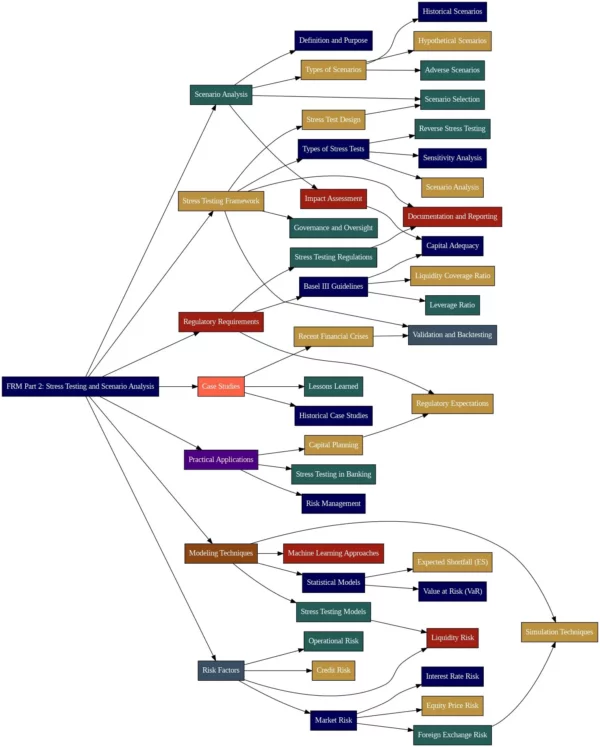
About FRMQuizBank
| Features | FRMQuizBank Benefits | Competitors | Self Study |
|---|---|---|---|
| Exam Explanations |

Comprehensive explanations with relevant exam knowledge
|

Brief correct/incorrect answers only
|
Nil
|
| Study Notes |
Concise key notes for quick concept mastery
|
No study notes provided
|
Self prepared
|
| Audio Study Material |
Over 3 hours of transcribed video study notes for on-the-go learning
|
No video study materials
|
Nil
|
| Mind Mapping |
Structured mind maps for comprehensive topic overview
|
No mind mapping tools
|
Nil
|
| Question Bank |
Extensive question bank using spaced repetition for better retention
|
Limited question bank
|
Nil
|
| Device Compatibility |
Full support for mobile, desktop, and tablet devices
|
Desktop only
|
Nil
|
| Content Updates |
Regular updates by dedicated exam experts
|
Infrequent updates
|
Nil
|
| Account Access |
Instant access upon payment completion
|
Manual account activation required
|
Nil
|
| Success Guarantee |
Free access renewal until you pass (within 1 year)
|
Limited guarantee with conditions
|
Nil
|
| Bonus Content |
Career development resources including resume writing, productivity, and mindset training
|
No bonus content
|
Nil
|
Prepare FRM Exam Anywhere
Add our FRMQuizBank platform to your device’s home screen – one tap gets you straight back to learning without missing a beat.
Start now
One Year Success Guarantee
FRMQuizBank delivers unmatched success rates and exceptional support for your FRM certification journey. A FRM certification elevates your professional profile, enhancing your credentials on LinkedIn and email signatures while opening doors to career advancement and increased recognition among industry peers.
We honor your commitment to excellence by providing comprehensive support throughout your FRM preparation. Our confidence in our program is backed by a generous one-year guarantee.
Should you need more time to prepare, face unexpected challenges, or require additional support, we’ll extend your platform access at no extra cost. Simply contact us through email or mail to request an extension.
Your success is our priority, and we’ve streamlined the extension process to be hassle-free. No paperwork, no documentation required, and no questions asked. Every request is processed promptly and professionally. Join thousands of successful professionals who have advanced their careers through our platform.
We stand firmly behind our commitment: anyone requesting extended access will receive it immediately—no complications, no interrogations, guaranteed.
Frequently Asked Questions
Our practice questions are expertly crafted to mirror the actual FRM exam experience. Each question includes comprehensive explanations, detailing why the correct answer is right and why other options are incorrect.
Access is instant after payment confirmation. You’ll immediately have full access to all study materials, including practice questions, study guides, and detailed answer explanations.
If you don’t achieve FRM certification after using our platform, we’ll extend your access free of charge until you pass, valid for one year from purchase.
FRMQuizBank is fully optimized for all devices. Study seamlessly across smartphones, tablets, iPads, and computers with our responsive platform design.
Our questions simulate the FRM exam’s style and complexity while adhering to ethical guidelines. We respect the official organization copyrights and we create original content that develops true understanding rather than relying on memorization. We focus on building genuine expertise for long-term success.
You’ll receive an official invoice immediately after purchase via email, including your contact information, product details, payment amount, and transaction date for your records.